Hollow Honor

Us against them.

An old jokeโ€”Ever hear of Boston Alzheimer’s? You forget everything except your grudges.

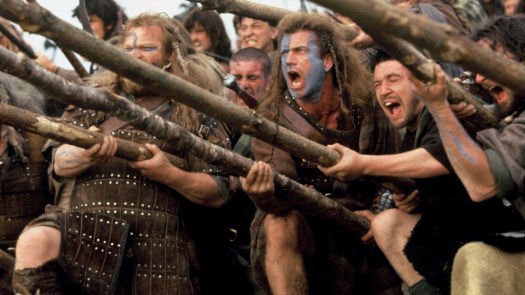
There’s been decades of research on what are known as “honor cultures,” in which every perceived slight must be met instantly and harshly. Any insult, whether against individual or clan, is cause for retribution. As Dov Cohen of the University of Illinois and his colleagues put it:

Approximately 20,000-25,000 Americans will die in homicides this year, and tens of thousands more will be injured in stabbings or gunfights that could have ended in death. In about half of the homicides for which police can find a cause, the triggering incident seems argument- or conflict-related; and, in many of these cases, this triggering incident might be classified as “trivial” in origin, arising from a dispute over a small amount of money, an offensive comment, or a petty argument. Such incidents, however, are not trivial to the participants in them. Rather, the participants behave as if something important is at stake. They act as if they were members of what anthropologists call aย cultureย ofย honor,ย in which even small disputes become contests for reputation and social status.

These honor cultures tend to have several historical commonalities:

  • They come from places whose origins were in herding rather than crop farming, so poaching and violent defense were common activities. We see the same things now in gangs and organized crime and vulture capitalism: when most of one’s wealth can be taken away at once by hand (in cash or drugs or hostile stock raids), poaching and violent defense are again common economic and political strategies.
  • They come from places where political stability was rare, and clans were the dominant form of control. Loyalty to tribe was a matter of life and death.
  • They come from places where law enforcement is scarce or non-existent or corrupt, and every man was responsible for his own and his own family’s welfare.

Where cultures of honor persist, we see these attitudes carry over into even small elements of social life. People from honor cultures “stigmatize men, described in brief scenarios, who didย notย respond with violence, criticizing them for being ‘not much of a man’ if they failed to fight or shoot the person who challenged or affronted them.” The old cliche from Western films still holds true in a lot of places: Them’s fightin’ words!

So we have a condition in which the social norms of precarious masculinity that we described yesterday are amplified by cultural patterns of perceived threats to honor, and the perceived necessity of immediate response. ย 

We can productively apply this understanding to any number of social or political phenomena, from party politics to sports rivalries. Will Blythe wrote a book about how the UNC-Duke basketball rivalry was more about loathing them than loving us. He called it To Hate Like This Is to Be Happy Forever.

And I find the whole thing exhausting, and tragic. When the universe is defined as us versus them, we have lost the capacity for generosity, the capacity for empathy, the capacity for good will. We leave innumerable people crushed, helpless, as we bulldoze our way toward our own benefit. It leaves us all as our own bargain-sized Ozymandias, our own less-than-cinematic Citizen Kane, surrounded by the debris and carnage of our hollow honor.

We can stand our ground, and see who’s left standing. Or we can stand for others, and make ourselves greater.

Article referred to: Cohen, Dov, Nisbett, Richard E., Bowdle, Brian F., and Schwarz, Norbert. “Insult, Aggression, and the Southernย Cultureย ofย Honor: An ‘Experimental Ethnography’.” Journal of Personality and Social Psychology, May 1996 Vol. 70, No. 5, 945-960.

Precarious

Step right up, sir… let’s see if you’re a REAL man!

I was at our local general store the other day, standing on the porch, wearing my face mask and waiting for Kathye to hand my bag through the take-out window. I could hear from up the road a motorcycle with a loud radio on. (Between the wind noise, the engine noise, and the helmet, motorcycle music systems are kind of a dumb idea. But other people get to hear it, which seems to be the point.) Sure enough, ten seconds or so later, two guys coasted past the shop up to the four corners. I was just about to turn away from the window when they blasted off from their stop, pipes wide open as they accelerated up and over the hill.

There’s a common trope having to do with sports cars and loud bikes and big trucks and lots of guns all having to do with threatened masculinity. But it’s not just folk wisdom; there’s a significant body of social science behind it as well. Researchers Joseph Vandello and Jennifer Bosson of the University of South Florida have developed the concept of precarious manhood, that being seen as a man requires “continuous social proof and validation.” A woman can be seen as a “good” woman or a “bad” woman or somewhere along that gradient, but a man is more likely to be seen as either a “real” man or “a pussy” or “a faggot” or “a wimp” or “a boy” or some status other than a virile, heterosexual male. It’s a simple, binary, yes/no condition: are you a real man, or something else?

To quote the title of their most important theoretical paperโ€”pulling together 130 prior works across psychology, sociology, and anthropologyโ€”manhood is “hard won and easily lost.” And along with three other colleagues (Rochelle Burnaford, Jonathan Weaver, and Dov Cohen), they set out to propose a few tests. In their article “Precarious Masculinity,” they discussed the outcome of several experiments:

  • Male and female participants were asked to agree or disagree with statements like “Manhood (Womanhood) is hard won and easily lost,” or “Manhood (Womanhood) is not a permanent state, because a man (woman) might do something that suggests that he (she) is really just a โ€˜boyโ€™ (โ€˜girlโ€™).โ€ Both men and women participants agreed in significant majority that manhood was precarious, disagreed that womanhood was. Men were even more likely than women to believe that manhood could be lost.
  • Participants were asked to read a somewhat ambiguous life story, concluding with the statement “My life isnโ€™t what I expected it would be. I used to be a man (woman). Now, Iโ€™m not a man (woman) anymore.” For the stories about men, the favored interpretation was that the loss of man-status was a social condition: that he felt shamed, felt like a failure. For the stories about women, the favored interpretation was that the loss of woman-status was a physical condition, the result of an operation or menopause or aging.
  • Participants were given a set of “psychological portraits,” generic drawings intended to express some larger condition rather than to be a verbatim image. For a story having to do with men, the portraits were of an attractive man, an unattractive man, and a boy; for stories having to do with women, it was attractive woman, unattractive woman, girl. The story went that the person involved was emotionally troubled, conflicted by spiritual doubts, and had recently discovered that they were infertile. For the story about a woman, the most common image chosen to represent the story was of the unattractive woman; for the same story about a man, the most common image chosen was of the boy.
  • Participants were given a set of questions about stereotypically gendered tasks and roles: sports and mechanical and automotive questions for male participants, cooking and children and fashion questions for female participants. They were told that they were going to be scored on how far toward the “masculine” or “feminine ” ends of the scale they performed. The results were fake: both half the women and half the guys were told that they’d scored normal for their gender, the other half told they’d scored normal for the opposite gender. Then they were given a second test, a series of words with missing letters, and told to complete the word. Guys who’d just been told that they’d scored low on masculinity were more likely to complete _IGHT as fight than night or right or sight, more likely to complete SHA_E as shame than shade or shale or share. Male participants were far more likely to complete the words in an anxious or violent form if they’d just been told they weren’t very manly. For female participants, there was no meaningful difference.
  • As a follow-on to that last study, participants were asked a) if they’d be comfortable if their friends and family members knew their results of the gendered-knowledge test, and b) if they thought the results would be different if they could take another shot at it. For male participants, guys with “masculine” results were fine with the results being known, and figured that the outcomes would be the same if they did it a second time; guys with “feminine” results didn’t want the results known, and believed strongly that they’d score better if given a second chance. For women, there was no difference between the participants who’d been given “feminine” or “masculine” results.

The upshot of all of these studies suggests that people believe that “manhood” is an absolute status rather than a gradient, that it’s a fragile condition that can be easily lost, and that threats to one’s manliness are shameful and needed to be repaired, by force if necessary.

More tomorrow.

The papers referred to today are (1) Vandello, Joseph A. and Bosson, Jennifer K., “Hard Won and Easily Lost: A Review and Synthesis of Theory and Research on Precarious Manhood.” Psychology of Men & Masculinity, 2013, Vol. 14, No. 2, 101โ€“113. (2) Vandello, Joseph A. Bosson, Jennifer K., Cohen, Dov, Burnaford, Rochelle M., and Weaver, Jonathan R., “Precarious Manhood,” Journal of Personality and Social Psychology, 2008, Vol. 95, No. 6, 1325โ€“1339.

Content Management

Why, you could put ANYTHING in here!

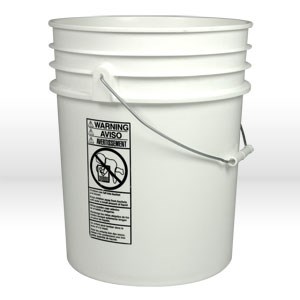
Imagine that bucket as a bookstore, or a gallery, or a magazine, or a college curriculum, or a grocery store. Any desirable space of limited capacity. The more of us there are who can provide the appropriate content for that bucket, the more we’ll be in competition with one another, and that competition will come mostly in the form of price.

I’ll teach that class for two thousand dollars.

Well, I’ll teach it for eighteen hundred.

Being a content provider in any field is like a reverse auction, in which the lowest bidder wins.

The journalist Ben Fong-Torres maintained a strictly freelance career for forty years, because he wanted the freedom to pursue his own topics at his own depth. He knew that as a daily newspaper reporter, he’d be assigned stories that weren’t in his area, and that he’d be under pressure to turn them around quickly, glancing off the surface rather than really penetrating. When he started in the 1960s, he could write a feature story and be paid about $500. But he finally gave up and accepted a newspaper job. The end came when he was offered a cover story for a big magazine in 2006, and they told him it would pay… $500.

One of the things I described in The Adjunct Underclass was our increasing understanding of college education as “content,” and college teachers as “content providers,” leading toward what economists call commodity pricing, in which a gallon of crude oil or milk is a uniform commodity to be sold at uniform price.

The fungibility of the commodity places downward pressure on price, and cannot consider the unique practices of the producer. If a particular dairy farmer thinks he needs $18.50 per hundredweight to break even, but the going market rate from the co-op is $16.50, then $16.50 itโ€™s going to be, and the individual farmer gets to choose toย eitherย (a) lose two bucks per hundred pounds, (b) reduce the quality costs of his work, or (c) stop selling milk altogether. So too for adjunct faculty. Intro Sociologyย can be bought by colleges in the Boston Metro teaching market for about three thousand dollars per three credits,ย so an individual teacherโ€”no matter how well credentialed, no matter how excellentโ€”gets to choose to (a) teach for an embarrassingly small hourly rate, (b) try to make their teaching something simpler and less time-intensive, or (c) not teach at all. In the eyes of the college-as-aggregator, as long as any specific provider is above the floor of competency, it doesnโ€™t really matter if theyโ€™re any better.

I was put in mind of this over the past couple of days while reading the really smart blog of the writer Madeleine Morris, PhD in creative writing from Roehampton University. She’s had some success commercially publishing her workโ€”she writes erotica, a small enough bucket in the best of times, and one with an enormous number of content suppliersโ€”but most of her work has been given away, published in bits and pieces on various websites, including her own. She’s part of the vast fiction community who, even when published in “the little magazines,” are paid only in contributor’s copies. But she lays blame at the feet of not merely the publishers, but also us readers.

Content has become an incredibly cheap commodity. Iโ€™ve watched readers whine over paying $2.00 for an ebook novel. I know of readers who buy an ebook, read it, and then return it for a refund. Think about it: a novel for less than the price of a coffee you consume in 5 minutes and piss out 5 minutes later. A novel that takes, if youโ€™re any more than an abject hack, at least 3 months to write.ย  So, itโ€™s readers too, who feel entitled to something close to free entertainment.ย 

The internet has made us all freeloaders. We expect our music and our reporting and our images and our ideas and our stories for free. We are offended by paywalls. So content providers are all reduced to buskers, playing our tune on the corner with a hat on the ground, asking Kickstarter or GoFundMe or Patreon for a few bucks.

And here’s another dilemma. I’ve had my career, I don’t need to be paid to write. So are these very essays contributing to the expectation of good, free content? Am I taking up reading time that someone else might be paid to claim? Am I contributing to our cultural diminishment of intellectual life by offering intellectual life for free?

So let me say this. All writers need readers. Some writers need readers and money, because it’s their livelihood. Pay those people. Please.

Systemic Internality

The inside of my head for the last few stories…

I’ve been working on a new book lately, and the first few chapters have been sort of slow going. They make sense, they’re smart, they’re setting up later work, but they feel weary. I attributed my malaise to a broader and more general malaise all around us.

But then last week, I wrote a scene with five friends in a bar on a Friday night. And it levitated, it wrote itself. It was just people talking. And I love that.

The last couple of stories I’ve shared with my writing group have been about people who have found themselves isolated, cast adrift from a community that they thought they’d once been a part of. And those are harder for me to write, and less fun to write, because there’s no dialogue. I mean, that’s kind of the existential state of exile, right? It’s not merely the identity fact that you’re not a member of the club any more, it’s also the social fact that you’ve got nobody to talk to who understands your native language. When you’re cut adrift, you lose the possibility of dialogue. You start talking to your cat, or your volleyball, just to convince yourself that you matter.

I thought back on the fiction I started to write once I first left higher ed. And the first six novels were all told mostly in scene, filled with dialogue and social connection. The one I wrote just before Christmas was all in scene, filled with dialogue. Those books just poured out of me, I couldn’t wait to get back to the desk the next morning and see what those people would do next. The stories of individuals adrift, though… I have to pull myself back to those. I have to figure out how they’ll dig themselves out of their isolation, which was a project I spent far too long on in my own life. It doesn’t appeal to me to go back there.

I grew up with television. And television is, paradoxically, an innately auditory medium. Whether it’s Hogan’s Heroes or Voyage to the Bottom of the Sea, The West Wing or Home Improvement, television lives and dies on the quality of its dialogue. The scenes and clothing and actions and music exist only to lend visual context to the conversations. Watch a TV show sometimeโ€”I don’t care what show, your choiceโ€”and count the longest time spent between anyone speaking. If it’s even ten seconds, I’d be amazed. Whether drama or comedy, whether medical or detective or family or Western, the fundamental unit of analysis is the ensemble, building itself every week through words.

I’ve made my writing career in essays, in the sound of my own isolated voice. The dialogue with other thinkers is implied, not present. And I’ve got a pretty good voice for essays, because I try to write the way I’d say it. But I don’t have to write novels that are actually just essays in drag, as so many are. I can write ensembles. If I’m going to write for pleasure, I should include my own pleasure as a worthy goal.

The Importance of Being Earnest

We see things not as they are, but as we are.

Anais Nin, Seduction of the Minotaur, 1961

In every morning’s e-mail, I receive a briefing digest from the New York Times (sick tigers at the Bronx Zoo, Anthony Fauci blocked from taking a reporter’s question about hydroxychloroquine) and another from the Chronicle of Higher Education (will colleges reopen this fall? will this mark the end of tenure?). I read some of the highlights (well, maybe the wrong word) from each location this morning, and then got drawn into an article from the Chronicle’s archives, called “The Birth, Death, and Rebirth of Postmodernism.” And from there, hyperlinked quickly to an adjacent article, “What’s Wrong with Library Studies?” which was a 2016 pushback against “the paranoid project” of literary studies configured as exclusively political critique. And that hyperlinked me back one more year, to December 2015, and Lisa Ruddick’s essay “When Nothing Is Cool.”

Ruddick is doing some interesting things here, about the ways in which cultural criticism can be alienating for even those who practice it, that it promotes a form of “intellectual sadism… norms that make ruthlessness look like sophistication.” I think that our relentless pursuit of irony has been a force for cultural diminishment. When we begin every analysis with the presumption of others’ ill-will, the presumption of hidden agendas, the presumption of threat, we diminish ourselves in a pre-emptive act, lest others diminish us instead. As John Cougar* set forth in 1980, “Nothin’ Matters and What If It Did.”

Irony is a cynical response to cynicism. We saw the growth of the ironic form in the 1950s as a rebellion against consumerism, its maturation in the 1960s as a rebellion against Vietnam, and its full blossoming in the 1970s against the betrayals of Watergate, the full collapse of whatever faith in common purpose we might have once ever had. It’s no coincidence that Saturday Night Live, a television show created specifically to show us how stupid other people are, was launched in October 1975, only a year after Nixon was forced from office and we really started to learn just how extensive his criminal enterprise had been, only six months after we fully gave up on twenty years of baseless involvement in Vietnam. We’d been lied to, we were angry about it, and that anger became rootless, free-spraying across the landscape, taking down everything around us.

I’ve never been able to sit through even a single full episode of Seinfeld, a show based on the premise that every single person is debased and motivated only by vanity. I cannot watch a Will Ferrell movie, all of which are motivated by the cheap shot of setting up and then mocking a lead character who is both inept and narcissistic. If even our entertainments are populated by people with no redeeming characteristics, we are culturally lost, engaged in a “ruthlessness that looks like sophistication.”

Tell me what you want. Tell me what you believe. Tell me what you think is noble and good. Even if I disagree, I won’t mock you for your dreams. We owe it to ourselves to create some hesitant islands of fully stated aspiration, in the midst of a culture that can only honestly express its mistrust.

*In 1980, he’d moved on from Johnny Cougar, but hadn’t yet become John Cougar Mellencamp, nor his current plain ol’ John Mellencamp. He was still caught up in his own (externally driven) self-negation, wearing a name chosen by his record label.

Nothing Is Neutral

Useful sometimes, less so other times

Sometimes things have to hit me several times in quick succession before I think about what they mean.

  1. This morning, I had a new colleague ask how to find reliable data on adjuncts. I told him that I didn’t think there was any, because all the data that IS collected is collected to serve a question that I’m not asking. The IPEDS differentiation between “full-time” and “part-time” faculty actually conceals what I’m trying to learn. Their question is about calculating student-teacher ratio, and my question is about the insecurity of intellectual life. It’s like using a kitchen thermometer to measure how many potatoes I have left; they’re both kind of about food, but they’re not mutual or interchangeable.
  2. Yesterday, my friend Aimee was talking about which of two gallery spaces was preferable for her fall show. And she was talking about the art world’s preference for the plain white wall, so that “the space wouldn’t compete with the art.” That, of course, privileges art that lives nowhere in particular, eliminates the notion that art could cooperate with a space rather than compete with it. (She actually used the term white box artist, which I think is its own wonderfully revelatory category.)
  3. Nora is trying to put a group of local food providers together with local people or families who are in need of that food during our time of home isolation. And we quickly realized that we don’t have a great way of doing that. The school knows the families that qualify for free or reduced-price lunches, but that only includes families with kids between 4 and 18 years old. The local social service agencies know the people they care for, but there are a fair number of families who have done everything they can to stay below the observation of social services, knowing that their lifestyle would draw scrutiny and possible intervention if it were exposed. Or we can just put out the call to say that food assistance is available, and run the risk of freeloaders (its own contextually defined category)
  4. I was pointed to the category of “under-recognized artist,” which the Harpo Foundation defines as an artist who hasn’t presented in major museums or events, hasn’t received multiple awards or grants, and isn’t represented by a prominent gallery. (Note the subsumed categories of “major” museums and “prominent” galleries.) Likewise, Bread Loaf divides its participants between Contributors, Scholars, or Fellows, based on number and scope of prior publications.

Every category we make serves some purpose, draws attention to some characteristics and ignores others. Think even about the photo at the top of this post. Having those four cards would be terrific in poker or in rummy, would be okay but not outstanding in cribbage (unless the cut card was an ace or an eight), and would be disastrous in a game of spades. Categories support rules, and don’t easily transport across rule systems.

If we accept data laid out in the categories provided by others, we’re kind of like the drunk looking for his lost car keys under a street lamp because that’s the only place he can see well enough to search. We’re often forced to rely on data that’s carefully illuminated but not helpful for our specific need. I’ve been published (and paid for my writing) for over thirty years, with three books, but not published specifically in fiction. So am I a contributor, a scholar, or a fellow? Am I an emerging artist, or a mid-career artist, or an established artist? Is my research part of the humanities, or the social sciences?

You want to play the game, you need to know the rules. The rules will determine the categories. And the categories, far too often, define who we are.

What a Weird Business

I’ve been working on my current novel most of the afternoon, after having completed my emergency management duties for the day. (Mostly I accomplished a two-paragraph transition between scenes, before I gave up and loaded the dishwasher, ate some cashews.)

But today’s email included one of the most delightfully random, or perhaps randomly delightful, messages I’ve received in a while. It began as follows:

Dear Dr. Childress: I am pleased to inform you that we have issued a translation license to Rye Field Publications, via Chinese Connection Agency, for a complex Chinese-language edition ofย THE ADJUNCT UNDERCLASS.

Well, how about that! Perhaps the very last development I ever imagined regarding this book is that it would be translated into any other language. (U. Chicago Press has already sold a different set of rights, for the creation of the audiobook. Now, if someone wants to make a movie out of it, I’d totally be on board for that… an eight-episode Ken Burns documentary about the end of American higher education.)

I’m interested in this notion of “a complex Chinese-language edition,” as it seems to carry political overtones. Rye Field Publications is a Taiwanese publishing house. According to Wikipedia, Taiwan has never adopted the simplified Chinese characters emerging from the People’s Republic, and the government prohibits its use in official documents. So my book will be one more twig added to the scale of the decades’-long balance between independence and unification. Not its intended purpose, of course, but our writing is almost never used for its intended purpose. Readers always get to decide what our work is for.

As I wrote in my last post, so much of what happens in publishing takes place within a sealed box, invisible to readers and writers alike. It’s fascinating when a cover panel gets removed once in a while, and we get a look at the gears.

Help Me Narrow It Down, ‘K?

But seriously, WHY don’t you like my book?

So I screwed up my gumption once again and went out into the wilderness of literary agents. I usually start with the website of the Association of Authors’ Representatives, since they’ve got a decent code of ethical conduct. I put in some keywords to narrow the search, and found 167 names. There must be a pea under ONE of those shells, no?

So I picked one and went to the agency website. And it broke my heart, that very first one of the day’s session. So many of these people are such imprecise, vague writers! I mean, honestly, do they even like words and stuff? Here’s a couple of excerpts from different agents within that firm, about the kind of writing that they hope to find:

  • works with quality fiction โ€“ literary, historical, strongly written commercial โ€“ and with voice-driven nonfiction
  • looking for literary and commercial fiction featuring unusual stories and voices
  • represents high-concept suspense, literary, and speculative fiction
  • looks for books with deeply imagined worlds, and for writers who take risks with their work
  • on the lookout for writing that immediately draws her in, and stories that stick with her long after she’s finished reading
  • authors and artists who wish to look beyond the obvious and strive for the exceptional
  • a sucker for unconventional narratives that aim to do something unique and inventive
  • seeks out novels that pay equal attention to voice and plot

If they’d been my college freshmen fifteen years ago, I’d send them all back with some pretty sharply worded recommendations for revision. What a wretched list of non-ideas! We want quality. We want unusual. We want high-concept. We want writers who take risks. We want stories that stick with her. We want things that are unconventional and unique.

Don’t even try if you’re gonna do it that bad. This is the literature version of corporate-speak: the impactful win-win, the go-forward basis, the leveraging information. But these specific sentences were written by people in the industry that forms words into ideas. You’d wish they’d be better at it.

There was oneโ€”just one, of the thirteen agents in this firmโ€”who said something deliberate enough for me to make a decision. She wrote: In general, novels with happy endings put her in a bad mood. And I was, like, That’s terrific! If you’re going to be a di… I mean, if you’re going to be a snarky, ironic jerk, thanks for letting me know right up front. You saved me some time.

We’re faced with hundreds of relatively opaque options, choosing what’s behind door number one, or door number two, or door number four hundred thirty six, digging through the box of unmarked keys. It’s like playing the lottery, but with the possibility of readers instead of money under the hidden, scratch-off future.

Maybe I’ll try another ticket tomorrow. But today was more than I could bear.

Maslow’s Genres

By Abraham Maslow, noted literary theorist ๐Ÿ™‚

The original idea of this post was going to be titled “Why There Gotta Be So Many Dead People In These Books?” I’m tired of reading stories where people die, or might die, in what seem like manipulative ways. It just seems too easy, to build tension through holding our hand over that most existential on/off switch. I mean, if it’s a war story or a pandemic story or a spy story, then yes, we might reasonably expect that someone could be offed. But the rest of the time, let’s play that note with just a little more reserve, shall we?

There’s a related feminist critique of one specific model of the woman-without-agency, the sexual assault victim as a stock character. If we need to add menace to a cartoonish male character, we can have him sexually assault someone. (Elmore Leonard’s book Out of Sight is hideously guilty of this.) If we need to add empathy for an otherwise uninteresting female character, we can hint at her unresolved feelings about a sexual assault that she endured. It’s a lazy way to ramp up the stakes at women’s expense, yet again.

But as I was thinking about all this, I started to think that maybe we can understand something about genre in fiction as an examination of which level of Maslow’s Hierarchy is most central to the plot. You’ve all seen Abraham Maslow’s Hierarchy of Needs, in which he proposed that our needs are arrayed in a tier, with our more specifically human needs resting upon those that assure our basic mammalian existence.

In Maslow’s structure, the two foundational layers are about survival. Level 1 is physiological: food and water and warmth and air. There are plenty of books about that, mostly adventure novels. The hero is:

  • trapped below the surface of the sea with not enough oxygen in the scuba tank
  • caught in an avalanche, an earthquake, a landslide, a snowstorm
  • stuck in space

You get the drift. The basic stakes are that the hero may drown, suffocate, freeze, starve, and so on.

Horror and thriller and wartime novels are mostly about Level 2, safety. In this case, the threat comes not from hunger, but from malice. Something’s trying to kill us, dude! That’s a pretty good premise for a story, from the campfire onward. Who knows who’s out there in the dark, waiting to bludgeon us with their bloody hook…

Romance novels are almost entirely concerned with Level 3, belonging. The whole point is that a lonely person becomes not lonely, finds a partner with whom they feel connected. But not just romance: most TV sit-coms, for instance, are Level-3 shows. Nobody cares about the plot of an episode of The Big Bang Theory or Frasier or Friends or The Flintstones: the whole point is that the gang remains intact and bonded by episode’s end.

Magazines are mostly Level-3 endeavors; we might read about cars or homes or yoga or dogs or any of the hundred thousand things a magazine might be about, but at their heart, they’re doing the work of welcoming us to a community who care about those things. They show us a lifestyle, and help us feel as though there are others who share our enthusiasms and perhaps we could join them. The message of almost every magazine in the world is the same: you are not alone.

So what do we do with Levels 4 and 5? The four Rabbit novels of John Updike were almost exclusively Level-4 books about self-esteem, as Harry Angstrom unsuccessfully tries to regain some sense of capability in a world that no longer offers him an easy path toward it. Joan Didion’s Play It as it Lays shows us Maria’s loss of self in a movie-making community that no longer has a place for her.

Level 5 books about self-actualization are maybe the most rare. Think of Dancer, Colum McCann’s fictionalized story of Rudolf Nureyev; think of The Queen’s Gambit, Walter Tevis’ novel of an orphaned girl who becomes a chess champion. Siddhartha and The Story of O are the head and tail of the coin of the kind of self-actualization that comes from self-negation, two distinct but related forms of nirvana.

There aren’t really genres organized around Level-4 and Level-5 needs, are there? Too bad, ’cause that’s what I’m drawn to write about. Literary fiction picks up those themes more frequently than commercial fiction, which may be why I’m so frustrated when those books lose their discipline and just bump somebody off.


Now let’s get meta for a second. I’m not arguing that Maslow provides us the right way of reading a text, merely an interesting way or a useful way. What I’m trying to do is to rough up the surface of the ball so that someone else can get a grip on it.

And really, that’s what any theory is. That’s what any metaphor is. And that’s what most teaching is, at least in the humanities where I live. My job is to help someone see something they’ve seen a thousand times, and to rough it up enough to get a new grip on it instead of letting it slide past. My job in the classroom was to do that enough times, in obvious enough ways, that my students could themselves learn how to scuff the ball and produce their own friction.

Man, I miss that.

Leading and Following

Each of these people is good at something different… let them drive sometimes

One of my rules of thumb is that you can tell how healthy a college’s culture is by how often the college’s president has his or her picture in the magazine and online. The more megalomaniacal the graphic presence, the more oligarchical the institution is likely to be. I’ve worked for places in which the leader had to take credit for every single thing, surrounded by his anonymous “people.” Those workplaces are both personally miserable and organizationally ineffective.

One of the goals of leadership should be to surround yourself with people far superior to you in whatever that thing is that they do, and to take every opportunity to push them to the front, so that their best talents shine. And this is not merely a public strategy, this should also be operational strategy. The leader’s role is to hold the mission, to measure actions against the mission, to assemble the best possible team to advance the mission, and to use what charisma she or he has to rouse others to stay strong and join the cause. The leader’s role is also to follow… to follow the recommendations of people who know more, to follow the guidance of those who’ve immersed themselves in the data and the practices of their fields.

For decades, I’ve wished that presidential candidates were required to name the entirety of their cabinet prior to the election. I know that’s unfair to those cabinet nominees, who have to be public with their willingness to leave their current positions even with the uncertainty of an election ahead. But we deserve to know who a candidate believes should be our nation’s Attorney General… our Secretary of Defense… our Secretary of the Treasury. We deserve to know in advance whether an administration will be filled with intellectual leaders, professional practitioners, party holdovers, or personal sycophants.

In our time of COVID, it’s especially important for our leaders to know when to follow. This is not a political opponent with a strategy to outwit, and it’s not a business cycle to be timed correctly. It’s just a mindless virus that neither knows nor cares what we want, going about its daily business in a way that’s incompatible with our own. This is the time we follow… follow the guidance of the epidemiologists and public health experts who have decades of experience in studying other outbreaks, and have learned what has and has not worked.

Leadership is not always (perhaps not even usually) about exerting one’s will. Leadership is about surrounding yourself with smart people, and then listening to their recommendations in service to a common goal.