Compatriots

We’re fortunate that two of the most thoughtful writers on higher ed are also among the most frequent. Matt Reed, more or less the provost at Brookdale Community College in coastal New Jersey (his actual job title is Vice President for Learning), writes a near-daily blog called Confessions of a Community College Dean for Inside Higher Education. And his stablemate John Warner, a novelist and long-time adjunct instructor and publishing columnist for the Chicago Tribune, writes another regular IHE blog called Just Visiting. Both of them are close to the ground, describing the complications of higher ed in ways that make it clear what’s at stake for students and teachers alike. If you want to know what the work looks like, and what it means, they’re a great place to start.

So when I discovered that John had reviewed my new book for his IHE post today, I was delighted. But I hadn’t expected how powerful the review would be. I’ll quote his first line: “Normally the only contingent faculty career that could bring me to tears was my own, but the latter stages of The Adjunct Underclass: How America’s Colleges Betrayed Their Faculty, Their Students, and Their Mission by Herb Childress had my eyes filling sometimes with sadness, sometimes tinged with anger.”

And again, it’s that sense of despair, that sense that we all know that we could do it right but yet somehow choose not to. We’ve walked slowly but steadily in the wrong direction for nearly forty years, and now we’re so far from home that it seems impossible to reclaim. I still think we could get there, but it would require a powerful reimagining of our path, and powerful argument to make that path meaningful to a broader public.

If we’re going to make that turn toward home, it’ll take people like Matt and John, like Karen Kelsky and Sara Goldrick-Rab, like Adam Harris and Hua Hsu. People who carry the unique blend of empathy and knowledge and powerful, accessible writing. I’m grateful to be on their team.

Standing Off to the Side

I’ve been back into my novel again for the first serious work since February, reading the first 50,000 words over again to re-learn the characters and their struggles and their hopes. There are some lumpy spots, probably one vestigial scene that needs to be cut away, but in large strokes, it’s a good story.

I’ve arrived now at the frontier, at the place where the crisis will be foregrounded and then resolved. I don’t yet know how it will play out, or which direction the resolution will take them. I have to let that happen, I can’t make it be one way or another. I’ve painted the circumstance in which they find themselves, and it’ll be up to them to negotiate that terrain, and one another.

As part of letting go of that control, I’ve spent the past couple of days writing from the point of view of someone who had not yet had much of a role, though she’s about to. I had to understand what this opposing force wants, in order to understand how she’ll act. I understand Kurt and Megan, I understand their adopted daughter Sarasa. But Sarasa’s mother is back to reclaim her daughter, after eight years of silence, and I needed to understand this pending conflict from her point of view. I need to presume that she’s an honorable person who wants to recover her family, who “wants the best” for her daughter, and is utterly uncertain what “the best” would be. What has she been through in her decade of separation from her daughter, in the eight years since she’s even been able to communicate with her?

This material will never make it into the book. But it was necessary work to understand why Svara would come forward at this point and ask for the return of her now-teenaged daughter. It makes the problem matter even more; as Hegel said, the nature of tragedy is right versus right.

When I write nonfiction, I do way more interviews than I’ll ever be able to use. Partly that’s because I never know who’ll say something particularly illuminating. But partly it’s because the tone of those conversations bleeds a little emotional charge into everything else. I expected my adjunct correspondents to be angry, to be resentful. And they were, a little. But I didn’t expect the despair. And that despair, that sense that we all know what could be but never will, lent its tint to the flat white of the data. The unused words from those interviews are not “on the cutting room floor.” They are infused through every paragraph of the book.

Likewise, Svara’s testimony to me through the past two days, though it will not be tied into the book verbatim, will change the color of the conflict, will make it richer and less transparent. We learn so much through unnecessary work; through it, we become receptive to meaning.

It’s Good to be Married to a Writer

Nora took yesterday off from the work on her book, and spent the day in the Berkshires with friends, while I got myself reacquainted with Kurt and Megan and Sarasa in my own novel that I’ve not worked on in two months. When she came home at dinner, we talked about our respective days, and she was marveling at the casual wealth of the tony homes and grounds of western Massachusetts. She described one particular hobby farm that produced cheese, selling it in a self-serve farmstand with an iPad and a Square reader instead of a tin box that you put six bucks into. They drove slowly through the grounds, because there were chickens everywhere. “And they’re gorgeous! These are not working class chickens!”

The Posh Chicken of the One Percent

That’s one of those sentences that’s never before been spoken, a concise description of a specific attitude toward life. These are not plebian, proletarian chickens. These are the entitled chickens of the lesser nobility. These chickens’ parents would absolutely buy the naming rights to the rowing clubhouse in order to get them admitted to USC.

It’s good to be married to a writer. You get instant literature over dinner.

The Array of Conversations

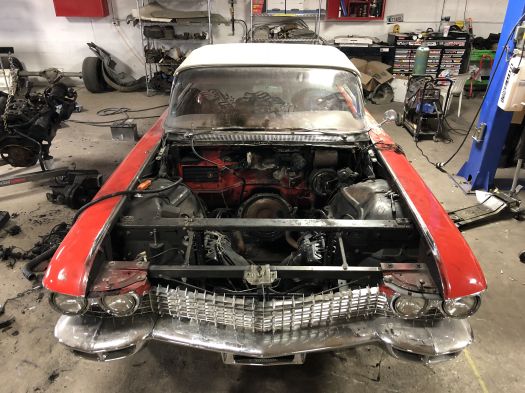
The world of higher education is remarkably opaque to us. You’d think we’d know more about an industry that twenty million Americans at a time are involved in. But then, you’d think with 275,000,000 cars on the road, we’d understand mechanical systems and be better drivers, too.

Cars and colleges are so ubiquitous, and so thoroughly designed, that they become invisible in daily use. We go out the door in the morning, and there it is, ready.

So when that ubiquity is questioned in some way, we’re surprised, and many people want to think more carefully. When we read stories of the master’s-degree barista… or the millions of people in their thirties and forties with decent jobs and still a negative net worth because of their loans… or industrialists and TV actors buying their kids fake test scores and fake credentials as a water polo player or fencer… then what had seemed inevitable is suddenly recognized as a specific, designed phenomenon. And we can start to question that design.

The Adjunct Underclass seems to have arrived at that moment of question. It’s been reviewed in professional circles, in Science and the Library Journal. It’s been excerpted in the Chronicle of Higher Education, and the subject of a long Q&A with Inside Higher Education and another with Karen Kelsky’s The Professor Is In. But the reviews I find most gratifying are among the civilian population, finally invited in to see the workings of the engine. The Hour of History podcast, available to anyone on YouTube. A review in the Washington Monthly magazine. A book-based essay by Hua Hsu in the New Yorker. And then yesterday, a review in the Wall Street Journal.

It’s clear that a lot of people are wondering what’s under the hood, how the thing works, and why, and for whom. I’m grateful that my book has arrived at this particular moment, a project launched three years ago and landing at just the right time.

Thomas Frank and Malcolm Gladwell have both written compellingly about the role that luck plays in success. Gladwell frames success as having three components: native talent, enormous hard work, and opportunity. Talent and effort will not take root without opportunity. And Frank says that people who don’t recognize the role that luck has played in their lives, people who imagine that all of their success is due to their own intelligence and effort, often don’t think to create beneficial conditions for others.

So yes, I know a lot about higher ed and about writing, and yes, I did a ton of work to learn more about both for this project. But I’m especially grateful for all the opportunities that others have given to the knowledge and the work, so that it’s been able to take hold and be productive.

The 95 Theses

I’m at Rutgers this morning, about to meet members of their adjunct (or in the local parlance, PTL for part-time lecturer) community as they embark on their contract negotiation. When I accepted the offer to visit, I told my host that I think of collective bargaining as the emergency room, helping people survive in the face of immediate trauma and injury. But my project is different than that.

Having grown up in the Lutheran Church, one of our talismanic objects was the 95 Theses, the arguments that Martin Luther “nailed to the door of All Saint’s Church,” which makes it sound a lot more confrontational than it was. He mailed it as a memo to church leaders, and then put it up on the seminary’s equivalent of their bulletin board. But leaving aside that kind of heroic imagery, the Theses were indeed a document of revolution. They were a direct challenge not merely to the Church’s custom of paying indulgences for souls in purgatory, but to the underlying theology of securing one’s seat in heaven through one’s own labors. No, he said, this is not how it works. The work of the faithful is to repent, and to accept the grace of forgiveness.

I’m put in mind of that today as I prepare to talk about my project to people engaged in a related but separate project. While I recognize the need (and the valor) of the struggle for economic safety, my work is fundamentally a challenge to the concept of college as we’ve come to know it. College is neither the provision nor the acquisition of credentials. College is neither the provision nor the acquisition of individual skill packets, separated into disciplinary categories. College—when we do it right—is the place where we learn that our life’s work is both finite and important. It’s where we learn that we can always know more, that we become committed to knowing more, where we learn that our understandings are always provisional and temporary and positioned, and that well-meaning people can disagree without anger. It’s where we learn that our work is not merely for ourselves, but always on behalf of.

A couple of years ago, I was part of a project held at Lincoln University, America’s first Black (originally all men’s) college. And in a break between sessions, I wandered through their meeting center and looked at photographs of their faculty and students from the first years of the 20th century. And as I looked at those men’s faces, the attitude that showed back at me was resolve. Resolve not merely that they might become engineers or chemists, but that they would be leaders in the larger, perpetual work of making society whole. That’s what college is, when we do it right.

So I don’t need to nail my work to some door somewhere. But my message is the same as Luther’s, six hundred years ago. No, this is not how it works. The work of college is resolve in the face of uncertainty, the willingness to admit that we can never know all that we hope to, but that we move forward nonetheless, always on behalf of.

Well, THAT Was Fun!

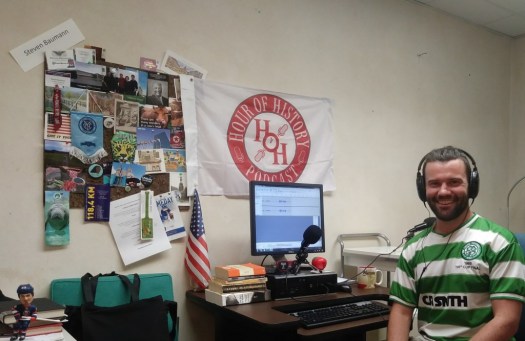
I’ve said for years that I’ve got a face made for radio. And last week, I proved it. I did an hour-long podcast with Steven Baumann, for his Hour of History series. It was just a terrific time: he came to the table with great questions, and I think I held up my end okay.

So if you’ve got some time on the stationary bike, or doing your ironing, I’d highly advise checking out Steven’s website and our episode, among others. If you like it, send your friends.

Your host, Steven Baumann

The Structured Dislocation of Higher Ed

I’ve lived in a lot of places. Two in Michigan, one in Texas, four in California, one in Wisconsin, one in North Carolina, one in Massachusetts, and now in Vermont. Multiple addresses in some of those cities. A total of twenty-two mailing addresses that I’ve occupied. Some of those larger moves were driven by the physical or social characteristics of the place from or the place toward, but many were driven by my participation in higher education.

First, as an undergrad. There were no four-year colleges in my hometown. I was accepted by three really good state schools that lie 112 and 169 and 530 miles from home, and chose the 530.

Then as a grad student. I was accepted to the elite doctoral program at the elite university that I’d finished my undergrad at, could have stayed in the same apartment. But I was recruited by a somewhat less elite university that had a program and people that I really came to admire. That was 2,167 miles, and a complete disruption of my ex-wife’s and my friendship networks and her work. I have apologized for that decision innumerable times.

Then as a postdoc. After six years since the conclusion of my PhD, I was desperate for any means of re-entering the intellectual community. So once again, I disrupted our lives (I was thoughtless, I admit it, but despair makes you do desperate things), and we moved 2,809 miles to the end of our marriage.

Then as a quasi-academic. When the postdoc was nearing its expiration, I found a college administrative job, and moved—at least this time by myself—702 miles north.

Most of my friends in higher education can tell you similar geographical stories.

  • From Oregon to upstate New York to Wisconsin.
  • From Massachusetts to New Jersey to Florida to Ohio.
  • From Kolkata to Delhi to Kansas to Wisconsin to Pennsylvania.
  • From Oregon to Colorado to Texas to Tennessee.
  • From New York to Wisconsin to New York to Vermont.
  • From Ohio to Michigan to Connecticut to Maryland to Illinois.
  • From Michigan to Hawai’i to West Virginia.

Academic life demands allegiance. Allegiance to scholarly life above place, above partner, above kids in school or friends we treasure. We don’t get to choose mountains or prairies or oceanfronts. We don’t get to choose conservative or liberal neighbors, don’t get to choose wild landscape or wonderful culture.

There really aren’t that many careers like that. Military life comes to mind, of course, but we’ve known that for a long time, the term “Army brat” is part of our vernacular. Life in the arts is similar, moving from everywhere to the three gravitational poles of Los Angeles for film or New York for theater or Nashville for music. “If I can make it there, I’ll make it anywhere…”

But we don’t talk explicitly about the regular dislocations of academic life. We don’t do a good enough job being clear with our star undergraduates that going to a good doctoral program will require utter departure from family, followed by a second complete departure for an academic position. We go to sleep in the Pacific Northwest and find ourselves half awake in the Chihuahuan Desert. We exult in the rainy Northern California coast, suffer in the humid tobacco southeast. No one asks about our climate zone when we’re sold in the academic nursery, but some of us just won’t thrive where we’re planted.

So now you know. You will get to make the choice between family and academic life, between geography and academic life, between cultural affiliation and academic life. And if you choose anything other than academic life, at any moment, it’ll cut you dead.

Iconography

I wrote a couple of days ago about my experience of the book’s independent life out in the world. I have to hope that my guidance and care in its upbringing will lead it to a successful career, but that’s now outside my control.

But another thing that’s outside my control is the way that the book, and I, are represented. Lots of articles have been headed by a thumbnail of the book cover, or the bland author photo I sent to the Press, or the somewhat more interesting photo that Janet Oberto took of me at a college event a few years ago, when I was driving four computers and two LCD projectors at once. Some publications have commissioned their own specific graphics for coverage. I’ve written thank-you notes to both Nate Kitch and Cathryn Virginia for their ingenuity in capturing the tone of the articles they illustrated, as well as to Isaac Tobin for the book and book cover design.

Jhumpa Lahiri wrote a lovely little book three years back called The Clothing of Books, in which she argues that the stuff around the text—the cover illustration, the author photo, the blurbs—can often work at cross purposes with the text itself. She wishes for the old Penguin Classics covers, like school uniforms… just the title, the author’s name, and the consistent publisher’s marks.

Anyway, all of that was brought to mind yesterday by my discovery of the weirdest artifact of this book—at least so far, and I hope ever. There’s a YouTube channel created by a user known as smokaj0000, to which three or four videos per hour are generated (almost certainly without human intervention) from articles in some selected publications. The algorithm breaks the text across a number of slides, finds some more-or-less related screen grabs to put behind it, and plays some public-domain telephone hold music that, as the Dude said, really ties the room together.

I wonder what Jhumpa Lahiri would think about authorial theme music…

What hath been wrought

Saturday’s event at the Northshire. Photo by Susannah Swearingen.

Now that the book has been unleashed into the world, it’s no longer mine.

Every reader will now embark on her own project with it. Will tie it into her own experience, her own position, her own motives, her own goals. Will read things that aren’t on the page, as every reader does, creating a new story with this story as a partial frame.

The writer can’t possibly imagine everything that others will do with the text. I spent most of three years making it, but now I’ve relinquished control. It’s become a tool for others to use. And the thing that’s been the greatest surprise is that the work most often taken up so far has been emotional. Coming to terms with our own role in higher ed—the fear of parents who want their children to pursue an employable career, the despair of good scholars set aside, the good daily work and high aspirations of those still within the club—that emotional work has been the project at the center of almost all of the response to the book. We have a deep human need to make sense of the world, and that’s only partly a project of data and pattern. It’s more importantly a narrative project, an identity project. How did we come to be who we are? And what does that mean about who I am in the midst of it?

That’s the work we don’t talk often enough about. We get scared, or we take pleasure, or we need reassurance, or we celebrate. I participated in an hour-long podcast this morning, which I’ll link to once it goes up this coming weekend. I was upstairs talking into my computer microphone, and Nora was downstairs working. When I came down, she said that she hadn’t been listening closely, but that the general tone of the conversation sounded like pastoral counseling. That’s the work I think I’m best suited for, a kind of academic chaplaincy, someone who listens closely, who says “Your story is not isolated. You didn’t do it wrong. Let me show you another way to think about it.” That work, far more than advancing the cause of any particular discipline, has always been at the core of my interests, even if I couldn’t quite name it before.

I worked on this book for a long time in complete isolation. It’s fascinating, in ways that I’d never anticipated, to see what others do with it.

And the crowd is going crazy!

Early Thursday morning, I wrote that I was going to see a friend defend her dissertation. And did she ever. She just did a brilliant job, she made everyone in the room smarter. All five committee members said that the work was exciting, thorough, showed intellectual maturity. They were offering advice about making the dissertation into a book, always a good sign. The nearly two hours of conversation were a celebration of the very best things about academic life, the perfect example of why people become fascinated with small details of life that illuminate larger regions.

And then the ref blew the call.

This dissertation, this marvel of scholarship, was not passed, and the PhD was not conferred. The work was “accepted with revisions.” In my experience, that usually means that the work is mostly sound but there’s some big methodological or theoretical hole that needs to be patched before the ship sails free. It’s an indicator of a couple of months of remaining effort, which the committee believes you to be capable of but is concerned enough that they’re reserving judgment.

But in this case… typos. Inconsistent capitalization. Bring us back a clean copy in three weeks.

It’s like calling back a towering home run because one cleat of one of the batter’s shoes touched the chalk of the batter’s box. It’s like closing down a run of a Broadway show because one actor’s suit jacket had two buttons instead of the appropriate three. Inconsistency in trivia is part of every fast-moving document. We all know it, and we all prepare to do copy editing before we go to final publication. But the editors who review for acquisition discuss the work on its merits, knowing that the tuning will occur.

So what a decent human would have done in this case is to congratulate their student, shake her hand and welcome her to the doctoral community… and then privately, off-stage, say “Here’s a marked-up copy. You’re going to want to do a little proofreading before you send this in to the graduate school for the archive.”

But no. This guy, who’d already taken three or four opportunities to demean the assembled graduate students who’d come in support of their colleague, decided that inconsistent capitalization was sufficient to withhold his blessing. He had one last chance to be a decent person to those in his care, and he fucked it up.

If this were a stadium, there would be beer cups flying onto the field. The commentators would be showing replay from six different camera angles, all clearly demonstrating the umpire’s error, the success of the play. And the raucous cry would emerge from fifty thousand voices:

Bull—shit!

Bull—shit!

Bull—shit!

In the greater scheme of life, a blown call on the field or in the seminar room doesn’t really matter. My friend will have her PhD in three weeks, and the work will still be really smart. I’ll all be behind us. But this is the kind of petty exercise of power and status that academia is so deservedly mocked for. And it makes me grateful all over again to stand outside it.

(By the way… if you’re reading this and you’re wondering if it might be about you, if you’re the scholar who didn’t generously support the students whose careers literally depend on your judgment… then yes, it’s you. Even if you weren’t THIS guy in THIS room, take a moment to ask what you do, every day, to ease the lives of those who work tirelessly and intelligently to enter your community. Sometimes I think the opposite of “tyrant” is just “grown-up.” Be a grown-up, and don’t make things worse for the people around you.)