

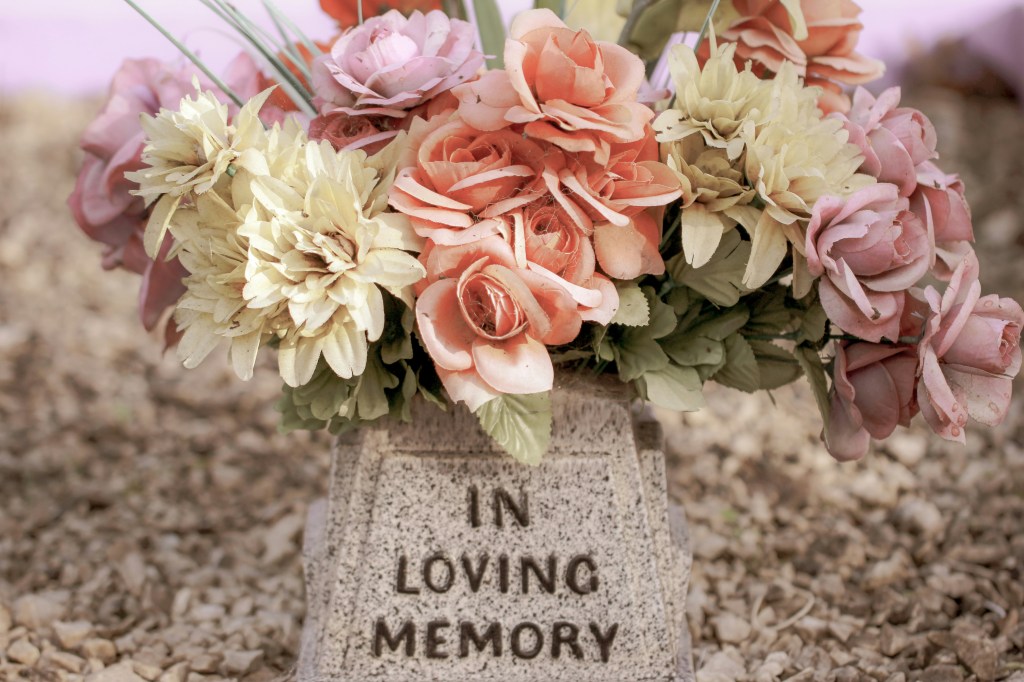
(Image by Yogendra Singh, via Unslpash)
Back in 1990, I was a grading assistant for Paul Groth’s course in American vernacular architecture. As the junior member of the teaching team, I was sent downstairs to get fancy coffees for the rest of the team and myself. When I came back up the stairs, I had the cardboard cup tray on the palm of one hand, and distributed cups to friends with the other. Paul noticed that, and complimented me on my skill. I said that I’d spent a little time as a waiter. And Paul, who was gay and lived in San Francisco, took a beat, and then said, “In my community, waiters have to be gorgeous.”
We all know that every upscale restaurant in Los Angeles and New York employs a wait staff made up of aspiring performers who rely equally on talent and on physical beauty . You can still encounter a normal human at a neighborhood taco shack, but if you have to make a reservation, you’ll be waited on by a perfect specimen.
I was at an event recently at which one of the guests was a professional party organizer, employed to put on bridal showers and lawn gatherings for wealthy families. She told us of one such party in which she and her team were selecting “cater-waiters” from a portfolio provided by a modeling agency. They had requested both clothed and shirtless photos of all of the men they were browsing, quickly sorting into piles of acceptable and unacceptable based on the character of their abdominal muscles rather than food knowledge or service experience.
The family’s criteria for service staff had been explicit and simple, she said. No Uglies.
“The hustle” has become a defining work mode of our time. Everything is done with an eye to how it moves you forward. And it has a lot in common with drowning, grasping in desperation at any passing branch, hoping it’ll keep you afloat a little longer. When stability and security aren’t available, you need to have your eyes in motion and grab whatever feed presents itself.
About the time I was working for Paul at Berkeley, the sociologist Hugh Klein published one of the most influential articles I’ve ever read — “Adolescence, Youth, and Young Adulthood: Rethinking Current Conceptualizations of Life Stage.” (Youth & Society, 21:4, June 1990) His argument was simple: that we conflate culture with nature, and so presume that stages of life like “children” and “teenagers” and “retirees” are biological facts. Age is certainly a biological fact, but the social roles that a five-year-old would be expected to fulfill have varied enormously across history and place.
Klein focused his research specifically on the stages of life that we’ve created to describe people between 14 and 25 or so. There weren’t really any teenagers until compulsory high school education created them; there weren’t really any young adults until college became such a ubiquitous experience that we had to call those people something. 1 So in light of our current economy — in which pick-up work is often all that’s available, influencers are dense as dandelions, and Patreon and OnlyFans and Substack offer the chance to make a living one subscriber at a time—I’ll propose a stage of life between 25 and 35, specific to contemporary American life, that I’ll call the Hustlers.
I think that by the time you’re a few years out of college, you’ve started to realize a fact that’s both unspoken and irrefutable—that the boundary between prodigy and has-been is sudden, sharp, and unpredictable. That with no warning, and by someone else’s decision, you might find yourself on the wrong side of the fence. That you might find yourself left out of the cater-waiter portfolio, that the arc of your trajectory has apexed out. There’s an increased awareness that the clock is running and there’s a deadline.
You’d better hustle.
- Endless intellectual nonsense has been generated because of the unwarranted generalizations of Neil Howe and William Strauss, who codified the idea of Gen X and Millennials and all that crap. Their work lives in the same general neighborhood as astrology. ↩︎
 Herb Childress