Clunk

One of those funny coincidences today. (ha.)

I’m at work on a handbook of academic assessment, and spending some of the day reading principles of effective feedback. The late educational assessment leader Grant Wiggins (“professional educational troublemaker of long standing”) claims that effective feedback has a few common characteristics:

  • It refers to the goal that someone’s trying to achieve—it helps me do what I want
  • It’s tangible and transparent—I can see and understand it immediately
  • It’s actionable—I can do something with it
  • It’s user-friendly—I can understand its terms and principles
  • It’s timely—it comes when I need to try again
  • It’s ongoing—I get feedback toward progress, not just my current condition
  • It’s consistent—the language and principles I’m aimed at remain steady

This is all good stuff, exactly what any of us would hope to provide as teachers or as informal coaches.

And as I’m reading, this other turd drops into my in-box:

Thank you for querying <agency> about your book project. We have evaluated your query and regrettably, your project is not a right fit for our agency.

We must be highly selective about the new projects we pursue. Thank you again for thinking of us. Please be well.

Sincerely,
<agency>

There are so many times our lives when the feedback is nothing but a binary: yes you did or no you didn’t. It isn’t feedback, really, in any meaningful way at all; it’s just a denied hall pass. It meets none of Wiggins’ seven principles. It is inert.

I actually had this following passage in the “book project” that was denied, about a different version of the information-free rejection:

Just then, Gwen’s phone pinged. She glanced at it, and laughed. “Well, I’m not going to MIT, anyway,” she said. “Look at this message line.” She handed me the phone with the e-mail notification from the MIT Office of Admissions: “Decision on your application.”

“I don’t even have to open that message to know I didn’t get in,” she said. “The ones who got in probably got a message that says something like ‘Welcome to MIT!’ This just has ‘sorry, too bad’ all over it.” She took the phone back, opened the message. “Yep. Sorry, too bad.” She stuck the phone back in her pocket. 

These are the messages we receive from those who have loads of slush to clear from the doorstep before their real work can get underway. And they already have plenty of real work. The rest of us are just a nuisance to be dispelled as efficiently as can be done.

And I’ll give this agency some credit: they sent a form letter. More than half, over the course of the years, have not. Those supplications have merely vanished. As Pepé Le Pew would say, Le Pouf.

(And can I be petty and quibble with their language? Sure I can… it’s not a book project. It’s a book. It’s not made out of Elmer’s glue and popsicle sticks. It’s not pine cones spray-painted gold and hot-glued onto a plywood ring to make a wreath. Come on… if you’re supposed to be some professional-user-of-words-kind-of-person, think about what your words imply. Try harder.)

I know they pretend kindness, but I think that the agentry industry ought to adopt a standardized form for rejections. I’ll even give them the draft:

Dear author:

No.

Why not? (choose one)

  • Inept writing in sample
  • Inept writing/formatting in query
  • Interesting, but it’s not a topic/genre I can sell among my editor contacts
  • Interesting, but nobody knows who you are

See how easy? And now I can do something with the feedback! I can work on my craft; I can rebuild and proofread my query; I can do some more market research and find a more closely allied agent; or I can hang onto it and try to build the platform some more. If I get twenty of these rejections, I can do some data analysis, find patterns in the frequencies.

Otherwise, as my working-class relatives in Michigan were fond of saying, it’s just a turd in the punchbowl.

Clunk.

Gift or Burden

Here’s my book… lemme know what you think… no, no rush…

Let’s recap the past two days. On Tuesday, I wrote about how impossible it is to know how good we are at any specific thing, and how elite performance, by definition, is unavailable to almost all of us. And then on Wednesday, I wrote about how difficult it is to either offer or receive feedback on the quality of our work.

So where does that leave us? (Aside from it being Thursday.)


Thing one. These little essays are written for my own website, but they’re automatically linked to also become posts on my LinkedIn account. And LinkedIn, because it’s built for busy professionals who can’t waste a minute (except on LinkedIn), conveniently labels all of my posts by estimated reading time. “6 min read,” yesterday’s was deemed. We know enough to provide the executive summary for our giant analytical documents, because the executives have to get their talking points about our crisis and move on to the next.

Using the algorithm that seems to drive the LinkedIn estimator, we’re looking at reading 200 words per minute. That’s pretty fast, business reading rather than the immersive, engaging reading that might slow you a little. (As Sven Birkets once wrote, Everything here ultimately originates in the private self—that of the dreamy fellow with an open book in his lap. Dreamy fellows aren’t moving at 200wpm.) So let’s estimate that my fiction might be read at a more leisurely 150wpm. That means my last novel would ask 600 minutes of your attention—ten hours.

That’s a big ask.

Go to a great museum, spend the day. If they open at ten and close at six, that’s eight hours. Six if you have lunch and spend time in the gift shop. And over those six hours, you’ll see hundreds and hundreds of pieces, and you’ll average way less than a minute apiece with them. You’ll review the wall of paintings, choose the two or three that slow you down, spend five minutes with each of those, and then walk into the next gallery.

Here’s a test. Get a kitchen timer and set it for five minutes. And look at one painting on your computer monitor for the full five minutes. It’s a LONG time, isn’t it?

And I’ve asked you for ten hours.

It’s just an unreasonable request, in our era of three-minute YouTube videos that now seem like an eternity in the face of ten-second TikToks. Who’s got time? I think this is behind our fetish for flash fiction: character-conflict-explosion-resolution-NEXT! Give me 250 words and be done with it. We’re amending our unreasonable art form to meet the demands of our tweeted, soundbite age.

This weekend, I’ll be writing in preparation for a ten-minute play event put on by our local theater company. Can you do Death of a Salesman in ten minutes? Hamilton? The Ferryman? No. You put two or three people into one scene and that’s all you get. And that limits the kinds of themes you can write about. The producer of the Netflix adaptation of The Queen’s Gambit said that he was interested in writing a seven-episode miniseries because if it had been a two-hour movie, the only question in people’s minds would have been “does she beat the Russian guy?” It would have been a sports movie, Rocky with less muscles. But in six hours, they had time to explore her obsessions, and the obsessive communities who take her in.

In ten minutes, you’d have five material exchanges in the middle of one chess match, and a little dialogue over the top of it.


Thing two. When Nora and I make dinner for friends, we usually spend most of the afternoon prepping, for an evening that lasts three or four hours. The ratio of creation to enjoyment is about one to one, and Nora and I get to participate directly in that enjoyment. It’s a rapid, balanced payback.

Books aren’t like that. That book that I’m asking a reader to spend ten hours with cost me thousands. And the response from that reader back to me, if there is one, will be consumed in seconds. Thousands of hours out, seconds back.

We absolutely have to write for ourselves, if it’s going to be worth our time doing at all. The payback ratio makes absolutely no sense otherwise. The work itself has to be gratifying; that’s the payback that matters, and that balances itself out. The thousands of hours of creation must be each be its own reward.

So let’s think about today’s vocabulary word: asymptote. An asymptote is a value that a mathematical function endlessly approaches but never quite reaches. Visually, it looks like this:

Image result for asymptote

The curve never reaches the asymptote of zero, but gets endlessly and infinitely closer to it.

So how close can we get to zero feedback before the work no longer makes emotional sense? Or conversely, if we endlessly approach zero feedback, why not just accept zero, write the thing and put it away to start another without ever giving it away at all? If we write for ourselves, let’s just leave it there and call it good.


Thing three. Of course, we can’t do that. Each entry in this blog is an engaging writing task, and teaches me a little more about what and how I think. Even these little essays could be written and filed away in a folder on my hard drive. But I don’t do that. I format them, post them to my website, and cross-post them to LinkedIn. I must believe that the work has some external benefit. And if faith is belief in the absence of evidence, then my writing is as close to an act of faith as I’ve come in decades.

Unsolicited Advice

Don’t DO that!

One of the maxims for good living that was drilled into me in my childhood was the Midwestern guide to community cohesion: Unsolicited advice is never welcome.

We pretend kindness, and deliver cruelty. We just know that if only our friend did this one thing, their life would be so much better. But no. If you can’t say something nice…

One of the hard parts of this directive, though, is defining “unsolicited.” And we all define that very differently. I gave Nora a handbag once, one that she’d admired at a show. She was delighted with it (as was I), and she showed it to a close friend, gushing about how much she loved it. “I’d like it a lot better without the embroidery,” that friend said. Under what condition did that friend feel warranted to offer that critique in that circumstance?

“Don’t you want me to be honest?” we’ll hear people say? And if the answer is that you’re honestly going to be mean spirited about something, then no. No I don’t.

Yelp, for instance, is nothing more than unsolicited advice. Sure, I mean, Yelp solicits it, but that’s not the same as the hapless restaurant or nail salon or community college that bears the brunt of it. (I mean, the definition of the word yelp is “a short, sharp cry, especially one of pain or alarm.” The very name of the app evokes a beaten dog.) The outcome of Web 2.0 is nothing but unsolicited advice, which sometimes can be unbelievably abusive. (At least with Web 3.0, there won’t be any people: it’ll just be data points from your fridge and your thermostat and your car, all condensing into an info fog that we won’t need to actively engage at all. Our machines will talk about us behind our backs.)

When you get a gift, you know enough to not say, “Golly, this isn’t made very well at all.” When someone makes you dinner, you don’t say, “I don’t know what you did to this salmon, but you should never do it again.” When someone shows you their grandchildren’s photos, you don’t say, “What’s wrong with that one?” You may well say those things later, to your spouse, but even then… why? To what end?


Sometimes, though, we actively do seek out critique. And even that’s a hard task.

I have a friend in my writing group who recently finished his creative writing MFA. He talks about a common and unfortunate habit in his program that they called “fan fictioning:” rather than address what the writer is trying to do with their story, the reviewer makes it into their own. “Maybe Dan should just be living with his father and not the whole family, that would show more about how isolated he is. And maybe instead of bowling, Dan’s dad could be interested in, like, modern dance, so that we’d really see how much of an outlier his obsessions make him.” And so on. It has become the critic’s story, no longer the writer’s, and the critique is no longer helpful.

All of our words for criticism (including “criticism”) are dangerous. In architecture school, we had “critiques” or just “crits,” which everybody knew were going to be aggressive and hostile. in writing programs, we have “workshop,” which just invites every participant to grab their tools and fuck around with your story while you sit helplessly with your microphone muted. We place our work before a “jury” or a “panel,” which isn’t going to go well; the best we can hope for is to be acquitted or paroled. Our work might be “reviewed blind,” which sometimes feels more apt than might have been intended. Sometimes we’re allowed to “defend” our work, which means it’s come under attack.

No matter what form criticism or advice takes, the fundamental fact is that we’ve engaged in an action that we find meaningful… we’ve done it to the best of our ability… and now we put the results on the table for the judgment of others. How can that be anything but emotionally fraught? How can we want anything other than someone to say “well done”?

The time for advice is during the making, not after. When you’re laying out a piece of work, and say “I’m not sure what I should do here…” When you’ve made a cocktail and it’s pretty good but not quite, and you say, “what do you think this needs?”

I taught an informal fiction course last summer, and I gave feedback on student work every week. You just have to. If you let people go the whole eight weeks, finish a story and send it to you, then you’re left with only two possibilities: “Good job!” or “ehh…” But if the critique comes steadily during the building, then the resulting project is going to be as good as that person can make it during that time, and you can talk honestly and happily about the ways that it’s grown. If we just get the finished thing dumped on the desk, we’re faced with something more like a binary yes/no judgment, a much higher-stakes response.


I’ve written quite a few novels—nine and a half, to be exact—but have shown most of them to relatively few people. There really is something fragile about the early stages of a book, when even we don’t know yet what it’ll be; the imposition of a second sensibility could enlarge it or derail it, and we know it isn’t properly made yet, so we keep it under wraps. And that just makes the unveiling even more fraught. I’ve spent thousands and thousands of hours to make this story exactly what I want it to be. And it probably won’t be exactly what you want it to be. So where does that leave us?

For my most recent novel, I had thirty copies printed out in a pleasing design; printing has gotten cheap enough, and page layout software good enough, that I could have them done for five or six bucks apiece, inexpensive enough to give to friends as something nicer than a Word file. I’ve given about twenty of them away, about three months ago. And I’ve heard back from four readers.

But really, what do I want to hear? I want to hear that it was astonishing, that they hadn’t read another novel that good in years. I mean, let’s be honest, we don’t do this work unless we care enormously about it. And we don’t give it to others unless we want them to care about it, too. We intend it as a gift, sort of… but it’s also a burden, because we’re soliciting their good review.

The notoriously conservative football coach (and enormously creative, hostile critic) Woody Hayes once said, “There’s only three things that can happen when you throw the ball, and two of ’em are bad.” Well, there’s only three things that can happen when you give somebody your book, too, and two of ’em are bad. They can love it; that’s good. They can ignore it in the swarm and swirl of life; that’s bad. Or they can tell you they didn’t like it; that’s bad, too.

More tomorrow.

Z-score

How many standard deviations from the median am I?
(from the Analystprep.com course on quantitative analysis)

I think about this a lot.

Thirty-five or so years ago, I was reading one of the annual editions of the Bill James Baseball Abstracts. Bill James was one of the first (and best) statisticians working in baseball. For instance, he analyzed the ways that the specifics of ballparks worked for and against the pitchers on their teams—for example, the Oakland Coliseum had a huge foul territory that was still in play, not in the seats. He calculated the number of free outs a pitcher would get over a set number number of innings from popups that infielders could catch that would have been in the stands elsewhere. Things like that. Just a really smart, obsessive, geeky guy. And a funny and opinionated writer, too.

Anyway, I remember one excerpt of an essay—I’ll butcher it in paraphrase—in which he talked about guys in the stands at ballgames watching a shortstop misplay a ball, and saying “Man, I coulda had that.” James, in response, wrote this wonderfully scathing little piece about how nobody in the stands at a baseball game has any real way of knowing just how good those guys are on the field. And he used statistical analysis to explain it.

There were 26 teams in the major leagues in the 1980s, and each team had a season-long roster of 25 players. That’s a total of 650 major league baseball players, out of (at that time) 80 million adult American men, plus another 50 million or so throughout Latin America. So 650 players out of a hundred thirty million in the eligible pool means that those guys—even a season-long benchwarmer with the woeful Pittsburgh Pirates (who won 57 games and lost 104)—were among the 0.0005% best baseball players in the eligible community. That is to say, there’s one major leaguer among every two hundred thousand of us. You can be awfully, awfully good… and yet not nearly good enough. One in a million is nearly literal.

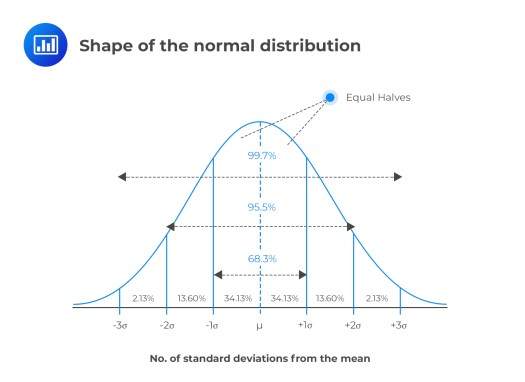
The shape of a normal population distribution takes the form of a Gaussian curve with the median value at the center and symmetrical fall-off to both sides. One’s position within that distribution can be described by Z-score, which is simply the number of standard deviations we might be below or above the norm. Major league baseball players represent those men who are at Z>5, five standard deviations above the norm, a community of stunning outliers.


Baseball is maybe more objective than writing, but still, as writers, we’re working to enter a community of stunning outliers. It’s estimated that about 50,000 novels are commercially published in the US each year. Literary agent Miriam Altschuler claims that 70% of those sell 2,000 copies or fewer, which means you’ll have never heard of them (and she’ll be broke if she tries to represent them). So all of us writers are applying to enter a tiny community, most of whose seats are already held by tenure. You’re not going to displace Margaret Atwood or Stephen King on any publisher’s roster. (I hope that’s not news to you…)

When we’re sitting in the stands, reading some shabby novel, we say things like, “I could do that.” But really… could we? How would we know? Who would tell us our Z-score?

Let’s think of it as a series of filters.

  • We start with the 200 million American adults, and knock it down to the ten percent who read the most fiction. That’s twenty million.
  • Now let’s take the ten percent of that group who imagine that we also could write professional-quality fiction. That’s two million.
  • Now let’s take the ten percent of THAT group who actually have the time and the commitment to produce a full-length manuscript. That’s two hundred thousand.
  • Ten percent of that is 20,000, which is way more than the number of available publishable slots after you subtract all the Atwoods and Kings and Grishams and Oateses. Probably another ten percent reduction to two thousand is closer to it for all of us wannabe “debut authors.”

The Z-score for a new novelist is almost as substantial as for a major league baseball player. And yet, we write.

More tomorrow.

Obscured

And that’s all you need to know.

I re-read one of my novels over the past couple of days. (Writers do that… it’s a form of magical thinking that the characters must not be dead yet… one of the stages of grief.) And that novel—a really good one—is one of my… novels for grown-ups, let’s say. Since we have far more cultural horrors over sexuality than we do over, say, gorefest splatter films, anyone who writes grown-up books will come in for a bit more attention. So I’ve long thought about pseudonyms for some of my work.

It’s a tough category. You could pick a name from a book or magazine. Actually, probably two names, a given and a family from different donors, so as not to unjustly tar someone else’s reputation. So, just looking at this week’s New Yorker, I could be Luke Wickenden, or Akash Jarvis, or Adam Villavicencio, and no one would be the wiser. But I’d have to be careful about unwarranted gender or ethnic assumptions, to not advertise myself as an identity other than my own.

So an easier path might be initials, maybe paired with a compass direction. Pulled at random from an online generator, I could be F. J. South, or E. M. West. Or something vaguely associated with my real name, like Richard Hoover (Herbert Hoover crossed with Richard Childress, the stock-car racing owner).

But just yesterday, I was thinking about the Car Talk method of fake names, which is the creation of bad puns. And I think that’s the way to go, a name that looks reasonable on a book cover but gives itself away when Terry Gross says it out loud for the interview. There are some that are overused kids’ jokes, like Sue deNim or Nonny Mouse. But I think I’ve got it. The short, casual name would be Yuda Noh. The longer, more formal name would be Yuda Nita Noh.

Look for it on your bookstore shelves soon.

The Larger Lesson

It’s hard to make predictions, especially when they’re about the future. —Yogi Berra

I was reading the daily update from the New York Times this morning, and one of the sidebar articles linked at the bottom was about the boom in online sports gambling on lesser-known sports. It’s one of those chipper “how about that!” pieces that fill space in every paper, things that can be run today or bumped to tomorrow if the real news gets busy. But rather than being cheerful, it kind of got me down. And then it got me way down.

So here’s the premise. The Russian Liga Pro table tennis league streams matches sixteen or more hours a day. It doesn’t live up to its name; these players are hobbyists, not Olympic or professional caliber athletes. Most of them look to be about as good as I was when I was in college, which is to say not very good at all, even though committed, and way better than most people grabbed at random off the sidewalk. But with a match every half hour, Liga Pro offers constant action to bettors all over the globe. “Points in the Liga Pro move quickly, and many table tennis gamblers… focus entirely on fast-action midgame bets, wagering on which player will win the next point. Matches are brief, too, with winners often decided in less time than an N.F.L. halftime show.” 

I’ve never had to face a gambling addiction, but I’ve known some folks for whom it’s a huge problem. And that was my first shift downward from the pleasant surface of this story. Listen to these descriptions…

For gamblers, it is a quick rush, the equivalent of a scratch-off lottery ticket… Anything you can do to get the rush you get from winning or losing a bet more quickly, people tend to do that, which is why slot machines are so addictive… shrewd wagerers always believe they can find an edge… Arriving home from work around midnight, he takes a shower, eases into bed and begins looking for enticing table tennis matches to bet on. Some days, he said, his table tennis winnings exceed his earnings at his job.

This is nothing more than an intravenous line for gambling addicts. You’d never imagine that a low-level Russian table tennis league could damage the lives of people from Chesapeake, Virginia, to Sydney, Australia. But there you go. There’s always somebody willing to feed the beast.


But as bad as that is, my elevator had another couple of floors to go down.

Isn’t much of what we think of as capitalism just a broadly delusional gambling addiction? We often look at people like Bezos and Gates and Bloomberg and think, “what is an extra billion dollars going to get for you? You literally don’t have enough lifetime to spend anywhere near what you already have.” And the easy pop-psych answers are a) that they’re competitive and the money is a way to keep score, and/or b) that money is a proxy for power, and they love having power. Yeah, maybe. But what if it isn’t? What if it’s just a way to always be in the action? What if it’s always having a horse on the track, a seat at the table, a handful of this week’s Powerball slips? What if it’s nothing more than the adrenaline addiction of instantaneous outcomes?

“Shrewd wagerers always believe they can find an edge.” And we’d all like to think of ourselves as shrewd, when we invest in a company, choose a location for our restaurant, open our pool room. We read the cues, do the analysis, strike boldly. But according to the Small Business Administration, half of all small businesses fail within the first five years. And of the half that remain, a lot of them are bumping along while their owner works her day job to keep the family afloat, always hoping for the turn card to fill in the hand.

There’s a lot of blather about “rewarding risk takers.” Well, why? Why should risk be rewarded? What is it that’s noble about gambling that it should form the entire basis for our social organization? (And when a company or person gets to a certain level, they know how to displace the risk onto you and I, in a process commonly known as privatizing the gains and socializing the losses. Oh, time to lay off three thousand workers this afternoon? Sorry. Oh, that waste stream we’ve put into the river for forty years? Sorry. Winners gonna win, too bad about you.)

And it’s only certain risks that get rewarded, anyway. I mean, write a really elegant, adventuresome novel. Write a really marvelous, inventive concerto. Is THAT risk going to be rewarded? Not very likely, or very much. So we truncate our risktaking down to the modes that have a gambling market associated with them, even as we know that the house always wins. We surrender innumerable opportunities to live our lives in humane and delightful ways because we’re always at the service of people with gambling addictions that they call strategic plans.

We all rely on certain imbedded and rarely examined assumptions about human nature. Competition is thought to be the only appropriate governing mode of economics, that we will win or die. That comes from a notion that people can only be motivated by acquisition or fear, that we’re fundamentally lazy and need to be scared enough to get off the couch. But there are other ways of thinking about what humans are. We can become great not merely so that we don’t lose, but because we’ve been inspired by beauty and elegance. We can surround ourselves by aspiration and become greater through the attempt to enact some of that beauty ourselves. We don’t always need the threat of financial ruin or displacement to spur us forward. Ask any artist.

Adrenaline and competition and gambling are easy hits, huffing the gas of exhilaration. But they’re not the basis for a steady, rewarding personal or social life. We know the costs to our cognitive capabilities of being online all day every day. But we don’t think about the costs to our lives and our families and our communities from constantly seeking out that next big win, turning that next card, picking that next stock—or from working for those people.

Like sports gamblers, we invent stupider and stupider bets just to give us that hit more often. Every time a stock is sold, there’s one person betting that it’ll rise, and another person betting that it’s done rising. One of them is right, but they both play, over and over and over. There’s a “Dow Jones Futures” market (formally known as “extended-hours trading“) in which we can bet on what the stock market will do in its next session. Doesn’t that sound like betting on who’ll win the next point in a ping pong game? Doesn’t that sound like the kind of desperate need for action that an addict would take? We have no control over it, the outcome doesn’t respond to our actions or rely on our skills. We’re just flipping the coin over and over, imagining ourselves to have some system, some inside info, some method that makes us something other than another guy at the liquor store buying scratchers.

The next time you hear some legislator soapbox about “risk takers should be rewarded,” ask them to buy you a few bingo cards at Saturday’s parish game. It’d be a cheaper investment than trillion-dollar tax cuts to distribute investors’ gambling risks onto the rest of us.

Really, all we have is a life, to spend with the people we love, doing the things that lift us from animal necessity. Let go of the scorecard and do the things that matter.

The Power of Omnivorous Observation

The Genesee Billiards Club, which a) doesn’t exist and b) has seen better days.

I waste a lot of time. I read a lot of magazine articles, I listen to a lot of music, I watch a lot of YouTube videos. A time-and-motion analysis of my normal days would horrify you and embarrass me, so let’s not.

And yet, let me put forward a countering idea. None of that is wasted, because it all becomes seeds that can emerge without prediction in my writing. (Or becomes the compost within which the seeds grow: your metaphor may vary.)

Here, let me give you an example. I was writing about a young American on his way to becoming an elite table tennis player, about the training and the carefully planned nutrition and the constant nagging about technique and strategy that come with any elite athletic aspiration. And I was early in the story, not quite sure what I wanted to do, and started browsing YouTube videos of the Chinese world champion Xu Xin, an elite athlete since he was ten. And I came across this one. On its face, it’s inconsequential: a “day in the life” promo by his primary sponsor, Stiga. And I didn’t learn anything new from it, although that cool chop-and-catch trick he does with his fingernails at 1:38 does show up in the book.

But you cannot watch that video and not understand something new about loneliness, and how that kind of loneliness is an inherent part of elite activity. How one by necessity isolates from the world, from almost everyone else, in order to narrow down onto this single, mighty thing. My book became a book about loneliness a little bit, and it wouldn’t have without that small moment of woolgathering.

In my very first novel, I needed to know what kind of landscape Robert’s pool room would have been in, so I spent an hour on Google Maps, finally locating the building on Genesee Avenue in Saginaw, Michigan (near the corner of Federal Ave, if you want to look—it’s the three-story brick building at the start of this essay, with the phone number painted on the boarded-up facade). The book is set in 1956 and the street photo is from July 2014, but we’ve all seen enough of these small downtowns to know what it would have been like in a more vigorous era, when Saginaw was double its current population and GM workers were protected by their unions. And then to walk through the residential neighborhoods just off either side of Genesee, and imagining something about who would have lived in those homes and what that meant for Robert and Charles’ customer base. The Genesee Billiards Club owes its detail in part to pool rooms I’ve been in, in part to the Eagles’ Club where my dad spent most evenings, but in greater part to this seemingly casual browsing that leaves its residue behind.


This subconscious process comes up for me today because, I kid you not, I heard one of my fictional characters on the radio today. SRSLY!!!

Today’s episode of the NPR show 1A was about America’s broad variety of “congregate care” therapy camps for teenagers, and the innumerable abuses they’ve perpetrated against their young captives. The guests were Kenneth Rosen, a journalist with a new book about the “troubled-teen” industry; Sara Gelser, an Oregon state legislator who’s trying to write oversight legislation in her state; and Megan Stokes, the executive director of the trade group, the National Association of Therapeutic Schools and Programs. The program’s host asked a seemingly simple question: do these programs work? Rosen, the journalist, said there’s no research-based evidence that they do. Gelser, the state senator, said there’s no research-based evidence that they do. But Ms. Stokes, the E.D. of the trade group, gave a long non-answer, about how they’ve partnered with the University of New Hampshire, and exactly which research instruments they use for kids and for families and the fact that those instruments have received an A rating from some other trade group, and how each program hires a third party to conduct the questionnaires, and how the data is anonymized before it goes back to New Hampshire for analysis…

And it turns out that I’d written exactly this two years ago, when Kurt and Megan brought their adopted daughter Sarasa to family court because some educational assessment administrator had decided that she was in need of special education. The family’s psychologist had already testified that the school district’s diagnostic category was no longer in common use, and that she believed that Sarasa was doing well. Let’s pick it up there, with the judge’s follow-on question to the school district administrator:

“Ms. Barr, your judgment is that Sarasa is not doing as well as you might hope. What did you see that leads you to that belief?” 

She straightened herself, and Kurt was surprised to see how tall she was when she unfurled. She never raised her eyes from her notes. “Your honor, the Northern Radford County Unified Union School District adheres to the ICD-10, which is acknowledged as best practice among educational professionals. The PDD-NOS diagnostic category allows for an educator to capture behavioral disorders that don’t fall easily within the other autism spectrum disorder groups. Common indicators of PDD-NOS might include…”

“If I might interrupt,” the judge said, “allow me to clarify my question. My question is about Sarasa, and the specifics of your interaction with her. What did she do or say that you found troubling?”

Ms. Barr regrouped, tried to start over without the benefit of her prepared remarks.

from Trailing Spouse, 2019

We’ve all been part of this conversation, with a self-important person clearly painted into a corner and desperately trying to talk their way out without having anything meaningful to say. And those conversations stick in your head somewhere, accessible without prompting when the right moment draws them forward. Ms. Barr in the novel… Ms. Stokes on the radio… Mr. Roy in ninth grade… our current local Vermont state representative… people who have nothing whatsoever to justify their positions except the vast self-assurance that they’re right. People who drone on, delivering no information, sloshing out a soothing coat of paint that they believe conceals every flaw in their thinking.

We all have novels within us, even as every character within them is real. Each of us have built a storehouse of life experiences, from grade school and early family through web browsing and random NPR shows on the way back from the hardware store. All of those characters, all of those moments, are waiting for us to open that cabinet and put them to use.

Admirable, Wonderful, Remarkable and Strange

Nope, none of those. (from BabyNames.com, 2020)

As regular readers know, Nora’s been involved for several years in the pursuit of a local family’s history, as she attempts to write the fictional implications of early 19th Century Quaker life as played out by the Morison family of Danby, Vermont. And anybody who’s ever done historical research—whether genealogical, cartographic, legal or material—will know how many rabbit holes open beneath your feet, each threatening to swallow you for days at a time.

One important genealogical resource is findagrave.com, from which users can locate photographs of cemetery memorials and a little bit of historical info (leading to many, many offers to sell access to lots more info, hence the .com at the end of the URL). So Nora’s browsing findagrave this morning, looking at the roster of people buried at one of the numerous and tiny cemeteries of Danby. In modern times, we think of cemeteries as giant civic or commercial spaces in which we invest in a plot among tens of thousands of anonymous neighbors, but cemeteries used to be small grounds adjacent to one church or one small-town memorial for the use of that membership. Danby, which reached its peak population of 1,730 in 1810, has at least six of these historical cemeteries, each with a few dozen people or families represented.

Anyway, Nora finds one grave in a tiny Danby cemetery with four infant quadruplets, all dead in their early infancy in 1795 and buried together under one marker. And their names?

Admirable. Wonderful. Remarkable. Strange.

There used to be loads of people named after desirable attitudes; the category is called virtue names. Names like Constance and Hope remain with us as contemporary names, but they’re mostly decontextualized from their literal meanings. But there used to be lots of people, girls most often, with names that proposed the child’s ideal disposition and contribution to the community.

Some, as I say, are familiar. Charity and Chastity. Faith and Grace. But others are mostly lost to a different era. Opportunity. Agreeable. Harmony. Mercy. Prudence. Temperance. Honor. Justice. Verity. Nora’s actually found a boy named Hate-Evil in her searches. My mother’s Averill family way in the wayback had a girl named That Averill, so my great-great-grandma was the original That Girl!

So I say let’s bring That back, so to speak. Let’s have a whole generation of Admirable Parker, and Mercy Bushwick, and Verity Chen. Let’s meet Remarkable Nguyen, Agreeable Robinson, and Temperance Chaudhury. Mighty Peterson and Reliability Santos.

We’ve already got a Strange Childress, though that’s not what it says on my driver’s license.

There’d be an enormous temptation to mess with it, of course: the Stoner family naming their son Whatever Dude Stoner, the Glass family naming a child Break Emergency Glass. And there’d be some folks who chose anti-virtue names, too: Idler, or Wastrel. But on the whole, it’d be nice to help kids be aspirational, right from their birth certificates onward.

Unreasonable

Not humanly possible, even if there ARE six of you!

The story goes that golfer Ben Hogan, after his first round with a young Jack Nicklaus, was asked his opinion about Nicklaus’ prospects. Hogan was said to have replied, “This young man plays a game with which I am not familiar.”

We are all occasionally blessed to encounter people who are unreasonable. Who are so fully committed to their art that they do things that the rest of us not only couldn’t do, but couldn’t have imagined before we saw it.

Or, in this case, heard it.

I am several years late to this party, but in case you don’t know, I’d like to introduce you to the music of Jacob Collier. Jacob is a self-professed “chord geek,” always searching for new ways to combine the relative handful of notes available to us. He’s that rare figure who uses music theory to create rather than merely to understand. And what he creates is unexpected at every instant, even as it always feels inevitable.

Collier, growing up in a professional music home, was encouraged to a path of what I can only call rigorous play. Before he’d finished high school, that path was emerging onto the field of overdubbed recording, in which he sang with himself in densely textured arrangements of well-known songs: a few by Stevie Wonder, some Lionel Richie, even the theme song of The Flintstones, all shattered and rebuilt to be simultaneously recognizable and not.

But then, this. (Headphones or good speakers, please. You can thank me in nine minutes.)

Henry Mancini wrote the song “Moon River” for the 1961 movie “Breakfast at Tiffany’s,” and it’s since been appropriated by tens of thousands of crooners from Andy Williams to Barbra Streisand to Frank Ocean. It’s a pretty song. But in Collier’s arrangement, it becomes both joyous and profound, and about three times longer than before. It becomes impossible. It has reached perfection.


Why is it that we cry when we encounter beauty? We can learn what Collier has done to build these chords, but it’s the chords themselves that break us to pieces. We can know that Spiro Kostof was trained in theater before his doctorate in architectural history, but it was the fact of his writing and his lectures that brought thousands of people to understand the built world in new ways.

When I see something like the dancer Yoann Bougeois’ interpretation of Claire de Lune, or pretty much anything that Simone Biles does, or the creative cycling of Danny Macaskill, I’m left wishing that every child everywhere had access to someone who is unreasonable. Someone who can show us up close what real greatness is, what it’s for, what it costs. Most of us live most of the time in the big bulge in the middle of the bell curve; we deserve to experience what’s out there on the far right tail.

And for ourselves and our own responsibilities, let’s close with a quote from Jacob Collier: Don’t wait for things to be possible before doing them.

Identities Chosen, Identities Assigned

Placing like with like (photo from PBS)

I borrowed yesterday’s post from two thinkers I admire, Kristen Renn and Masha Gessen, and their hopes that we could imagine our identities, and those of others, in ways that are more fluid and less fixed. That we are all invested with innumerable possibilities, some of which will be more fully expressed than others.

But that’s slow work, convincing people one at a time to imagine things like gender and sexuality and race and religious beliefs and politics to be blurry and mobile. Most of us, most of the time, still see and react quickly. We are all the products of a lifetime of living within a culture that has dyed us in particular ways. (Even when we work hard at being aware of ourselves, we mess up. I realized about an hour after I’d posted yesterday’s thoughts that I’d used an incorrect pronoun to describe one of the people I mentioned. I caught it myself and fixed it as soon as I saw it, but we’re all the products of long training and habit.)

We might all be free to imagine and to employ our own identity in a more deliberate way, but that individual work of liberty takes place within a culture that’s instantly ready to hold us to more rigid categories. I imagine us all with a clipboard, walking down the sidewalk and ticking off categories of race and gender and age, spending an extra second or two of study when we can’t easily “tell.”

And those determinations would be harmless enough, I suppose, except that the “observable designations” we apply also carry a whole galaxy of emotional tones that launch our encounters. The whole notion of racial profiling rests on the broad array of social and moral characteristics that we believe are associated with the visual characteristics of skin tone or facial structure or language use or naming conventions or clothing. We judge almost immediately who is an ally and who is a risk, and then act upon those unwarranted judgments.

We see the physical harassment of Asian Americans in response to COVID.

We see BLM participants labeled “dangerous,” and white supremacist rioters called “patriots.”

We see store owners and managers making immediate judgments about who’s a “customer” and who’s a “potential shoplifter.”

I do it, too. We all do.

I see a lifted pickup truck and I worry about its driver’s capacity for anger management.

I see a police officer and I fear that if we had an encounter, I wouldn’t be able to trust the honesty of his recounting of the event.

I see a political yard sign and I can create an entire opera about the family life behind the doors.

Our capacity for rapid and uninformed judgment is immense, and it carries decades of cultural messaging that we don’t even remember learning. We are all native storytellers, even when we’re not all that good at it.


The seven deadly sins are often paired with what are sometimes called the seven recuperative virtues. Greed is countered by charity; gluttony by temperance; sloth by diligence; and so on. But I think these may be mistaken, because they continue to focus on the individual. I’m lazy: I should be more motivated. I’m angry: I should be more patient. And as nice as it is to imagine ourselves capable of that level of moral self-correction, or insist upon it from others, I don’t think it’s likely to work very often. I think instead that the appropriate counter to each of those cardinal sins is to stop paying attention to ourselves and to turn our attention outward. To become attentive, to become curious, to become eager to see what every encounter might offer.

To imagine that we don’t already know the story.

To believe of others what we hope is true of ourselves: that we’re not done yet, that there’s still growth and opportunity and magic ahead.

To return to Masha Gessen, what if we saw ourselves as always changing, always uncertain, but always capable of making choices? To which I will add, what if we saw everyone else that way as well?