A Fiction of Third Place

I’ll be there for you…
(Image by Sithamshu Manoj, via Unsplash)

The last couple of days, we’ve thought about what it means to be boring. I think that’s important, because after all, none of us want to be boring, and sometimes a negative example is as important as the positive. (Though, after having gone to thirty years of academic and professional conferences where speaker after speaker doesn’t learn from having been bored themselves all those years before, maybe we DO need to be more overt.)

I’ve put forth the idea that one of the core ways of being boring is to speak without checking in with the listener, just pouring out stuff without concern to their interest or engagement. We can also be boring in the opposite manner, by being bland and taciturn and giving our listeners nothing to grab hold of. We see both of those flaws in writers. “It was a nice day” is boring. “It was 83ยฐ Fahrenheit at 10:34 am, roughly 74% relative humidity with southwesterly winds at 8 mph, cloud cover increasing but broken…” is boring, too, unless you’re a pilot.

The opposite of being bored is being engaged. I’m going to go back to Gurevitch’s characterization from yesterday of the components of dialogue, which requires speaking, listening, and responding. And that’s a tough requirement for the writer, because we have no idea who’s listening, can’t actively check in on their engagement and calibrate our ideas to their interest. It’s an inherently distant relationship. So what does it mean for a writer to be engaging?

I have a couple of practices that I think help, having to do with two different but concurrent dialogues. The first, and the most important, is the dialogue I’m engaged in with my characters. I’m constantly, actively listening to them, considering the ways that they’ll respond to the circumstances I’ve launched. Considering who else might come along and change things up, because of their own interests and their own habits and patterns. Considering how the two of them (and later, the three of them, or four, or six) speak and listen to and respond to one another. Whenever I want my characters to do something, I’m going to write poorly, because I’m short-circuiting their interests and their agency. It’s no longer a dialogue, it’s a sales pitch, in which I’m moving them toward my goals.

So as a reader, you’re overhearing a meaningful dialogue among (mostly) intelligent people. There’s always something fun about eavesdropping, right? But then again, a little bit of that can go a long way. Even the most interesting conversation wouldn’t hold our attention for hours if we weren’t included somehow. And that’s the role of the second of the concurrent dialogue, which is hosted by the story’s narrator.

I use that word “hosted” deliberately here, because I think that the narrator plays the same role as a good bartender or waiter or party hostโ€”to build connections. Specifically, narration in a story is a constant attentiveness to the distance between what the characters know and what the readers probably know, gradually introducing readers into a greater depth of understanding of the community they’ve entered.

I came across Ray Oldenberg’s The Great Good Place shortly after it was published in 1989, and although he never intended this purpose, the book has shaped me as a writer. His argument (he’s a sociologist by training) is that community is built by voluntary gathering, and that the first two places of our lives, home and work, have to be augmented by third places of collective engagement. He uses for his subtitle examples such as “Cafes, Coffee Shops, Community Centers, General Stores, Bars, Hangouts.” A book is a similar kind of a hangoutโ€”it’s a place independent of our own into which we wander, and ideally want to return to. But whether it’s a bar or a book, when we first stumble across the threshold, we know nothing. It’s the role of the narrator to welcome a reader into the world of the story, to help us make sense of the strangeness we’ve encountered and gradually to help it feel native.

Some hosts do that directly: “Come over here! There’s someone I want you to meet!” Some hosts do that indirectly, the bartender who sees a new patron listening to a bickering conversation and says (to the new client, but for all to hear) “If these guys couldn’t complain, they’d have nothin’ to talk about at all.” By so doing, he further cements his relationship of affectionate banter with the regulars, and becomes the translator and the first friend of the newcomer. The tone that our narrator uses marks the personality of the place, or what writers call the voice of the work.

So the narration of the book becomes the reader’s first friend, the guide who’ll make the rest of the tale both intelligible and welcoming. And the narrator also checks in on all the relationships between the regulars, to make sure they’re engaged as well.

Come on in. We’ll have a great time.

Thrilling, Mile-A-Minute Tales of Adventure!!!

No, really, I AM listening. Please go on…
(Image by Ekoate Nwaforlor, via Unsplash)
  • Axiom 1: Ordinary people make for boring stories.
  • Axiom 2: Fortunately, there are no ordinary people.

As I said yesterday, my most recent book is about a plow driver in a rural community of about 800 people. And that’s not a pitch that’s going to immediately lend itself to a Hollywood bidding war. How on earth can anybody go on for 350 pages about a damn truck driver?

Today, we’re going to talk about boring stories, and why sometimes they might not be. But first, let’s investigate this idea of something being boring. Entire television franchises have been built around people who buy storage locker contents at auction. Nascar and IndyCar races are nothing but following that old guy whose left-turn signal has been flashing for three hours. As George Will once said, football is mostly committee meetings. The world is filled with boring things that somehow have drawn broad and enthusiastic attention.

I think that grammar is at fault. Being boring is not an appropriate adjective to describe a thing. Being bored or boring is an appropriate adjective to describe a person’s state. Things are not inherently boring; they have just encountered a recipient for whom there is no appropriately shaped port. Boredom is a state of being disconnected from one’s surroundings. Not pleased by them nor menaced by them nor curious about them, but utterly disconnected. Think of how Charlie Brown’s teacher is portrayed in the animated shows… an offstage muted trumpet playing nonsense tones. What ninth-grader in 1970’s Michigan is going to be attentive to a lesson on the Boxer Rebellion in China, when presented by a teacher on the glide path to retirement? We were a whole room of disconnected cables there…

So indeed, things can be boring to one person and interesting to another simply because of the way we’re shaped. But I don’t want to give way to radical relativism, the idea that one thing’s as good as the next and we can just blame the audience when something doesn’t get their interest. That doesn’t help us strive for quality, it’s just the endless drivel of 480 cable channels.


  • Axiom 3: Boring people tell boring stories.

What makes a person boring? A boring person is going to tell you whatever they want to tell you, with no regard at all for whether the listener is engaged. A boring person is only a transmitter, has no interest at all in the status of the receiver. We all know folks who go on endlessly about their grievances or their enthusiasms. I mean, I can tell you the names, jersey numbers, and field positions of every member of the starting lineup for the 1968 Detroit Tigers. Really, I can do that. (Nora calls it brain lint.)

But I won’t. Because I have to assume that it won’t be nearly as interesting to you as it was to me, the ten-year-old Michigander who listened to Ernie Harwell on the radio for every game when the Tigers won the 1968 World Series. There are a few dozen other people in that situation, and if I ever ran into one, we’d have a shared connection. We wouldn’t be bored, because we’d have the appropriate intellectual and emotional cable set.

So I can be aggressively boring by delivering information that I KNOW is of no interest and no value to its listeners. Blah blah blah blah blah.

The philosopher Z.D. Gurevitch says that the dialogue has three components: speaking, listening, and responding. There’s no dialogue if the writer doesn’t write. There’s no dialogue of the reader isn’t reading. And there’s no dialogue if the reader doesn’t think a little differently after having read.

So that’s my effort to not be a boring person. Yes, I initiate the dialogue by writing something. But I hope that I invite dialogue by writing something that might actually help a reader color their thinking just a shade or two.

Let’s talk about that tomorrow.

Umm… hi?

I’m sorry I’ve been away..
(Image by Dฦฐฦกng Trรญ, via Unsplash)

It’s been six months since I’ve been here. And it’s not you, it’s me.

Gosh, what have I been up to? Well, I’ve rejoined our town’s Selectboard, this time as its chair. So that means I’ve written two grant proposals, fielded endless complaints about spring road conditions, have begun coordinating the physical move into our new town office this fall, instituted a couple of new task forces, and started to collect job descriptions from other communities in preparation for rebuilding our highway crew after a soon-to-come retirement.

I’ve led my nearly-annual short fiction coaching course in February through April, in which thirteen local writers went from blank page to admirable short story in the space of eight weeks. Along with the coaching, I wrote a story of my own, designed the book’s cover and page layout, had it all printed, and organized a celebratory event with excerpts from each story performed by members of our local Theater in the Woods company.

And, as of about nine o’clock last night, I safely landed a new novel.


My new copy of Poets & Writers magazine arrived in the mail yesterday. It has sections on writer profiles, new and notable books, industry gossip, issues of craft, and advice on the business. One of the business articles was on writing pitch paragraphs, which of course open the door to someone reading the full 94,275 words later on. So let’s try it with the new one.

For Angie Torvala, the only woman road foreman in Michigan’s Upper Peninsula, some things never change. Snow. Broken equipment. Road complaints. But in the midst of that stability, some things do change. Her daughter Esther about to leave for college, a world that Angie never knew. Her summer boyfriend Grantโ€”maybe around no longer, maybe becoming something more. And the innumerable, quiet tragedies that an isolated winter can bring.

Another couple of weeks of language-level tuning, some design work, and off to the printer it’ll go.

This was a rough one. I’ve had books that have just fallen like rain, books that I was barely able to keep up with. My novel Leopard, roughly the same length as Foreman, took me only 90 days. This one took me 204. I’ve been distractible, easily jarred off track.

And yet, here it is.


One of the other elements of the pitch article had to do with “comp titles.” As in real estate, the book business often relies on comparable properties to set value and market interest. That can lead to cliches like “The Sopranos if it was mixed with Bridget Jones’ Diary,” or “Dances with Wolves, but set in contemporary New Orleans.” The work of devising an appropriate set of comparables, like the work of building any category, depends entirely on the quality of the connections we make.

The most immediate, and most unlikely, comparable I’ve read in the past year is Sayaka Murata’s novel Convenience Store Woman (2016, English translation 2018). Like Foreman, this book is about an everyday, unseen life, and the marvels that it contains. A book about a way of life and a way of thinking that most of us never consider.

But maybe the most important reason why it’s comparable is that it ends almost exactly where it starts. This is entirely unlike most Western fiction, in which the crisis leads to an entirely different state of being at the end of the story. Fiction teacher Matthew Salesses tells us something about that in his analysis of Asian stories:

The plot structure follows kishotenketsu, which does not require conflict and is a four-act structure rather than a three-act (or five-act) structure. Instead of beginning, middle, and ending (a beginning in which conflict is introduced, a middle in which conflict is faced, an ending in which conflict is resolved), ki is introduction, sho is development, ten is twist, and ketsu is reconciliation. Conflict is not necessary.

Matthew Salesses, Craft in the Real World (2022), pp. 107-8

The idea of a world established, disturbed, and ultimately restored is a quieter form of storytelling than our superhero era has taught us to appreciate. It’s more like sitting on a dock watching a glassy pond, tossing a stone in to see the spreading ripples, and then appreciating the smooth water once again.

How is that not boring? We’ll talk about that tomorrow.

Unintended Irony

Yeah, yours and ten thousand others…
(Image by Alexander Grey, via Unsplash)

Some while ago, I wrote a funny little piece about the uniquely inert literary genre of the rejection letter. I’ll copy it here.


Thank you so much for querying our agency and for giving me the opportunity to review your manuscript. After reading your letter I’m afraid I just wasn’t hooked enough to want to ask for more. But this is a highly subjective business and another agent might feel differently.

โ€ขโ€ขโ€ข

As an agent with an established list, I’m very selective about requesting more material at this time. For that reason, Iโ€™ll need to pass on your manuscript. I wish you all the best of luck with your future queries.

โ€ขโ€ขโ€ข

Publishing is a long game, keep writing and persevering. I wish you nothing but the greatest success. Best of luck and success in finding the perfect advocate for your work.

โ€ขโ€ขโ€ข

Thank you so much for your submission. I received 68 of them before lunch today, and literally have to clear them with a wheelbarrow before I can get back to work. Ugh! Best of luck!

โ€ขโ€ขโ€ข

Our agency is migrating to a new submittals portal, and I have to clear the cache in the old one before the changeover can be completed. So thank you for your submission of February 2014. No. 

โ€ขโ€ขโ€ข

Donโ€™t you read my blog? I HATE writers! Maybe someone wants your needy, misshapen beast, but it isnโ€™t me. I wish you success as you move forward with blah blah blah whatever. 

โ€ขโ€ขโ€ข

Iโ€™m sure that we did meet at Bread Loaf last summer, but I only went in order to try to poach Lauren (Gravy Train) Groff from her current agent. The rest of you were pretty indistinguishable, and she wouldnโ€™t budge. Wasted trip.

โ€ขโ€ขโ€ข

Regardless of what my bio says on our agency website, Iโ€™m not currently accepting new clients. Yeah, thatโ€™s itโ€ฆ

โ€ขโ€ขโ€ข

Although your proposed novel is indeed very close to the request Iโ€™d posted on Manuscript WishList (โ€œHow about a work of literary fiction set at an elephant rescue park in Thailand, through the eyes of the people trying change the treatment of animals?โ€), your manuscript isnโ€™t the way Iโ€™d do it. #MSWL #notquitewhatImeant

โ€ขโ€ขโ€ข

I have to go in for a dental hygiene appointment this afternoon, and Iโ€™m kind of freaking about it, so Iโ€™m afraid that I couldnโ€™t give your manuscript the attention it no doubt deserves.

โ€ขโ€ขโ€ข

Swipe left.

โ€ขโ€ขโ€ข

Do you seriously not understand how hard my job is? And you bring me this?

โ€ขโ€ขโ€ข

I have reviewed your first pages, and Iโ€™m very eager to read the entirety of your manuscriptโ€ฆ psych!! 

โ€ขโ€ขโ€ข

Although your proposal is indeed interesting, a quick Google Image search has shown that you are not nearly photogenic enough to be a contemporary author. Your work seems better suited to a prior era, one that existed before author photos and Instagram. Another agent may, of course, feel differently, but itโ€™s doubtful. 

โ€ขโ€ขโ€ข

As Iโ€™m sure you know, roughly three-quarters of literary fiction sells two thousand or fewer copies. And fifteen percent of nothing remains, alas, nothing. My daughterโ€™s riding lessons lead me to require something with greater market potential. I would, however, encourage you to purchase at full list price one of the numerous books published by the authors that I do represent.

โ€ขโ€ขโ€ข

Itโ€™s not you, itโ€™s me.

โ€ขโ€ขโ€ข

Iโ€™ve decided to become monogamous, and to focus my attentions on a single client. Karl-Ove and I have been very happy together.


And in an unintended irony, I received the following from The New Yorker today in response to that piece:

Dear Submitter, Weโ€™re sorry to say that your piece wasnโ€™t right for us. Thank you for allowing us to consider your work.

These are Q-Tip letters, the single idea NO wrapped in a little ball of protective cotton. I swear that agents and editors and HR offices all go to the same weekend workshop to learn how to say nothing whatsoever. (Probably get continuing education credits, too.)

Don’t pretend. Don’t be passive-aggressive. Just say no.

Invisible Brilliance

I’m gonna make it to heaven, light up the sky like a flame
<fame>
I’m gonna live forever, baby remember my name

I was playing pool with friends on Sunday evening, and I had music on, as I always do in the pool room. About fifteen years ago, I bought a Sony 400-disc CD jukebox, which operates on the same principles as an old record jukebox: a rotating carousel of inventory that spins to the appropriate slot and lifts the correct disc out into the player. I thumbed through my printed list and chose disc 202, the flamenco guitarist Paco deLucia performing Juan Rodrigo’s 1939 Concierto de Aranjuez. Kind of normal fare for a pool room, the thing that comes between Lynyrd Skynyrd and AC/DC, right?

Anyway, it was a terrific record, one that I haven’t heard enough times, but as with all good things, it came to its end. The jukebox put 202 back into the rack and automatically advanced to 203.

Let me tell you a little bit about disc 203. The record is called “Broken Barricade,” recorded in 1993. I bought the CD for 99 cents in 1998 at the Grocery Outlet in Eureka California, over by the expired corn flakes and the pallets of ill-fated Marcus Allen sports drink. I knew nothing about the band or the music, but for a dollar, I was intrigued.

It’s one of the very best records I have.

The band, Paradox, was a project of the guitarist Yoichi Tanabe, who gathered three studio musiciansโ€”pianist Masado Matsuda, bassist Hiroki Takeda, and drummer Kozo Suganumaโ€”to play some of his jazz compositions. And is usually the case with session players, these guys are tight! The music is precise and sharp, the solos expansive, and the pieces themselves build expectations only to subvert them and head off in a new direction. Here’s one piece, Diagram 776. It isn’t to everyone’s taste, no music ever will be. But the level of talent in composition and performance is undeniable.

At the time this was recorded, all four of them were in their late 30s, which meant that they’d each had at least 25 years of music experience. This is the level of talent that can make you an international superstar, or land you in the cutout bin.


Disc #45, “Unfinished Business” by the Bill O’Connell Big Band, came from the cutout bin. Disc #62,”Mute” from Catchers, came from the cutout bin. 102โ€””Milliontown,” by Frost*. 120, “In with the Out Crowd, by Grant Geissman. 173, “Lightwave,” by Tycho Brae. 187, “Take the Z Train,” by the Microscopic Septet. 193, “Sex,” by The Necks. 204, “In Process,” by Parsek. 218, “Opaque,” from Pekka Pylkkanen’s Tube Factory. 221, “Colors of the Night,” by Peter Finger. 297, “Human Condition,” from Shai oN Shai. 300, “Trombonia,” from Slidewerke. 327, The Third Ending’s self-titled record. 342, “Downtown Uproar,” by the Widespread Depression Orchestra.

There is SO MUCH outstanding work in the world that will mostly go unseen, unheard, unread. Some of my very favorite writers came originally from the cutout or used binsโ€”Joe Coomer, Jennifer Tseng, Eugenia Kim. I have visual art from Rachel Mello, from David Munyak, from Kurt Meyer, from Aimee Lee, none of whom will ever be at the Whitney or MassMoCA but all of whom make elegant, noble work.

The musician Elvis Costello was once interviewed by NPR, and said that he was often asked by worried parents what to tell their kids who were interested in a career in music. “Make sure they’re interested in music, and not fame,” he said. “Fame can be disappointing, but music is very rarely disappointing.”

So this is my tribute to all who do brilliant, invisible work. You may not be this year’s chart-topper, but someone sees you. Someone’s life is made better by your work. And you may never know who that is.

Finding Community

Well, I keep tryin’…
(Image by Carl Heyerdahl, via Unsplash)

A friend wrote me a question that her sister raised: why is art so competitive? I mean, just make stuff, right? Do more. Anybody can make art, that’s an infinite resource. But money, and recognition, and awards, and visibility… those are finite. And thus we have to fight over them.

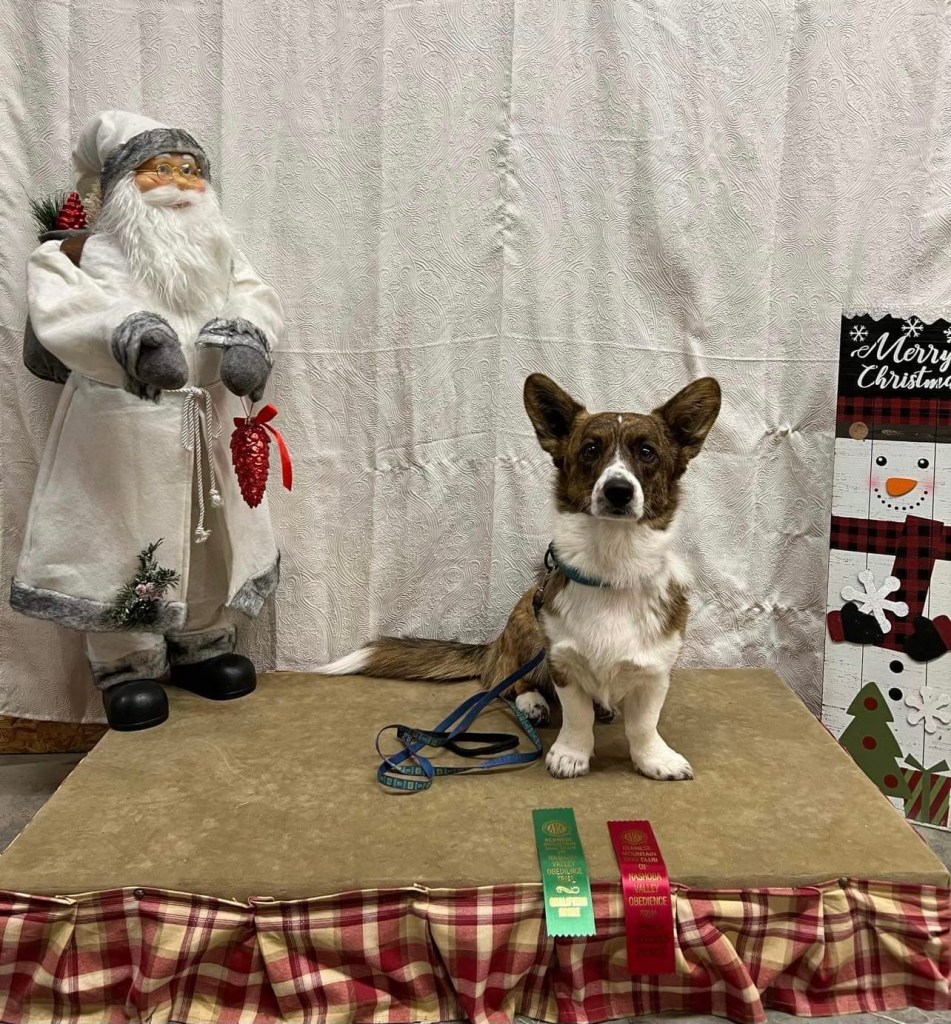
Another friend does dog behavior and tracking trials, and her dog has done pretty well in her first two years. So every couple of weekends, we’ll get a photo like this one:

And that’s another reason we have competitions. How would I ever know if I was any good if I couldn’t be shown to be better than someone else?

Of course, once we’ve entered the world of art, “better” is no longer quantifiable, but rather a matter of judgment. We hope that the judges are connoisseurs, with long experience at critical evaluation of the appropriate work, but even with that, judgments would rarely be uniform even within a panel, much less if we replaced those panelists with a whole other cohort, even less if we replaced the dog-show reviewers with fine-arts reviewers or restaurant reviewers or car reviewers.

We aspire to approval from those whose judgment we trust.


In my final undergraduate semester, I took a Journalism class called “The Critical Review” from the truly phenomenal David Littlejohn, a broadly-interested arts critic and fine, fine teacher (1985 UCBerkeley faculty of the year). He started the semester with a question to his (competitively selected) studentsโ€””what is criticism for?” We gave the first stereotypical answer, which is consumer advice: you’ll enjoy this movie-restaurant-car-whatever. He waited us out, and then said, “Then why should we read a review of Paul Simon playing the Oakland Coliseum for one night last week? Why do people read reviews of museum shows in New York that they’ll never go see?” Well, we stumbled all over that one for a while, before he let us in on his secret, which I’ll paraphrase for you: It doesn’t matter what you’re reviewing. People will read you for the same reason they read anybody about anythingโ€”because there’s a smart, engaging voice that they trust.

A good critic has broad experience with, and enthusiasm for, whatever art form they’re writing about. A good critic has developed some vocabulary and some criteria that they can communicate about their tastes, even better when they can demonstrate where their tastes lie within some broader discourse. A good critic can describe a particular phenomenon accurately and carefully and joyfully, and understand something about what traditions or practices it lives within.

So when my friend writes of her experience of having her work reviewed by a state arts council, made up of people she doesn’t know, who don’t know her work nor the tradition it lives within, who are asked to pass judgment on it in an accelerated moment because they’ve got dozens or hundreds more to get to that day… well, really, she has no need to care about what they think, because they haven’t exercised any of the duties of a good critic. But, alas, they have the money and the certificates of recognition, so she’s forced to plead her case before the illiterate.

I’m part of a writers’ group that I assembled from folks I’d met five years ago at Bread Loaf. It’s a small group, just four of us total. And we’re all good writers, but more importantly, we all read a ton, and we’re able to make connections between the story on the table on any given day and other things we’ve read, and to talk about why they might be useful points of comparison. Increasingly, now that we’ve been together for years, we’re able to make connections between the story on the table on any given day and all of the other things we’ve seen before from that same group member, able to put one piece of work into context with others. We have different interests, of course, and by nature would take a story different directions; but these people have all become smart, engaging voices that I trust.


I’m part of some other communities of writers and artists whose judgment I trust less. And I think that one important difference is that they have no interest in a broader discourse within which their work lies. They have no widely educated judgment or vocabulary to fall back upon, just a reflex that “it’s pretty” or “I liked it” (or not).

One of my colleagues at an architecture program I worked for used to ask prospective students to name their favorite architect. And most often, they couldn’t name one at all. (If they could, it was usually Frank Lloyd Wright, the only household name the industry has ever produced.) Imagine asking that same question of prospective musicians, to name their favorite musician. There’d be immediate answers, probably more than one, and some reasons why. Imagine asking that same question of prospective actors, or directors; they’d know bunches of heroes, and be equally likely to talk about their reasons for naming them.

It’s hard to find community as an artist, and it’s not just because some people are better and others are worse, or because we work in different media. It’s because, in part, we’re entering a specific body of interests and knowledge; because we’re speaking among friends who share our enthusiasms. And the more eccentric and specific our enthusiasms are, the fewer are those with whom we can share them most fully.

Add the problems of competition into that mix, in which we have to show ourselves to be “superior” even to our friends in order to get into a magazine or a gallery or a fellowship or a faculty position, and building and sustaining creative community becomes even harder.


For the subtitle of his his wonderful 1989 book The Great Good Place, the sociologist Ray Oldenburg wrote “Cafes, Coffee Shops, Community Centers, General Stores, Bars, Hangouts, and How They Get You through the Day.” I won’t get much into his theoretical description of the idea of the third place; for our purposes, I’ll talk about the ways that one becomes a “regular” at one of these places. Frequency of attendance is only one of the factors that makes someone a regular. Two other factors are more important: that one is vouched for by someone who is already established, and thus is trustworthy; and that one adds something of value to the conversations already underway. So community is built both by the residents and by the newcomers. The residents welcome newcomers into their midst; the newcomers contribute something that the established members value. The responsibility lies in both halves.

So for those already within a community of practice… look around you and invite others whom you think would be welcome. Build your cohort purposefully. For those hoping to enter a community of practice… shut up and listen for a while, and figure out the conversations that matter to those already present before you insert your own agenda. Think about how to use your interests to enhance what already exists.

The world provides no native holes that are shaped exactly like us. Each of us has to carve out our own place among others. And the work of shaping best fit inevitably changes both the mortise and the tenon.

Stepping Aside

Such a nice phrasing
(Image by Will H. McMahan, via Unsplash)

I think that the universe has sent me many messages over the past few weeks, and perhaps I should attend to them.

First, we had a contentious and enormously important election two weeks ago, which meant that much of my August through October was spent helping to volunteer with one candidate’s campaign and work on behalf of a state constitutional amendment. (And I’m proud to say that the adoption of Article 22 of the Vermont Constitution, known as the Reproductive Liberty Amendment, passed by more than a three-to-one margin statewide, and was approved by a majority of voters in every one of the State’s 283 voting precincts.)

Second, I injured my knee while working with a friend to section up a huge fallen tree in the yard. He was chainsawing the trunk into 16″ lengths to prepare for splitting, and I was pulling away the three-foot diameter disks and rolling them out of the way so he had a clear workspace. And as I pulled one section away, I felt a POP that seemed as thought it must have been audible, a blinding pain, and I was unable to lift my right foot. Now, four weeks later (yay for rural medicine…) I know that it was a strained lateral collateral ligament, clearly not fully torn because it’s responded well to physical therapy. Today’s the first day that, if I didn’t know intellectually I’d been injured, I’d have no empirical evidence to support the statement. But it was a climb to get here.

Third, we’ve been social. It just feels like we have a lot of friends going through things right now, plus those friends have introduced us to new friends, and we end up either having folks over or spending an evening away three or four times a week.

And fourth, a number of other smaller projects have sprung upโ€”writing and rehearsals and production of a play, a friend needing an external review for his students’ final project, the possibility of a grant proposal for substantial Town road work.

All of that means that I haven’t written much in the novel over the past month. And the quiet part is that I’m relieved.


This is the second novel in three years that I’ve set aside partway through. The first one, Story Box, remains a terrific idea that I may yet come back to. And this one, Shopkeeper, is also a terrific idea that I may yet come back to. But ideas aren’t stories.

A friend wrote me yesterday to let me know that one of her short stories had been nominated by its journal for the Pushcart Prize, America’s annual award for material published by small presses. She’d been part of the short-fiction group I lead last spring, and in her note, she wrote: “your class taught me so much about writing short stories. It slowed me down, way down, and my other stories are benefiting from that as well. If I don’t know what my character is carrying in her pocket, I haven’t done my job.”

And that’s where we are. In both Story Box and Shopkeeper, I don’t yet know what’s in their pockets.


I’d be worried, except for two things. One is that I’ve got plenty to do. But the more important encouragement is that setting aside Story Box in late 2020 paved the way for the arrival of & Sons in 2021. I just read that book again over the past couple of days, to convince me that I really did know how to do this stuff. And, all modesty aside, it’s a fantastic story. I know everything anyone could ever need to know about Cale and Sammi and Ray, and it’s just a blessing to have their stories in my life. The book is simultaneously lively and smart, whereas the two that have been shelved are merely smart. I once critiqued Modernism as being all head and no heart, the intentional setting-aside of emotion and culture for a supposedly pure rationality (which in fact was just as cultural and historically specific as the Baroque). I’m a neo-Romantic at heart, a maximalist, depressed but filled with hope. Click below for a story that feels right to me, which I wrote a couple of months ago. And shoot me a message if you want a copy of & Sons.

What I Know after Five Weeks

So THAT’s what’s behind there!
(Image by Jazmin Quaynor, via Unsplash)

I’ve really struggled with the opening of this novel. People talk blandly about “writers’ block,” which I think has innumerable varieties. For me, my difficulties have come because I didn’t know what events would matter most to this high school boy I’m writing about, would be likely to persist into his adulthood.

Now I do. It’s a story of divided allegiances, and Jim will be called upon (over and over and over) to negotiate competing forces.

The conflict that matters most to me in fiction is internal. I lose patience with the grand narratives of protagonist versus antagonist; I’m much more drawn to the person who simultaneously wants two or more opposed things. And that’s what this story now has.


But I also want to talk a little today about my perpetual irritation with how clueless important people can be about why they’re important. One of them is a literary agent crowing on her blog about how two of her clients are on the NYT bestseller list. Well, if your clients are Temple Grandin and Neil DeGrasse Tyson, you didn’t have to do a whole hell of a lot to get them noticed.

The whole business model of literary agentry can be traced back to Morton Janklow, a lawyer who got a better contract for his client William Safire’s book about Richard Nixon. Right from the beginning, agentry has been about making powerful people even more powerful. According to Janklow’s obituary in Variety last May, his client list included Pope John Paul II, Barbara Walters, John Glenn, Al Gore, Thomas Harris,ย Judith Krantz, John Erhlichman, David McCullough,ย Ronald Reagan, Michael Moore, Pat Riley and Carl Sagan. The rest of us… not so much.

But as bad as that is, something else pissed me off even worse today. A friend dropped off a copy of a book for us, a cookbook based on another intellectual property. (I’m being vague because I don’t want my friend to suffer consequences for my impolitic statements.) Our friend been hired to develop all the recipes for dishes that these characters would have consumed, according to the roles and cultures that had been devised within the lore of this world. The three credited authors of the book are the movie directors and writers of the intellectual property; my friend the chef is listed nineteenth among the 26 credited contributors of the book, behind the photo stylist and colorist and photo retoucher, but ahead of the indexer and the publicist. Dude, it’s a fucking cookbook! The guy who wrote, prepared, tested, sampled, and revised every single recipe in the book should not be three-quarters of the way down the list!

A third bit of irritation comes from a recent study published in Nature Human Behavior showing that almost a quarter of tenure-line faculty in eight major intellectual fields in American research universities have at least one parent with a PhD. (I’d found an even stronger proportion among my postdoctoral colleagues at Duke twenty years ago. The higher you climb, the more important the foundation becomes.)

And all of that leads us to today’s sociological principle, known as “the Matthew Effect,” a reframing of Jesus’ words in the gospel of Matthew: “to every one who has will more be given, and he will have abundance; but from him who has not, even what he has will be taken away.” We can be technical and talk about this as “cumulative advantage,” or colloquial, as in “the rich get richer,” or echo Molly Ivins’ assertion about George Bush the Elder that “he was born on third base and thinks he hit a triple.” Powerful people are often in denial about the sources of their power, and imagine that they are somehow especially talented or virtuous. I suppose humility isn’t a productive virtue for those who want more power, but it’s not a good look to be quite so arrogant when an awful lot of their success has been showered upon them rather than pulled from the ground through raw effort.

What I Know After Four Weeks

Well, we must be going somewhere…
(image by chmyphotography, via Unsplash)

(First off: yes, I know it’s been five weeks. But since I’ve only done one week of writing in the two weeks since week three, it’s week four.)

I’ve been enormously distractible in the past couple of weeks, one hyperlink after another. We hosted a huge political gathering here on Sunday, I wrote a brief play, I’ve stacked some firewood, but it feels like I haven’t done much of anything at all.

I have, of course. Jim’s family has become clearer, and his love of working in the store is more grounded. I know how his mind works, I know what he notices when he watches other people, I know how he thinks about a simple algebra problem.

This, of course, is not a story. It’s ethnography, the rich description of a person within a culture. For it to become a story, I think it needs a little more uncertainty. To fulfill the work of the novel as Peter Ho Davies puts itโ€”a machine to make us keep readingโ€”we need the fundamental attitude of “I hope he makes it okay.” And that requires more difficulty than we’ve seen so far. I think there’s some backfitting to be done in the next couple of weeks.


Every so often, you come across a framing of a problem that clarifies the nature of that problem. For me this past week, it came in the New Yorker’s post-award profile of the work of this year’s Nobel laureate in literature, the French memoirist Annie Ernaux. The reviewer Adam Gopnik, a fantastic writer himself, had this construction early on:

The news of a new Nobel Prize in Literature tends to divide amateur readers into two camps: those who have never heard of the author and those who have, vaguely… Annie Ernaux [is] on her way to becoming a permanent writer to those who read for the love of it, not the game of it. [emphasis mine]

What a fantastic distinction! People who read for the love of it, because they want to be immersed in the lives and circumstances of others, and people who read for the game of it, for the formal exercise of narrative structures and the novelty of exploring some intellectual frontier. I recognize this divide in my writer friends, and lived it very closely during my years in architectural education, as I struggled to see anything interesting and humane in the high design of the various moments. It’s a common enough distinction that we see it even in bartending, where people who make good drinks stand on a somewhat different shore than those who make interesting drinks. The beverage writer Jim Meehan says that mixologists serve drinks, bartenders serve patrons.

A year or so ago, the New Yorker’s art critic Peter Schjeldahl talked about his difficulty feeling anything for the clearly expert work of Paul Cรฉzanne. He wrote, in a construction remarkably similar to that of Gopnik, “I tire of being made to feel smart rather than pleased.”

I read, and write, for the love of it. I stand with the bartenders, and proudly so.

What I Know After Three Weeks

They’re only anonymous if we don’t ask
(Image by Gleb Lucky, via Unsplash)

I had a slow week with the book, doing the necessary work of going backward to earlier scenes to ask myself why people were doing what they were doing. Or, more accurately, what kind of a person would do these things. It really is ethnographic, in which we have to watch people do stuff before we try to guess the meanings behind it.

I know some big structural things about the story. I know my protagonist. I know that the book will see him at four different stages of his life: in his middle-school years, in his early 20s, in his late 30s or early 40s, and again in the present day in his mid-50s. I know that the four novelettes will be called Novice, Apprentice, Journeyman, and Master.

I know that the streetscapes will be characters themselves. No retail store stands on its own, it lives on an urban block, shoulder to shoulder with taverns and markets and bowling alleys and bookstores and florists and diners.

And within that frame, I have no idea what the painting will look like yet. I have to let them tell me.


The big work of this past week has been to learn more about the second tier of characters, the ones who’d be supporting actors. In the case of middle-school Jimmy, that’s his dad, his mom, his mom’s new boyfriend, his brother and sister, and the other people who work in the store. I’ve learned things about each of them this week that I absolutely didn’t know last weekend.

I have to do some work to imagine the array of businesses that would be on a middle-class Milwaukee shopping street in 1980. No Starbucks yet, too small a neighborhood to warrant a vest-pocket Burger King. The neighborhood grocery is now bigger than a corner store, not yet a supermarket. No one drives to the shopping center to Staples or Bed Bath & Beyond yet, so small family versions of housewares and office supplies and bookstores still exist. But exactly what’s on that block of Oakland Avenue in Shorewood… that’s crucial work still to be done.

And what I don’t know yet… can’t know yet… are the early disruptions of Jimmy’s young path. There’s been one, the revelation of his mother’s affair and his parents’ divorce. But there will be a reckoning with his siblings, and with his mother’s new partner, and those I can’t yet describe. They’ll come into view as I sketch, and then pen, and then color those scenes.