The Ethnography of Fiction

How do World One and World Two interact?

When [the author Hilary Mantel] is starting a new book, she needs to feel her way inside the characters, to know what it’s like to be them. There is a trick she uses sometimes, which another writer taught her. Sit quietly and withdraw your attention from the room you’re in until you’re focussed inside your mind. Imagine a chair and invite your character to come and sit in it; once he is comfortable, you may ask him questions. She tried this for the first time when she was writing “The Giant, O’Brien”: the giant came in, but, before sitting down in the chair, he bent down and tested it, to see if it would take his weight. On that occasion, she never got any further, because she was so excited that she punched the air and shouted “Yes!” But from then on she could imagine herself in the giant’s body.

“The Dead Are Real,” Larissa MacFarquhar, The New Yorker, October 8, 2012

I want to return to an idea I’d tested out on you a couple of months ago: that the people in our fiction are real, by any meaningful definition of reality, and that we owe them our most careful and generous observation.

Remember that we’d posited the notion that there exists a World One, within the novel, and a World Two, which we inhabit as daily people. In World One, there is a logic. There is a series of factual and moral connections between the characters who live there. There is a problem that vexes them, that they have different ways of resolving, toward different desired ends. As the reader and the writer, we do not live there; we have no ability to interact with them, to change their circumstances, to investigate their reasoning aside from what they’ve already revealed. And likewise, they do not live with us. They do not go to dinner with us, or use up our toilet paper. World One and World Two do not intersect in any experiential way; World One is observable to us over here in Two, but only observable and no more. (World Two is, of course, utterly outside the experience or interests of those over there in One.)

This is actually quite a common experience. I hardly have access to the thoughts and experiences of anyone at all. I can talk with people, ask them questions, watch them and listen to them, but I can never have a full understanding of who they are, what they love and what they fear, what childhood memories have driven them. I can’t inhabit their bodies, to know down in my cells what it feels like to drive a Formula One car or be a cellist. The more time I spend with my friends, and the more different experiences we share, the better my understanding of them might become. They have become fuller characters for me, but they remain eternally outside my complete understanding. (I remain outside my own complete understanding as well, but let’s leave that aside for now.)

What ethnographers try to do is to enter another community and to try to understand what matters to them. To enter that place and to shut up and hang out for a while. Maybe not even to ask any questions at first, because the questions we carry with us at the start won’t be informed by any meaningful knowledge anyway. No, we just go, and chat, and try to do whatever it is that the locals are doing, and listen to their stories and their grievances and their pleasures, to watch the ways they move their hands, to watch the ways they touch one another or avoid touching one another. How they touch the things around them, how they enter rooms and what corners they gravitate toward. To see who has permission, and who doesn’t.

We watch and listen and shut up. And slowly, some sense of the local rules begins to emerge. We start to see structures, patterns, habits. And we repeat those back to our new friends, and they laugh at us, and correct us, or say “well, yeah, sometimes it’s like that, but sometimes…” And eventually, if we’ve been careful, we get to a place where we can tell them something that sounds true.

And once we’ve gotten to that place of truth, once the locals believe that we understand them, we allow ourselves to report back to other outsiders. Not merely to tell them the facts of what we’ve seen, to tell them the patterns that we were clever enough to intuit, but to invest those facts and patterns with meaning, with gravity, with moral weight. To allow our readers to have an emotional connection with people whom they will never, ever know.

When we do that work well, the interests of the people of World One—that is, our ethnographic hosts—are primary to our concerns. We aren’t worried about ourselves or our careers or how we’ll be received or how our work intersects with the work of others. That’s all before and after, and not at all during. While we’re invested in World One, their lives and goals and joys and disappointments are primary to us.

And THAT, I realized this weekend, is why so much literary fiction feels like a disappointment to me, perhaps even a betrayal. The author isn’t actually doing justice to those in World One, isn’t letting them have their own voice, isn’t patient enough to just shut up and listen. The author, over here in Two, is being willful, is deciding what’s happening in One. Is paying them to stage a fight, is buying them drugs, is falsifying the data. Is lying. The characters in those stories are always firmly connected to the mind of the World Two writer, never allowed to become their own people and live their own lives.

When an author starts with the statement “I will write a story about betrayal,” or “I will write a story about social class,” or “I want to experiment with genre X,” the story is fraught with the danger of artifice, of being no more than a pretty fantasy of the author’s own making. In research terms, the author is going to manipulate the data to get the outcomes she went looking for in the first place. When the author starts with the question “I wonder what it’s like to be a really good musician?” or “I wonder what it felt like to live in 1930s Germany?” there’s a better chance. But when the author starts with “There’s this Irish guy, O’Brien, who was a 19th century circus giant, but he was also really well educated and sensitive” and then watches and listens as O’Brien tests out the capacity of chairs… that’ll lead you to the truth.

Every So Often

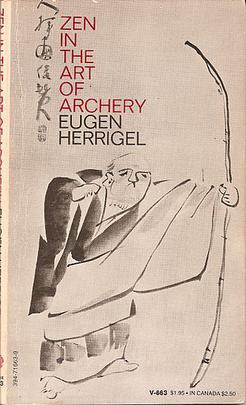
The archer ceases to be conscious of himself as the one who is engaged in hitting the bull’s-eye which confronts him. This state of unconscious is realized only when, completely empty and rid of the self, he becomes one with the perfecting of his technical skill, though there is in it something of a quite different order which cannot be attained by any progressive study of the art” — Eugen Herrigel 

Back when I was bowling competitively, I was pretty good all the time, and really good some of the time. But even at my best, there would be one shot every so often that was so exactly right, I could feel a strike while the ball was still in my hand. Didn’t have to look, didn’t have to wonder about the carry… ten in the pit, guaranteed. It was those rare, miraculous shots, one or two a week out of forty games, that were the drug, the sensation that drew me back and made the game worthwhile.

As a pool player, I get a shot like that every so often. As a writer, I get a sentence like that every so often. If I write for four or five hours in a day, I’ll get one sentence that comes as a gift; all the rest I have to work for.

Teaching can be like that, too. Every so often, you’ll get a group of people who can do miracles. I don’t think you can make it happen. You can pull together all the conditions for it to happen, you can bring together all the materials and all the preparation to make it happen, but those things are all necessary without being sufficient. When it’s worked… and it’s only been a few times that it’s really worked… there’ve been a few things that have all been true:

  • I’ve been enthused to teach whatever the course is about, wanted to learn something more about the ideas myself
  • I’ve built some sense of trust early on, that I won’t make fun of people or demean them for any honest effort
  • More than half of my students have been willing to think out loud, to say things they weren’t a hundred-percent sure of and see where it took us
  • More than half of my students were able to really listen to each other, and to be surprised at what one another had to say

Enthusiasm, trust, openness, and curiosity. When those things have all been present, the semesters have been astonishing, and every student in the room knew it.

Over the past couple of weeks, I’ve watched from a physical and electronic distance as my friend Aimee leads a group of college students through a four-week papermaking course. And it looks to me like she’s got that mix this time, that she and her students have arrived at that blessed place where every second is learning, where the ideas come like breath, with full focus and no intention.

They’ll all remember it forever.

Selling the Brand

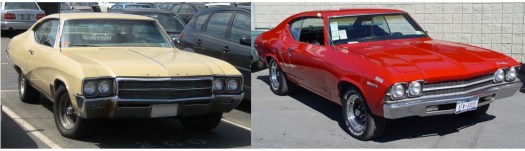
Although I was a car-crazed little kid, I was mystified as to why the Ford Motor Company sold the same car under three different nameplates—Ford, Mercury, and Lincoln. Or why General Motors had Chevrolet, Pontiac, Oldsmobile, Buick and Cadillac. Or why Chrysler had both Dodge and Plymouth. Even when I was ten, I knew that the Skylark and the Chevelle were the same car.

Who are you gonna believe, the marketing division or your lying eyes?

But brand loyalty is a big thing. If we’ve had a good experience, we’re likely to seek out that same provider and at least give them a first shot at providing us that experience again. A defining feature of rural life is the ritual stomping and pawing at the ground by Chevy or Ford or Ram truck owners, even though those manufacturers have copied one another’s good ideas for sixty years, their products by now far more similar than different.

That impulse toward the brand leads us to buy greatest hits albums, to collect out-takes and B-sides. To see yet another Marvel Universe or Star Wars franchise movie. It leads us to declare lifetime allegiances to sports franchises, and to use the word “we” when talking about a team’s fates. It leads us to prefer Lays or Jays, to prefer Sprite or 7-Up, to pledge allegiance to Bud Light or Coors Light. It leads us to believe, as Emo Phillips once had it, that the Northern Conservative Baptist Great Lakes Region Council of 1879 was the one true faith, and that the Northern Conservative Baptist Great Lakes Region Council of 1912 was a heretical cult.

I’m subject to that impulse myself, of course. I’m buying a new laptop next week, another MacBook to replace the seven-year old MacBook I have now. I can say that I’m buying an Apple product because I like the operating system (which I do), but the larger reasons are that I don’t have to do as much product research, and because I’m “an Apple guy,” which is a stupid, but real, self-definition. And I bought a set of Nokian snow tires this morning, because I liked the Nokians we had before, and because I don’t want to investigate twenty other brands, and because I like the idea of having Finnish tires on the car. Don’t ask. I already said it was stupid. But that doesn’t make it any less real.

That’s one of the things that “the brand” does: to keep us from having to evaluate the individual merits of each of its iterations. Standing in a bookstore is exhausting—so many possibilities, so many ways to fail. I’ll just pick up another Knausgaard, or another DeLillo, or another Groff, because I know more or less what I’ll be in for. There are hundreds of other books in there that I would certainly enjoy more, but thousands that I wouldn’t, so I’ll go back to the well yet again.

I’ve had a few experiences of this recently with regards to writers, with the purchase of the brand being foremost. David Sedaris got twenty-five years of his diary excerpts into the bookstores, and the New Yorker is now publishing a sort of farewell tour of John McPhee. McPhee describes meeting Thorton Wilder, who, late in life, had taken to cataloguing the 431 full-length plays of Lope de Vega.

I am eighty-eight years old at this writing, and I know that those four hundred and thirty-one plays were serving to extend Thornton Wil­der’s life. Reading them and cataloguing them was something to do, and do, and do. It beat dying. It was a project meant not to end… I could use one of my own. And why not? With the same ulterior motive, I could undertake to describe in capsule form the many writing projects that I have conceived and seriously planned across the years but have never written.

I don’t begrudge anyone their hobby. But pages in the New Yorker are among our most valuable literary real estate, just as permanent college faculty lines are among our most valuable intellectual real estate. And in both cases, the fact of tenure, of the value of the brand rather than the product, limits entry to a new generation of talented thinkers. When the seats are held in perpetuity, the barriers to newcomers are near total.

About twenty-five years ago, Nora and I held a session at the annual conference of our then-young discipline. We called it “Founders, Stalwarts, and Heirs.” We asked five people who had been present at the discipline’s origins to talk about their understanding of our field; each of them asked one of their early students, now in their own mid-career, to talk about how the field had changed since they started; and each of those mid-life scholars asked one of their current graduate students or recent PhDs to talk about what was next. It was a terrific conversation.

I’d like to imagine that being one of the roles of any senior practitioner in any field: to use their renown and their connections in order to actively groom and promote their replacements, and to generously leave the court when the moment comes. To use their brand power to support the new brands of younger colleagues. To use McPhee not to sell more McPhee, but to tell McPhee customers how much they’ll appreciate Tolentino or Tevis.

GM and Ford and a college all have an interest in perpetuity, in outlasting any individual practitioner. But individuals themselves have finite careers, and one element of that knowable arc ought to be preparing the vacated stage for those who might come next.

Man of the House

The caller ID was unfamiliar, reading only the phone number and “Windsor VT.” But I answered. The Jack Webb voice on the phone was brusque and authoritative:

Can I speak with the head of the household?

I laughed, and said, “Well, that depends on what you mean.”

He sighed, impatient, and said, Can I speak with the man of the family?

No, I replied, and hung up.

Two weeks later, another call, from the same number, and the same voice.

Can I speak with the head of the household?

I figured this time, I’d let him go through with his spiel, so I said, Sure, go ahead. And sure enough, exactly what I’d expected, a call from some law enforcement benevolent association, asking me to donate to the families of officers killed in the line of duty.

Why is it that we can predict some things on the basis of others? That is, why is it that some traits so often seem paired? An impulse toward authoritative control seems to be linked to the assumption of male dominance. That of course a household has “a head,” rather than being collaborative and fluid in its operation and decisionmaking. And that by definition the head of the household would be “the man.”

Aside from the fact of the caller leaving out any mode of untraditional family—gay couples, lesbian couples, non-binary couples, polys, singles, on and on and on…—there’s just this assumption of the rightness of male leadership that makes me so disappointed in my colleagues and so concerned about our future.

The linguist George Lakoff once wrote that the core metaphor of our contemporary political life wasn’t the bifurcation between parties, or between “left and right” more broadly, but rather the bifurcation between the strict, disciplinarian father and the generous, ever-forgiving mother. The difference between “everyone deserves opportunity” and “you got what you deserved.” The difference between justice and mercy. The difference between welcoming newcomers and defending our own kind. Individuals holding one position or another can’t be perfectly correlated to sex, but they are gender roles, learned from and reinforced by a sad, patriarchal culture.

I’m about to step down from our town’s Selectboard after six years of service. During those years, even with shifting individual participation, the Board has comprised four men and one woman. Most often in our town’s history, it’s been five men, so I guess we’re making progress…

The term “old boys’ club” has two defining terms: they’re old, and they’re boys. What would a board of five women do differently? Why would that seem like some kind of artifice, as opposed to an all-male board, which would go unremarked?

We are not stick figures. We can learn to become new. At least, I hope that we can.

Considering Pool

Stout Sticker

Now that the new year has begun, I’m back to playing pool a little more seriously than I had been. And it put me in mind a few days ago of a piece I wrote seven years ago, never intending that it would be published. It was a pilot study in preparation for writing my first novel, a way for me to imagine the primary space in which the story would live. But I’ve had it in mind again, as I inhabit my own pool room once again, and consider my own intentions toward it.

So here’s a nonfiction short, called “Six Rooms.”

It’s an Ephemeral Business

Today was one of those weird days when two different emails revealed two dimensions of the same issue. The first was my semi-annual royalty statement from my publisher. The book was officially released in April 2019, but pre-release copies got a lot of terrific reviews prior to that, so sales were really quick to start. The publisher’s fiscal year is July to June, so my June 30 statement made me look like a hero.

But as they say, that was then…

The estimated statement for July through December tells a different story. Bookstores are now starting to return unsold copies in substantial numbers. It’s not like the book has an expiration stamp on it, but still, booksellers know when a book has passed its sell-by date.

The second email was spurred by my having come across a really nice review of the book a couple of days ago in the Winter 2019 issue of the Harvard Educational Review. I sent that along to a few folks, and one responded that it was good that the book was still getting coverage.

Still.

So many millions of people work for magazines or newspapers, in popular music publishing and performing—people who invest remarkable effort and care in work that they know is ephemeral. How many magazines go into the recycling, how many newspapers go into the woodstove or under the puppy? Their writers and publishers and distributors are on to the next issue, the next season.

But really, isn’t most of what we do ephemeral? Every kind word, every moment of affection, every encouragement in a classroom? Most of what we do isn’t one-and-done. It’s the work we do over and over and over. We don’t expect it to be enduring, we expect it to be ongoing.

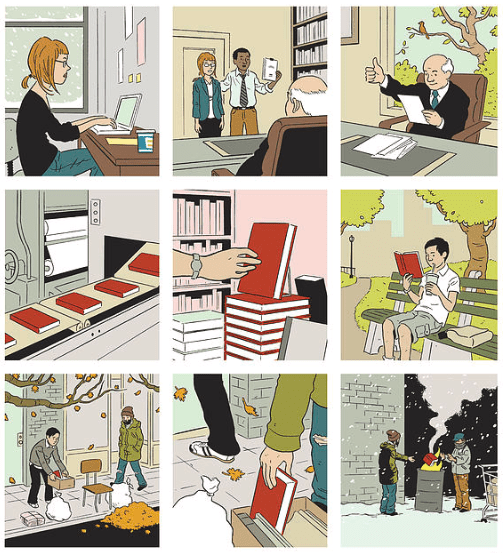
One of my very favorite New Yorker covers was by the artist Adrian Tomine, published in February 2008. It’s a wonderful reminder that our hubris is rarely warranted.

Adrian Tomine, New Yorker, February 25, 2008.

A Quiz to Guide the New Year

Photograph: Jeenah Moon/Reuters

Here’s a party game for the holiday. For each of the following pairs, choose one, and explain why. Listen carefully to those who choose the opposite word, and try to learn from them.

  • justice or mercy
  • rights or responsibilities
  • expertise or judgment
  • mastery or curiosity
  • standards or possibilities
  • preservation or generosity
  • rigor or exuberance
  • solidarity or dissent
  • community or solitude
  • was, is, or could

Let your choices guide your coming year. And remember always that other people make other choices, for justifiable reasons of their own.

Happy New Year.

Competing Goods

This is the second of two posts on ethical thinking.

The nature of tragedy is not good versus bad. It is good versus good.

Georg Hegel

The Internet is a wonderful place (except when it isn’t). And among its many wonders is the archive collected and maintained by the Center for the Study of Ethics in the Professions, a forty-year research group at the Illinois Institute of Technology. They’ve collected over 2,500 different statements of ethical practice from remarkably diverse professional and social groups. There’s the Asset Manager Code of Professional Conduct from the Chartered Financial Analysts Institute. There’s the Code of Ethics of the American Organists Guild. There’s the Supplemental Standards of Ethical Conduct for Employees of the Department of Health and Human Services (1996) Chapter XLV, 5 C.F.R. Part 5501.

I got interested in this material when I was a grad student, and my dissertation plans were going through our university’s Institutional Review Board for the Protection of Human Subjects in Research. Every research institution—universities, hospitals, museums—has an IRB that reviews prospective projects before conduct. My IRB review was tough, because I was doing ethnographic research, notoriously messy and fluid, and I was working with teenagers, a protected category requiring even greater oversight. We figured it out after a few sessions, but it wasn’t as easy as giving some anonymous group a multiple-choice test, or doing a blood draw.

One of the most common keywords in the ethics archive is confidentiality. Historically, the professions that could legally claim confidentiality are medicine, law, and clergy. But lots of other professions have made the internal claim among their practitioners that confidentiality is an important protection for those they serve. The Association of Professional Engineers, Geologists, and Geophysicists of Alberta asserts the confidentiality of their clients, and of the landscapes upon which they work. The Association of Computing Machinery protects confidentiality when their members come across data that’s not an essential part of their work. The American Library Association claims confidentiality for its users’ library records.

Questions of privacy—of the right of an individual to control his or her own information—have been fought about forever. Architects think about it when they place windows and doors, and forget about it when they design open-plan offices. Newspapers think about it when they protect whistleblowers, and forget about it when they publish paparazzi photos.

Different eras and their technologies have extended the questions of privacy into new realms. In 1890, with the growing influence of print media, Louis Brandeis and Samuel Warren wrote a law review on privacy that focused on “the right to be left alone.” In 1948, after unspeakable regimes of dehumanization, the United Nations named privacy one of the basic human rights. in the 1990s, in recognition of search engines that archive everything about us, the European Union institutionalized “the right to be forgotten.”

But breaches of privacy are perpetual. Santa’s got his list, as does St. Peter. Our streetscapes bristle with cameras. Your phone tells the world where you are every few minutes; your doctor’s office won’t reveal when you visited, but your phone’s location tag will. And we post selfies on Instagram of every restaurant meal and random encounter. The wonderful social analyst Jane Jacobs warned in her final book of a “dark age ahead,” an age in which everything that had come to us would be lost to mere commerce, a mass amnesia in which “even the memory of what was lost is lost.” We will someday (soon? already?) wonder what privacy was, and why people ever thought it was a good idea.

We want to be seen, to be noticed, to be celebrated. We want to be left alone, to have our sins forgiven. It turns out to be almost impossible to stand on both shores at once.

What Do We Owe the World?

This is the first of a couple of posts on ethical thinking.

Not a generalist…

I just finished another manuscript on Boxing Day. That now makes ten novels and a collection of short stories in the past seven years, all of them stuck in inventory. I’ve decided to not feel bad about the pace that I write, or the character of what I write about. Joyce Carol Oates is good for a couple of thousand publishable words a day, so I’m a slacker by comparison.

The last couple of my books have drawn extensively on one of the foremost reasons I’ve never wanted to have kids—a sense of the infinity of life’s possibilities and the deeply finite boundaries of an individual life. More specifically, would I urge my child to be a deeply focused obsessive, and so have the joys of remarkable craft and excellence? Or would I urge my child to be a broadly read, broadly experienced generalist, covered with Velcro and so able to adhere productively to every circumstance? That seems, at least from the outside, to be one of the core ethical dilemmas of parenthood, a specific and unresolvable choice that underlies almost every other.

Because of this question, both of these recent books have had a strong interest in what school does, and how it interacts with this core question. K-12 education has a strong bias in favor of the generalist, shoving every kid at uniform pace down the full array of tick-marked courses. Schooling seems, both from my own experience and from my research in the schools I’ve studied, to be fundamentally aimed at compliance, at leveling, at ensuring that everyone moves on the same track at the same speed. It’s like running a railroad—issues of individual curiosity and excellence just don’t have a lot of traction. We spend a ton of money helping some cars get up to speed, but the faster cars are just as disruptive, just as in need of velocity management to keep the whole enterprise together.

Here’s a quiz. Name something that these people have in common: Roger Federer, Pete Sampras, Rafael Nadal, Serena Williams. I’m sure you have an answer, but I have a different one…

Let’s add a few more names: Simone Biles, Shaun White, Kobe Bryant, LeBron James, Wayne Gretzky, Martina Navratilova, Danica Patrick, Arnold Schwarzenegger.

One more batch of names: Beyoncé. Hilary Swank. Leonardo DiCaprio. Emma Stone. Bruno Mars. Jennifer Lawrence.

All of them decided, when they were really young, that they were going to dedicate themselves fully to their talent, and they chose that training over college. They started to work on their craft when they were little kids, and were already astounding by the time they were teenagers. They weren’t compliant. They had a separate set of tracks, supported by a separate set of adults around them who celebrated monomania.

And I don’t mean to suggest that this is the right answer. For every Simone Biles, there are hundreds of injured and discarded little girls who never made that peak. For every Emma Stone or Kobe Bryant, there are thousands of stage moms and basketball dads who shoved their kids down tracks that didn’t fit, the children merely sticks with which parents could reach for their own dreams. Tiger Woods was playing golf with his dad at age 2, was probably already the best golfer in the world at 16, but it hasn’t ensured him an entirely happy life. Maybe the safe middle is a better choice than the distinct focus, alight to every possibility rather than perpetually narrowing to the one that draws us back. None of us will ever know, because time only runs one direction, but we’ll always wonder.

A Second Meditation on Names

Picking your name over breakfast…

Writers, musicians, actors, performers of all sorts have been uniquely able to choose their own names. Lil Nas X wasn’t born with that name; neither was Bono, or Emma Stone, or Bruno Mars, or Katy Perry.

The choice of a pen name seems to open infinite possibilities, but there are constraints. A writer could choose to call herself, say, Charlotte Bronte, but that seems unwise. There are lots of names that are so historically specific that they’re now out of bounds, like a retired jersey number.

In our more enlightened age, it’s also seen as disrespectful to appropriate an identity that isn’t our own. I could choose a pen name like Aleksey Meshkov or Nguyen Van Nam, but readers would expect a certain cultural authenticity from a writer with such a specifically identifiable name. Likewise if I chose Annette, or Evelyn, or Sarah. We increasingly see all writing as autobiographical, and so are offended if the biographical facts are thought to be a misrepresentation.

So I’d be left with choosing something that sounded more or less male and more or less Anglo. That simplifies things; 95% of the world’s possible names are now out of consideration. But 5% is still a lot of names.

There are alphabetical considerations. If I wanted to court Stephen King’s customer base, I’d choose a last name like Kiniston, so that his bookstore browsers would stumble across me. (The Beach Boys and the Beatles were inevitable B-E-A shelfmates for a decade.) It doesn’t make sense to choose a last name starting with A, because those are way up on the top shelf and wouldn’t be seen. Or a last name starting with W, because everybody’s tired of looking at books before they get all the way down there. Go to your local bookstore and see who’s at eye level in the first bay, and fit yourself into there.

There’s a modern trend toward using initials instead of a first name. JK Rowling, EL James, CJ Boxx, JD Robb. The letter J seems like a good choice to be in there, doesn’t it? Plus a single syllable last name, so the cadence becomes a simple, descending-tone bump-bump-bump. But you have to be careful about cultural associations: PJ Hanes sounds like kids’ underwear.

There are those who chose something other than a different, recognizable name. The architect Charles-Édouard Jeanneret wanted a sort of mysterious, god-like aura, wanted to shed the weight of history and become Modern, and so named himself Le Corbusier. Bono, Lady Gaga, 50 Cent, Banksy, The Rock. I like the idea of a name beginning with The, but I don’t know what a good noun would be. The music producer David Singleton occasionally writes under The Vicar. I don’t know… The Groundhog? The Bird Feeder? The Ficus?

The science fiction writer Alice Bradley Sheldon chose her name James Tiptree Jr. over breakfast, inspired by the brand of marmalade on the table. And maybe that’s how it works, just the random sense of yes that strikes at the right moment.