Having gotten the above dog last summer, I’m now going through dog training for the first time. Small treats are a central element of the training. You reward good behavior with a click and a treat, you lure the dog away from bad behavior with a treat, you get the dog’s attention with a treat. And one of the terms of art, when a dog is highly distracted by all the other dogs and handlers and scents in a class setting, is that you might need a “higher-value reward.” [String cheese, as it turns out, is maybe the highest-value treat there is. The gas station convenience store near the training center recently started stocking string cheese just because so many dog owners were stopping in on their way to class. Makes me wonder what proportion of string cheese is going into grade-schoolers’ lunchboxes, and how much is for dog class.]
For me, the highest-value treat in my life was a grade. An A, or a 100, were the core markers that I’d been a good dog, that people loved me. I still remember learning the “times tables” in third grade; every time you felt ready for the next step, you told the teacher that you were ready to do your threes or your fours. Then the teacher’s aide would take you into the next room, and you’d say four times one is four and four times two is eight, and so on through twelve. (Why twelve? I don’t know. Why do grown-ups do anything?) If you got it right, your little marker on the chart at the front of the room got moved forward a step. (Why was it important for us to treat this as a competition and introduce shame yet again into some kids’ experience? I don’t know. Why do grown-ups do anything?) Anyway, I finished my twelves while everyone else was on fours and fives, and I remember being really disappointed that I couldn’t go on and do thirteens. (Why couldn’t someone be interested enough in something to do more than the curriculum mandated? I don’t know. Why do grown-ups do anything?)
13-26-39-52-65-78-91-104-117-130-143-156-169, and yes, I did that in my head just now, faster than I could type it. Where’s my cheese, bud?
From reading in kindergarten through winning an architectural history award as an undergrad, from multiplication through dissertation, I lived in a world of high-value rewards. I’d done what was asked, done it in an exemplary way, and people loved me.
So what happens when people don’t love you any more? When the rewards don’t match the behavior? When the treat bag goes empty?
Stand where we tell you to stand, look at what we tell you to look at, and you’ll have the product you came for. (photo from the Orange County Register)
“When someone is searching,” said Siddhartha, “then it can easily happen that the only thing his eyes see is that for which he is searching. He is then unable to find anything or let any thought enter his mind because he always thinks of nothing but the object of his search. He is obsessed by a goal; searching means having a goal. But finding means: being free, open, and having no goal. You, O venerable one, are perhaps indeed a seeker, because, in striving for your goal, there are many things that you don’t see, even though they are right in front of your eyes.” — Siddhartha, Herman Hesse
I’m a huge fan of serendipity. I used to try to help my students look around in the library. “When you find the book you want on the shelf, make an imaginary circle three feet around it and look at all the titles in that circle. They’re clustered by topic, so there’s probably something there that’s related to what you came for but even better.”
When we’re laser focused on the thing we think we want, we miss all the interesting side roads. And friends, I can tell you now at my advanced age that my life has been nothing but side roads.
I talked yesterday about how high school is just a structure to force kids to attend to six or eight wildly divergent topics every day for four years, and thus build the learned helplessness that allows them to fit the commercial world without too many complaints. College could be something other than that, but increasingly isn’t.
As more and more working-class kids go to college, college is bending itself to become more high-school-like. It’s certainly the case that lots of kids come to college without the skills or experience of navigating a complicated intellectual path. But rather than build extensive structures to teach navigation, too many colleges have just simplified the path. “Guided pathways” used to be the term of art, walking each student directly down the rails to their chosen terminal. And like a rail ticket from Albany to Denver, you’re not going to see Minnesota.
Let me give you a few examples of the lucky experiences that a loose curriculum can offer.
When I was an undergrad, I wanted to be an architect. And as soon as I hit studio, I realized that I didn’t. I wanted to talk about people, the topic that the bullshit sculptors (excuse me… formgivers) avoided at all costs. But I fell into architectural history with Dell Upton and Spiro Kostof and Paul Groth, a field that was nothing but people. What the patrons wanted, what values drove their decisions, what empires were expressing their power. That was my first off-ramp into a meaningful and personally selected destination.
Near the end of my undergrad, I needed to fulfill one last humanities elective, and browsed the catalog until I found “The Critical Review,” a Journalism course taught by the miraculous David Littlejohn. It was there that I learned that writing wasn’t just being clever with words; it was thinking carefully about something in the larger world, and helping others to think differently about it as well.
When I was getting ready for grad school, the doctoral director (BA Stanford, MA/PhD Harvard) of the school I REALLY wanted to go to—and which had already accepted me—told me that my research agenda was stupid, that my chosen faculty were too busy to work with me, and that I had the wrong approach to architectural history anyway. So I went to my second-choice doctoral program, and had an utterly brilliant and self-created experience, weaving together scholars from architecture and art history and geography and fiction to add their colors to my project.
Our lives are most fully formed by the things we do on purpose, because purpose is desire made tangible.
I made a couple of visits to the Metropolitan Regional Career and Technical Academy, a high school in Providence RI that everyone called The Met. There’s a lot to say about it, but I’ll shorthand. It was a small school, about a hundred (mostly working-class) kids. And for four years, each of those kids did the same things every semester:
ADVISORY. Every day started out with a group of twelve students and their advisor, who were unified across the whole four years. That was the trusted family base from which kids could individually explore, and their advisor was there to help them take chances, and to be rigorous about those chances.
INTERNSHIP. Every semester, kids had an internship of at least 15-20 hours a week with a local business, learning some things about how to navigate not just the specific work at hand, but also the general world of serious adult interactions.
PROJECT: Every semester, each kid would have one self-chosen project that they had to conceive, execute and complete within that four-month window.
And at the end of each semester, each student had an individual summit meeting with their advisor, their internship supervisor, and their parent(s) or guardian(s) to talk about what had been successful, what had been less so, and what opportunities seemed to make sense for them to take on next.
Friends, it was fucking brilliant.
Anyway, on one of my visits, it was the college fair day. (One of the deals that The Met leadership had made with the RI board of education was that, in exchange for curricular freedom, they’d guarantee that their graduation rate was far higher than the abysmal Providence public high schools, and that 100% of their graduates would be accepted to a four-year college.) And as was fitting for The Met, college day was nothing like anywhere else, either.
For the first hour, the schools were setting up their promo materials in a big room, while the principal and advisors had all the kids together in the central atrium, coaching them into their work for the day, And that work was fascinating. Groups of three or four kids were assigned a college; their job was to explain The Met to that admissions representative, and then to ask why that college would be a good fit for a student who’d had that kind of autonomy and exploration. Why does your school deserve us?
Friends, that was fucking brilliant, too.
When I was a high school senior, the local community college was generally said to be “high school with ashtrays.” We don’t smoke indoors any more, but colleges in general are moving in that intellectual direction.
College could be simple. A tribe of geniuses who compete for the attention of their students (Why do you deserve us?), and lead the ones who choose into a unique garden of ideas. Put smart people in a room and good things happen, unless you actively interfere in it.
And way too many college actively interfere in it. The “guided pathway” is the exact opposite of exploration and discovery. It’s just high school without truancy laws, and we can’t be surprised when half the kids who start it don’t finish it.
When someone is searching, then it can easily happen that the only thing his eyes see is that for which he is searching. He is then unable to find anything or let any thought enter his mind because he always thinks of nothing but the object of his search. He is obsessed by a goal; searching means having a goal. But finding means: being free, open, and having no goal.
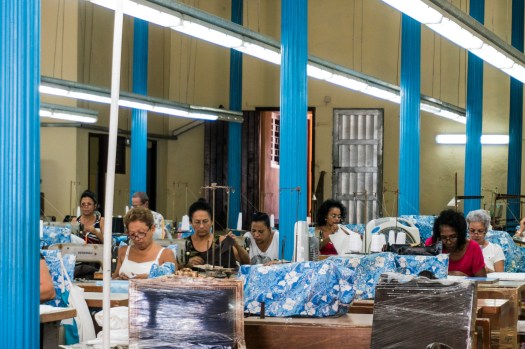
Keep your eyes on the task, please. (Image by Allan Wadsworth, via Unsplash)
Many years ago, I had an older friend who’d been a government bookkeeper during WWII. One senior accountant on a raised platform faced the room, with thirty or forty workers down on the floor in row and column desks. Every so often, one of Tom’s co-workers would light a cigarette and lean back in his chair, seemingly pondering some difficult calculation but really just taking a five-minute eye-and-brain break from the endless stream of numbers flowing across the desk. When Tom did the same thing without the cigarette, the bossman would holler “Hawley! Get back to work!” So he did what any reasonable worker would do, and took up smoking.
Etymonline.com shows the phrase “rat race” scarcely in existence at all prior to the war, and rising to its peak of usage in 1969. That growth paralleled the rise of bureaucratic culture, in which Taylorism, standardization, and the division of labor emerged from the factory floor and entered the office. (The male office, anyway. Taylorism and close observation had already been the main structure of women’s corporate working lives, from the Lowell mills to telephone operators to steno and typing pools.)
When each workday feels like the last, when someone’s job is to provide standardized outputs at a steady pace, that person has no attentional autonomy. That doesn’t mean they’re not skilled; Barbara Ehrenreich spent a year doing housecleaning and diner waitressing and hotel housekeeping, and said at the end, “There is no such thing as unskilled labor.” The skills and judgments one develops, though, are only focused on the immediate task provided. The miner may exercise a lot of judgment about the most productive and safest way to attack a wall, but the wall and extraction of coal therefrom is the only thing to pay attention to.
Years ago, when I was doing my dissertation in a rural high school, I started to see significant differences between students, but not only across the dimensions one would expect: intelligence, athletic ability, popularity and such. What I saw was four clusters of students that I framed my own X-Y quadrant diagram around.
High school is an attentional-deficit environment. Every fifty minutes, a new person insists on students’ full attention to yet another irrelevancy. They get yanked through six or seven attentional demands every day. The teacher John Taylor Gatto, in his 1991 acceptance speech for New York State Teacher of the Year (a speech he used to resign from the profession, saying “I can’t hurt children any more”), said that one of the hidden lessons of high school is that nothing really matters. We start and stop our engagement with any particular idea on someone else’s whim, rather than on our own progress or satisfaction with the work we’re doing. English-History-Religion-Algebra-Lunch-PE-Spanish, the screwing-on of knowledge-nuggets as we roll down the line. And in the end, we’re screwed.
It turns out that different groups of kids responded differently to the factory. Kids from middle-class families who were aimed at college and white-collar life did pretty well in school, but for different reasons. The ones who made themselves attentionally compliant, who did what they were told, were the “good kids.” I called them Believers—they endured the difficulties of the world in order to obtain the rewards sure to come. Others, though… they struggled against their bonds every day. They believed so strongly in the value of thinking that they hated being told what to think about, or when they should stop thinking about one thing and go on to another. They were the Theologians, who relied not on received wisdom but on self-determination. That girl in the back of Spanish II who’s secretly reading Cervantes… that’s a theologian.
Working-class kids who were moving toward blue-collar life right after high school also fell into the same two camps, but they looked different. The ones who were willing to comply—”whatever, dude“—were Agnostic to what was being presented, all of which was merely something to endure before lunch, before soccer, before graduation day. But the ones who pushed back had no aims to move toward, they just didn’t want to be herded. These were the “fuck you!” kids, the Infidels in detention or shifted off campus into the “continuation school” of post-expulsion and pre-emancipation.
High school, in principle, names its function as moving kids upward on that graph; giving them the tools they need to have a better shot in adult life. But what I saw, every day, was that the hidden function of high school is moving kids leftward, toward compliance. Compliance makes the machine run, whether you believe in the machine or not.
The sacrament of full focus. (Image by Malcolm Lightbody, via Unsplash)
I have a feeling this is going to be a string of posts.
I’ve always cultivated the ability to hide out and do the thing I wanted to do, fully focused and without interruption. And I’m increasingly recognizing what a luxury that is, unavailable to most of us most of the time. I’d like to explore that luxury—to whom it’s offered, and to whom it isn’t. How carefully it’s built, and how easily it’s lost. How our best intentions lead us, individually and institutionally and culturally, away from that precious state.
The idea of autonomy has to do with self-determination, An autonomous person gets to make, or at least strongly participate in, decisions about their own actions and beliefs and relationships. The opposite condition is submission or subordination, subsuming our own intentions to the intentions of others, Let’s look at that from two directions.
DIRECTION ONE. About thirty years ago, the British architect Frank Duffy wrote a book called The New Office, in which he put forth a taxonomy of work types, each of which requires different characteristics for a good workplace. (I admit that I’m a total sucker for a well-crafted X-Y quadrant diagram.)
I’m a writer and not an architect, so I’ll take exception to his four clever shorthand terms for each space, but the principle makes a lot of sense.
If you’re told exactly what to do and left alone to do it, you’re a drone. Example workspace: cubicle.
If you’re told exactly what to do and put in a group to do it, the work of the pack is more important than the individual member. Example workspace: high school classroom.
If you decide what to do and are left alone to do it, you’re an artist in her garret. Example workspace: writer’s desk.
If you decide what to do and are working with others to achieve it, you’re part of the inner circle. Example workspace: boardroom.
Hang onto that, while we go to…
DIRECTION TWO. The environmental psychologist Irv Altman developed a theory that the fundamental definition of privacy was the control of information: both information about oneself going out, and information from others coming in. So having your mail snooped around in is a loss of privacy, because you’ve lost control of information about yourself; but having loud neighbors is also a loss of privacy, because you hear their arguments and their video games and their TV shows without having asked for it.
Put those two directions together and you can understand why your job sucks. You don’t get to control information. You don’t even get to decide what to think about! And it’s not just the world of endless interruptions, though that’s an enormous disrespect to our attentional autonomy. It’s more importantly that we’re constrained by the very nature of our businesses. Here are a few examples:
I worked for a business once that was part of a national consortium founded upon ten common principles. My very first research project there was truncated after a day. I’d asked my new colleagues which of the ten principles was most important to them specifically, and was told that the company’s position was that only one of the ten really mattered, and that the other nine were niceties that had no real bearing on our work.
I worked for a business once that did exactly the same four or five jobs for one county government after another. Same scope of work, same methods, same spreadsheets, same deliverables. There was no room there to ask interesting questions or to approach the problem sideways.
I worked for a business once that hadn’t the faintest idea what a meeting was for. The president called us all together once a month to give us the equivalent of a podcast; the provost did the same thing with a smaller group every week. Committees were established with no time frame and no demands for progress; we just got together and picked at the same scabs for a couple of hours every Thursday afternoon or Tuesday morning. I rarely felt like I got any work done, because I set it aside every twenty minutes to go to another meeting.
These were all low-autonomy environments that had hired us because we’d been successful in high-autonomy training. They recruited us because we’d done really good work on projects we devised and cared deeply about, and then told us that all of that individual motivation was no longer the currency of the land.
So think of this post as the preamble. Over the next few days, I’d like to think about what attentional autonomy can tell us about social class, about craft, and about education. Maybe some other stuff, too.
The pattern has two directions (image by Ekaterina Grosheva, via Unsplash)
When I worked at the Boston Architectural College1, one of the fundamental rituals was the weekly Directors’ Meeting. Turns out that for a college of a thousand or so students, there were a lot of directors.
There were four directors representing the four disciplinary divisions: architecture, interior design, landscape architecture, and design studies. Those were the four academic/professional fields in which one could get a degree, the warp threads that were fundamental to setting up the loom. But every weave also has its weft threads that cross the entirety of the fabric. At the BAC, they were Design, Design Media, Design History and Theory, Technology and Management, Liberal Studies, and Professional Practice. No matter which of the four degree strands you were engaged in, your path would cross each of the six topical areas.
(There were also directors of Admissions, Advising, the Learning Center, and Financial Aid. Without getting too far into the weeds, there were a few others as well, mostly historical artifacts and loyal long-term employees who’d grandfathered their security as the school had changed around them. True in every workplace ever.)
Let me oversimplify a little bit, but not much. The degree strands weren’t fully owned by the College. More fundamentally, they were owned by the professional accrediting bodies that granted the College the right to offer degrees with the respective words attached. The National Architectural Accreditation Board, the Landscape Architectural Accreditation Board, and the Council for Interior Design Accreditation all visited the school every six or eight years and made sure the franchisees were adhering to corporate standards. (Design Studies had originally come about as an exit ramp for students in the three professional strands who weren’t going to make it professionally but who had invested time and money and deserved a college degree of some kind or another. It’s become something far beyond that now, but it isn’t part of a larger national cohort.)
It was really the lateral bands that defined what made the College distinct. They were one school planting its flag in the sand and saying no matter what discipline a student is part of, this is what every one of them will experience.
When I taught at Duke, Writing 20 (Introduction to Academic Writing) was the ONLY COURSE that was required of every single undergraduate student. For twenty years, it was a fundamental hallmark of what it meant to be a Duke student.
I find, now that I’ve left higher education behind, that I have very little interest in the disciplines. (I didn’t while I was inside, either. I was just curious, and had my own questions that I needed to satisfy.) With almost five thousand colleges in the US, it seems to me that it’s the horizontal curriculum that declares a college’s institutional mission. Complete this statement for yourself: no matter what you major in, at our college you will… That’s the sentence that makes your college worth choosing over any of the others. It ought to be fully distinguishable from all the rest. Write it carefully, and live it fully.
2006-2103. I have no idea what they’re doing any more. ↩︎
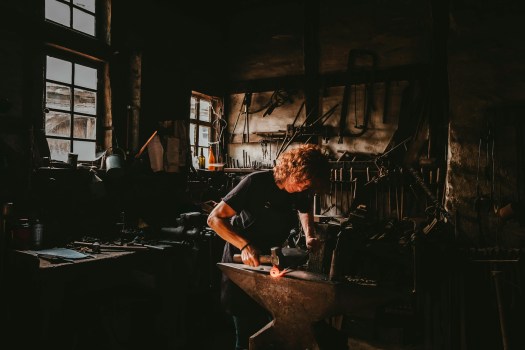
A worthy attention to craft (Image by Beda Marek, via Unsplash)
I was just browsing my most recent (and likely final) copy of Poets & Writers magazine. (Aren’t poets writers?) And I was struck once again by the most central mission of the magazine: selling hope. Markets for your work! What agents want! Contest deadlines! A million ads for a million MFA programs taught by a million writers you’ve never heard of. All of it aimed at helping its subscribers imagine themselves as “real writers,” which is to say writers who are acclaimed by someone else. As John Berger wrote, advertising is intended to make you envious of the person you’ll be after you’ve bought the product. Poets & Writers is intended to help us imagine ourselves published, and to buy both the magazine and its advertised products as mechanisms toward that holy end.
Friends, I’m here today to offer you a different holy end, which is the joy of immersion. If we can’t take sufficient joy in the fact of creation, we won’t do it for long. Trying to monetize words into dollars is just stupid. Over the course of six years, my “big book” that was highly reviewed all over the place has made me half a year’s minimum-wage income. If we want to be spoken of in the same sentence as F. Scott Fitzgerald, it’d be good for us to remember that Gatsby gets taught now because it was sent overseas to soldiers and sailors, cheaply, as a consumable entertainment during WWII. Quality does not equal notoriety; you can have either without the other. (As a moment of heresy, I wasn’t all that impressed with Gatsby when I read it for the first time, at age 60. I’d take a novel by Walter Tevis or Rex Stout or Nevada Barr any day.)
I think it’s important for writers to understand that writing is exactly and only a hobby. And to recognize that all hobbies can be sacraments, a profane mechanism that sometimes attains sacred outcomes. Have a look at this video. It’s a thirty-minute recreation of three years of work. He gave care to carpentry and wiring, to painting (with brush, roller, spray can and airbrush) and to gluing (with epoxy, spray adhesive, hot glue and wood glue). He employed skills in plastering, papier-mâché, and microfiber flocking, He studied landscape forms, botany, traffic engineering… and the natural conditions of aging in each of those media. He needed to know SketchUp, 2D printing for decals, 3D printing for structural materials, and plaster mold making for natural materials. And then, of course, the “basics” of model railroading and model cars. He’s invested tens of thousands of dollars in tools and parts and components and equipment, probably discarded mockup cardboard and masking paper and tape and plywood offcuts equal in volume to the final product. And this isn’t his first endeavor, he’s done smaller ones before.
Although he’s posted his creation and skill-sharing videos on YouTube, he’s not doing this fundamentally to monetize his time. He’d do way better working the counter at 7-Eleven. He’s doing the work because it’s a sacrament.
The guitarist and teacher Robert Fripp once wrote this:
We have three rights: the right to work; the right to pay to work; the right to suffer the consequences of our work.
We have three obligations: the obligation to work; the obligation to pay to work; the obligation to suffer the consequences of our work.
I am a writer, and have been for decades. I’ve been a fiction writer seriously for twelve years. And as with any meaningful hobby, I’ve spent a lot of money with no intention to recoup. I’ve spent more than five thousand dollars on writers’ conferences, I’ve spent six thousand dollars to print my novels, another thousand to have them shipped from the printer to me, and another two thousand after that to mail them around to folks who request them. I’ve used up four computers, and thousands of hours. And I give all of that away to anyone who asks. Poets & Writers does not recognize that as vital work, given their location in the hope industry. I have no hope. I have only joy in the doing, and the provision of pleasure to my friends.
The new book is off at the printer as I write this, my love letter to the anonymous paperback writers of the 1950s and ’60s.
it cost me two years to write it, and about $265 to print and ship thirty copies that I’ll have in about two more weeks. I already have about fifteen that I know I’ll give away immediately, and the rest will find what homes they’ll find.
I have the right—and the obligation—to work; to pay to work; and to suffer the consequences of my work. That’s what sacraments are, and why they’re worth doing.
Real work. (Image by Jimmy Nilsson Masth, via Unsplash)
Let me start with a note. Whenever I raise an issue about current events, I don’t mean to ever suggest that I’ve isolated the single variable that “makes all the difference.” That’s not how culture works; everything is always multivariate. But I do want to bring up ideas that will be helpful for us to think about.
I’ve talked before about Colin Clark’s four-sector economic analysis. There’s primary production, which is extraction; secondary production, which is manufacturing; tertiary production, which is professions and services; and quaternary production, which is strategy and investment.
Most of the world, for most of history, was engaged in the primary economy. We were all farmers or hunters or miners or fishermen. There were a handful of skilled tradespeople making goods from mined or harvested materials, a handful of doctors and artists, and a handful of kings and popes who had all the money and made all the decisions..
The Industrial Revolution was the ability of a handful of nations to receive investment in manufacturing capability, while the rest of the world continued to mine and grow what was needed. The American colonies were prohibited from having factories for a long time; it was really only industrial espionage by Francis Cabot Lowell that allowed America to become something other than a source of inexpensive food and tobacco and cotton for England. During the 19th and first two-thirds of the 20th centuries, the American economy shifted almost wholly from primary to secondary production. In 1800, about 90 percent of Americans lived on farms; by 1900, it was about 40 percent; by 2015, it was one percent.
The issue is that other countries caught up in secondary production as well. Manufacturing in Central and South America, East Asia and Southeast Asia has become as sophisticated as ours, at lower labor costs. And automation has taken up a lot of the manufacturing that remains. Our economy has shifted upward again, into the services and professions.
One of the most striking turns of phrase I’ve seen lately has been from the political scientist Tom Schaller. He was talking about the disproportionate deaths from COVID in Trump-voting areas: something like a four-to-one disparity between rural and urban counties. And he extended that notion more broadly.
They’re making decisions that don’t just affect their communities; they affect other communities and other industries that are parallel or adjacent. So now, it’s an economic murder-suicide when you make these decisions that don’t just hurt your bottom line, your finances, your ability to pay for Johnny’s braces or Joni’s summer camp but are affecting industries and communities and devastating your neighbors—including your neighbors who didn’t vote for Trump, especially your nonwhite rural neighbors. (emphasis mine)
The most common instigating factors were a sense of being grievously wronged, and a shame in the resulting loss of status. “This type of murder-suicide typically involves a man between the ages of 18 and 60 years old who develops suspicions of his girlfriend’s or wife’s infidelity, becomes enraged, murders her, and then commits suicide.”
Now, maybe it’s a stretch, but if you disagree, argue carefully, don’t just bark. We have a population of mostly men who’ve lost the status that came from primary and secondary careers, and who see success flowing to women and the well-educated—people who don’t do real men’s work, and thus aren’t deserving. And that sense of being wronged, and being shamed, is enough for some to say “burn it all down,” and take their neighbors with them. The fact that they will perish too is less important than the fact that they can avenge their lost heroism.
And the kings, distant in their towers, watch with pleasure while their serfs come to blows.
Given that this blog is crossposted to LinkedIn, I’m imagining that the title might be provocative. It should be, of course, but I don’t think it’s wrong.
Lots and lots of people hate paying taxes, because they think as consumers. The money we pay in taxes doesn’t immediately reflect itself in goods and services obtained. (Actually, a surprising amount does, if we benefit from research or education or highways or the Internet or a defended nation or a river that doesn’t catch fire or whatever. They’re just not a) fun or b) visible as purchased goods.)
The proportion of our purchases that goes to the profit for the businesses that provide goods and services doesn’t benefit us, either. When gas was five bucks a gallon in early COVID, the oil companies made absolutely astonishing profits; the costs for raw and refined products didn’t actually change all that much. It was just that BP and Exxon and Shell knew they could take advantage of crisis and confusion. But even at the smaller and more honest scale, let’s say you have a driveway poured. You pay X for that service, which actually includes a ton of sub-components: materials, equipment, labor. But part of that—let’s say five percent of the price you pay—goes to the profit of the concrete business. You’ll never benefit from that, nor will the workers. It’s not even the owner’s salary; that’s part of the expenses. The profit is the owner’s tax on the transaction.
That concrete business had material delivered from a concrete plant, which made a profit. They drove to the job site in a mixer truck; the manufacturer of that truck, and the shop that maintains it, both made a profit. The contractor has a couple of pickup trucks; Ford or GMC made a profit. They hauled forms to the site on a boom truck; the truck manufacturer and the boom manufacturer both made a profit. Every step along the way, the owners—not the managers, not the workers—skimmed a little off the top. The homeowner probably paid a 25-40% collective tribute to all the owners in the chain. That $20,000 driveway could have been fifteen or less, except for all the ownership surcharges.
Workers don’t make a profit. Consumers don’t make a profit. We pay the ownership surcharges, which flow only upward. I don’t know about you, but I’d rather pay taxes for drug rehab and homeless shelters and public libraries. I don’t get to make that choice, of course, because someone entirely unaccountable to the public skims their sliver and never has to justify, or even disclose, what they’ve done with it.
I read a great commentary today by the economist Kathryn Anne Edwards. She talks about the foolishness of trying to revive the manufacturing economy, but I want to quote a slightly different part of her talk:
If you really wanted to have good middle-class jobs in the U.S., you would identify the jobs that can’t be exported and replaced by a machine, and you would ensure that those jobs are high quality and well-paid. What made a manufacturing job good is that they were high-paying, had health, and had retirement. That’s not special to manufacturing. That’s just special to labor economic policy. The jobs that can’t be exported that need people like are teachers, nurses, doctors, childcare workers, a lot of these pink-collar jobs that have never had the type of economic leverage to demand higher quality. Not to mention the retail sector—people who work in kitchens, people who bring you food, people who take your bag up to your room when you check into a hotel. We have a massive sprawling low-wage service sector. You could make that into the middle class if you really wanted to, but I don’t think we want to.
No. I don’t think we want to. Unions bad. Government bad. Invisible hand always help. Ugg.
Let me throw another quote out here, this time from Finian O’Toole’s review in the New Yorker of a new book by the historian Padraic X. Scanlan, called “Rot: An Imperial History of the Irish Famine.“
It was obvious to outsiders that the root of Ireland’s misery was what de Beaumont characterized as a “bad aristocracy”—the monopolization of land by a small élite that had no cultural or religious affinity with its tenantry and little sense of obligation to develop sustainable agriculture. But an English ruling class in which many leading politicians were themselves owners of vast estates in Ireland was unable to acknowledge this inconvenient truth. Who, if not the landlord system, could be to blame? It must be the Irish poor themselves. As Scanlan puts it, “Intensive monoculture made Irish potatoes vulnerable to blight. The solutions proposed to mitigate famine were themselves the product of a kind of intellectual and political monoculture. Solutions were unimaginable outside the market that fuelled the crisis to begin with.”
In a neatly circular argument, the conditions that had been forced on the laboring class became proof of its moral backwardness. It was relatively easy to plant and harvest potatoes—therefore, those who did so had clearly chosen the easy life. “Ireland, through this lens,” Scanlan writes, “was a kind of living fossil within the United Kingdom, a country where the majority of the poor were inert and indolent, unwilling and unable to exert themselves for wages and content to rely on potatoes for subsistence.”
This is about as good a summary of capital extraction as one could imagine. It’s always been easy to blame the poor for being poor, but the tentacles of profit drain us all dry.
Remember when we thought HE was stupid? Ah, for the good old days. (Image via Wikimedia)
We often think of oligarchy in immediate terms—a handful of people with whom all of the power and wealth are vested. One of the less-considered impacts is that after a few years, we’re left with their kids, who are even stupider and more venal than they were.
The Republican Party, who seem somehow to have captured the working class, keep putting up one nepo baby after another. George H.W. Bush, the son of a senator/investment banker and grandson of a railroad company president. George W. Bush, further down the creek than that. Mitt Romney, son of a state governor and automaker president. DJT, the ultimate failson, riding the family fortune into the dirt over and over and somehow still convincing people to lend him credit and credence. Elon, child of a wealthy landowner and jewel dealer.
We see this elsewhere, of course. Papa Doc and Baby Doc Duvalier in Haiti. Uday and Qusay Hussein in Iraq. King Charles. A.G. Sulzberger, the sixth-generation publisher of the New York Times who never would have risen that far on individual merit. All of the Kardashians. And the ultimate DEI hires: Don jr., Eric and Ivanka.
When I was a postdoc at Duke, I kept hearing other postdocs talking about something their mother had done as an administrator at some college, or something their father had done as a professor of chemistry. It seemed too common to be coincidence, so I literally went door to door and asked each person what their parents had done for a living. Fourteen of the twenty-six had one or both parents in higher education.
When power can be inherited, we can’t talk with a straight face about meritocracy.
Imagine, if you will, a length of rope, running through the center of a long metal pipe so that there’s some rope on either end. Let’s use the total length of the rope to represent an economy: all the material wealth that a nation generates. The amount of rope remaining on one side is the benefit to consumers; the amount of rope remaining on the other side is the benefit to workers. The pipe is the benefit to the owners.
Capitalism benefits the pipe. Government benefits the rope.
Left to its own devices, the investment community would increase the length of the pipe indefinitely, leaving no rope exposed at all. We see that every time we’ve have a colonial excursion, for instance: the money flows home to the wealthy in England, and the subjects get… well, they get the short end of the rope, don’t they.
“Back in the day, when America was great,” we were governed by wild-eyed Marxists like Harry Truman and Dwight Eisenhower, who tried to leave as much rope available as they possibly could. It was a pipe-shortening era, with extraordinary marginal tax rates at the top end of the scale and relatively low taxes for average workers. In 1960, the median family income was $5,500, and their Federal income tax rate would have been 20% on the first four grand and 22% on the remainder; on the other end of the scale, family income beyond $400,000 (about four and a quarter million dollars in current value) was taxed at 91%.
The results are clear. The Economic Policy Institute shows that in 1965, the average CEO/corporate president made twenty times as much income as the average employee; in 2021, that ratio was 399 to 1. For those at the top, it pays to elect people who make that pipe as long as it can possibly be. That’s the definition of oligarchy.
The great trick of the past sixty years has been that the lengthening of the pipe has mostly been toward one end. Wages have been stagnant or worse for decades, and employees are shed in massive waves of gigification. Whether you drive a cab or teach in college, you probably don’t have “a job.” But we’re all happy consumers, with our array of fancy coffees and artisan body wash and “free” internet content. Bad wages are the norm, but an eight-dollar carton of eggs will lose you an election.
And yes, capitalism as the engine of prosperity, blah blah blah whatever. Prosperity is the overall length of the ROPE, not the proportional length of the pipe. Don’t confuse the two.
All of the above is only economics. It only has to do with things that can be measured in dollars. (I had a teacher in grad school who spent his whole career studying spatial design in shopping malls. “I love shopping malls. There’s only one variable that matters: dollars per square foot.” A great example of a wicked problem artificially tamed.)
That’s the other thing that government attends to: things that can’t be measured in dollars. Things like health, and dignity, and beauty. I’ll close today by quoting Robert F. Kennedy (the real one, not the washed-out photocopy we’ve got now), speaking in 1968 at the University of Kansas.
But even if we act to erase material poverty, there is another greater task, it is to confront the poverty of satisfaction – purpose and dignity – that afflicts us all. Too much and for too long, we seemed to have surrendered personal excellence and community values in the mere accumulation of material things. Our Gross National Product, now, is over $800 billion dollars a year, but that Gross National Product – if we judge the United States of America by that – that Gross National Product counts air pollution and cigarette advertising, and ambulances to clear our highways of carnage. It counts special locks for our doors and the jails for the people who break them. It counts the destruction of the redwood and the loss of our natural wonder in chaotic sprawl. It counts napalm and counts nuclear warheads and armored cars for the police to fight the riots in our cities. It counts Whitman’s rifle and Speck’s knife, and the television programs which glorify violence in order to sell toys to our children. Yet the gross national product does not allow for the health of our children, the quality of their education or the joy of their play. It does not include the beauty of our poetry or the strength of our marriages, the intelligence of our public debate or the integrity of our public officials. It measures neither our wit nor our courage, neither our wisdom nor our learning, neither our compassion nor our devotion to our country, it measures everything in short, except that which makes life worthwhile. And it can tell us everything about America except why we are proud that we are Americans.