Profit = Tax

Economics 101
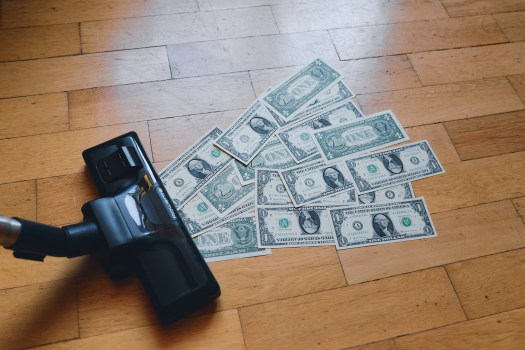
(Image via Unsplash)

Given that this blog is crossposted to LinkedIn, I’m imagining that the title might be provocative. It should be, of course, but I don’t think it’s wrong.

Lots and lots of people hate paying taxes, because they think as consumers. The money we pay in taxes doesn’t immediately reflect itself in goods and services obtained. (Actually, a surprising amount does, if we benefit from research or education or highways or the Internet or a defended nation or a river that doesn’t catch fire or whatever. They’re just not a) fun or b) visible as purchased goods.)

The proportion of our purchases that goes to the profit for the businesses that provide goods and services doesn’t benefit us, either. When gas was five bucks a gallon in early COVID, the oil companies made absolutely astonishing profits; the costs for raw and refined products didn’t actually change all that much. It was just that BP and Exxon and Shell knew they could take advantage of crisis and confusion. But even at the smaller and more honest scale, let’s say you have a driveway poured. You pay X for that service, which actually includes a ton of sub-components: materials, equipment, labor. But part of thatโ€”let’s say five percent of the price you payโ€”goes to the profit of the concrete business. You’ll never benefit from that, nor will the workers. It’s not even the owner’s salary; that’s part of the expenses. The profit is the owner’s tax on the transaction.

That concrete business had material delivered from a concrete plant, which made a profit. They drove to the job site in a mixer truck; the manufacturer of that truck, and the shop that maintains it, both made a profit. The contractor has a couple of pickup trucks; Ford or GMC made a profit. They hauled forms to the site on a boom truck; the truck manufacturer and the boom manufacturer both made a profit. Every step along the way, the ownersโ€”not the managers, not the workersโ€”skimmed a little off the top. The homeowner probably paid a 25-40% collective tribute to all the owners in the chain. That $20,000 driveway could have been fifteen or less, except for all the ownership surcharges.

Workers don’t make a profit. Consumers don’t make a profit. We pay the ownership surcharges, which flow only upward. I don’t know about you, but I’d rather pay taxes for drug rehab and homeless shelters and public libraries. I don’t get to make that choice, of course, because someone entirely unaccountable to the public skims their sliver and never has to justify, or even disclose, what they’ve done with it.


I read a great commentary today by the economist Kathryn Anne Edwards. She talks about the foolishness of trying to revive the manufacturing economy, but I want to quote a slightly different part of her talk:

If you really wanted to have good middle-class jobs in the U.S., you would identify the jobs that canโ€™t be exported and replaced by a machine, andย you would ensure that those jobs are high quality and well-paid. What made a manufacturing job good is that they were high-paying, had health, and had retirement. Thatโ€™s not special to manufacturing. Thatโ€™s just special to labor economic policy. The jobs that canโ€™t be exported that need people like are teachers, nurses, doctors, childcare workers, a lot of these pink-collar jobs that have never had the type of economic leverage to demand higher quality.ย Not to mention the retail sectorโ€”people who work in kitchens, people who bring you food, people who take your bag up to your room when you check into a hotel. We have a massive sprawling low-wage service sector. You could make that into the middle class if you really wanted to, but I donโ€™t think we want to.ย 

No. I don’t think we want to. Unions bad. Government bad. Invisible hand always help. Ugg.


Let me throw another quote out here, this time from Finian O’Toole’s review in the New Yorker of a new book by the historian Padraicย X. Scanlan, called “Rot: An Imperial History of the Irish Famine.

It was obvious to outsiders that the root of Irelandโ€™s misery was what de Beaumont characterized as a โ€œbad aristocracyโ€โ€”the monopolization of land by a small รฉlite that had no cultural or religious affinity with its tenantry and little sense of obligation to develop sustainable agriculture. But an English ruling class in which many leading politicians were themselves owners of vast estates in Ireland was unable to acknowledge this inconvenient truth. Who, if not the landlord system, could be to blame? It must be the Irish poor themselves. As Scanlan puts it, โ€œIntensive monoculture made Irish potatoes vulnerable to blight. The solutions proposed to mitigate famine were themselves the product of a kind of intellectual and political monoculture. Solutions were unimaginable outside the market that fuelled the crisis to begin with.โ€

In a neatly circular argument, the conditions that had been forced on the laboring class became proof of its moral backwardness. It was relatively easy to plant and harvest potatoesโ€”therefore, those who did so had clearly chosen the easy life. โ€œIreland, through this lens,โ€ Scanlan writes, โ€œwas a kind of living fossil within the United Kingdom, a country where the majority of the poor were inert and indolent, unwilling and unable to exert themselves for wages and content to rely on potatoes for subsistence.โ€

This is about as good a summary of capital extraction as one could imagine. It’s always been easy to blame the poor for being poor, but the tentacles of profit drain us all dry.

More tomorrow.

Second-Tier Oligarchs

Remember when we thought HE was stupid? Ah, for the good old days.
(Image via Wikimedia)

We often think of oligarchy in immediate termsโ€”a handful of people with whom all of the power and wealth are vested. One of the less-considered impacts is that after a few years, we’re left with their kids, who are even stupider and more venal than they were.

The Republican Party, who seem somehow to have captured the working class, keep putting up one nepo baby after another. George H.W. Bush, the son of a senator/investment banker and grandson of a railroad company president. George W. Bush, further down the creek than that. Mitt Romney, son of a state governor and automaker president. DJT, the ultimate failson, riding the family fortune into the dirt over and over and somehow still convincing people to lend him credit and credence. Elon, child of a wealthy landowner and jewel dealer.

We see this elsewhere, of course. Papa Doc and Baby Doc Duvalier in Haiti. Uday and Qusay Hussein in Iraq. King Charles. A.G. Sulzberger, the sixth-generation publisher of the New York Times who never would have risen that far on individual merit. All of the Kardashians. And the ultimate DEI hires: Don jr., Eric and Ivanka.

When I was a postdoc at Duke, I kept hearing other postdocs talking about something their mother had done as an administrator at some college, or something their father had done as a professor of chemistry. It seemed too common to be coincidence, so I literally went door to door and asked each person what their parents had done for a living. Fourteen of the twenty-six had one or both parents in higher education.

When power can be inherited, we can’t talk with a straight face about meritocracy.

The Pipe and the Rope

Today’s metaphor.

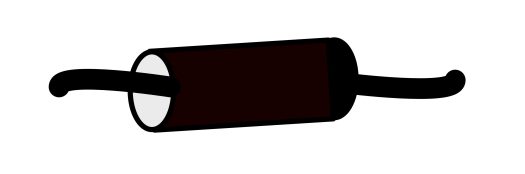
Imagine, if you will, a length of rope, running through the center of a long metal pipe so that there’s some rope on either end. Let’s use the total length of the rope to represent an economy: all the material wealth that a nation generates. The amount of rope remaining on one side is the benefit to consumers; the amount of rope remaining on the other side is the benefit to workers. The pipe is the benefit to the owners.

Capitalism benefits the pipe. Government benefits the rope.

Left to its own devices, the investment community would increase the length of the pipe indefinitely, leaving no rope exposed at all. We see that every time we’ve have a colonial excursion, for instance: the money flows home to the wealthy in England, and the subjects get… well, they get the short end of the rope, don’t they.

“Back in the day, when America was great,” we were governed by wild-eyed Marxists like Harry Truman and Dwight Eisenhower, who tried to leave as much rope available as they possibly could. It was a pipe-shortening era, with extraordinary marginal tax rates at the top end of the scale and relatively low taxes for average workers. In 1960, the median family income was $5,500, and their Federal income tax rate would have been 20% on the first four grand and 22% on the remainder; on the other end of the scale, family income beyond $400,000 (about four and a quarter million dollars in current value) was taxed at 91%.

The results are clear. The Economic Policy Institute shows that in 1965, the average CEO/corporate president made twenty times as much income as the average employee; in 2021, that ratio was 399 to 1. For those at the top, it pays to elect people who make that pipe as long as it can possibly be. That’s the definition of oligarchy.

The great trick of the past sixty years has been that the lengthening of the pipe has mostly been toward one end. Wages have been stagnant or worse for decades, and employees are shed in massive waves of gigification. Whether you drive a cab or teach in college, you probably don’t have “a job.” But we’re all happy consumers, with our array of fancy coffees and artisan body wash and “free” internet content. Bad wages are the norm, but an eight-dollar carton of eggs will lose you an election.

And yes, capitalism as the engine of prosperity, blah blah blah whatever. Prosperity is the overall length of the ROPE, not the proportional length of the pipe. Don’t confuse the two.


All of the above is only economics. It only has to do with things that can be measured in dollars. (I had a teacher in grad school who spent his whole career studying spatial design in shopping malls. “I love shopping malls. There’s only one variable that matters: dollars per square foot.” A great example of a wicked problem artificially tamed.)

That’s the other thing that government attends to: things that can’t be measured in dollars. Things like health, and dignity, and beauty. I’ll close today by quoting Robert F. Kennedy (the real one, not the washed-out photocopy we’ve got now), speaking in 1968 at the University of Kansas.

But even if we act to erase material poverty, there is another greater task, it is to confront the poverty of satisfaction – purpose and dignity – that afflicts us all. Too much and for too long, we seemed to have surrendered personal excellence and community values in the mere accumulation of material things. Our Gross National Product, now, is over $800 billion dollars a year, but that Gross National Product – if we judge the United States of America by that – that Gross National Product counts air pollution and cigarette advertising, and ambulances to clear our highways of carnage. It counts special locks for our doors and the jails for the people who break them. It counts the destruction of the redwood and the loss of our natural wonder in chaotic sprawl. It counts napalm and counts nuclear warheads and armored cars for the police to fight the riots in our cities. It counts Whitman’s rifle and Speck’s knife, and the television programs which glorify violence in order to sell toys to our children. Yet the gross national product does not allow for the health of our children, the quality of their education or the joy of their play. It does not include the beauty of our poetry or the strength of our marriages, the intelligence of our public debate or the integrity of our public officials. It measures neither our wit nor our courage, neither our wisdom nor our learning, neither our compassion nor our devotion to our country, it measures everything in short, except that which makes life worthwhile. And it can tell us everything about America except why we are proud that we are Americans.

Death Before Dishonor

No rules.
(Image fromโ€”no shitโ€”the International Spy Museum in Washington D.C.

Irish Alzheimer’s: Having forgotten everything except your grudges.

In 1960, the population of Vermont was just shy of 390,000 people. Within twenty years, it was almost half again as large, as the hippies and the back-to-the-landers flooded north from New York and Connecticut and Massachusetts (the invading population collectively known as “flatlanders”). People who came to the country with their city ways, who learned how to farm from reading the Whole Earth Catalog and Organic Farming and Gardening instead of from their grandparents, who were happy to show the old-timers “a better way” to do something or another. And a vast number exchanged big-city life for small-city life, swelling the populations of Burlington and Barre, and creating meaningful suburbs from the small towns around themโ€”tripling the size of South Burlington, quadrupling Shelburne, growing Williston by sixfold, all within the Burlington gravitational field.

To this day, a sense of being disrespected motivates a broad swath of “real Vermonters.” I remember a fairly contentious public meeting a few years ago in which one of the beleaguered asked their questioner,”yeah, well, where are YOU from?”

“I’ve lived here for thirty years.”

“Yeah, but where are you FROM?”

“Ohio.” And the point was made.


Honor cultures are those in which respect is a vital currency, and disrespectโ€”whether real or imaginedโ€”is the worst possible offense. There’s some evidence that honor culture may have its origins in herding communities, in which any possible threat must be addressed instantly (as opposed to crop communities, in which land occupancy is stable and one has to learn to deal with the neighbors). Gangs of all sorts are honor communities, because they’re constantly defending or encroaching upon turfsโ€”wearing the wrong colors in the wrong part of town, or usurping gang regalia without actual membership, can be fatal.

And this, to me, is why waiting for Trump voters to feel betrayed by their leader will not be a winning strategy. There’s a whole group of Americans who’ve felt themselves talked down to for decades; that enduring sense of being disrespected makes “owning the libs” far more important than any good outcomes they might hope for themselves. As the Japanese proverb has it, “if you want revenge, dig two graves.” More important to hurt us than to help themselves.; death before dishonor.

We’ve been divided by decades of curated grudges, amplified by those who benefit from our division. “Those _______ think they’re better than you,” they say, and then fill in the blank: women, African Americans, queer folks, college-educated, urban, take your pick. It works the same way as middle-school lunch tables: “You know what Jenny said about you this morning?” And discord is sown and amplified, with the real power flowing to those who pull us apart. Feuds never end, and never actually achieve strength; they just give us someone else to feel good about hurting.

Generosity is a slow sauce, but it’s the only viable option. Someone has to be grown-up enough to not spin the endless cycle of pain delivered and pain received. Only then can we be allies in the work against the people who harvest wealth from our division.

Run Government Like a Business? No Thank You!

Let’s put a core principle on the table: Business and Government are inherently countervailing forces, and should be. If business is the engine and drivetrain that powers a nation, government is the suspension and brakes that makes it operable and safe. All brakes, and it doesn’t run; all engine, and you put it into a tree in no time. The question of balance between functions has vexed every carmaker from Ferrari to Yugo, and it’s an important question. But just to decide that we don’t need half of the car? Dumb.

For a hundred years, Republicans have asked for the biggest engines they can get, even though they have no idea how to drive. And like young Vermonters in their vast diesel pickups, they make tons of noise and have a load of fun… until they put it into a tree.

Herbert Hoover: The Roaring 20s, followed by the nation’s worst depression.

Richard Nixon: American manufacturing converted into American retreat.

Ronald Reagan: eight years of dementia followed by the savings and loan collapse.

George W. Bush: took Clinton’s balanced budget, said TAX CUTS, DUDE!!!!, and drove us into debt again.

Trump the first time: the guy who said COVID would just disappear, like magic, costing a million American lives and hundreds of billions of American dollars.

Trump the second time: raw, unfettered oligarchy.

It was P.J. O’Rourke who said “Republicans campaign on the idea that government doesn’t work, and then they get elected and prove it.” But it’s so much FUN to drive fast and stupid!

This time around, though, it’s more sinister. This new breed of Republicans want to purposefully make sure that government doesn’t work, that we’re dissatisfied with it, so that we quit having any expectations at all and are willing to privatize all of it. (Ever try to get customer service from Comcast? From Blue Cross? From American Airlines? Good luck with that.) When Obama was working toward the first iteration of the ACA, there was a lot of noise about “death panels,” government bureaucrats who would decide whether or not you were worth treating. Well, friends, we already had death panels and still doโ€”they’re called insurance companies.


Government is not, and cannot be, and should not be “run like a business.”

First off, 80% of businesses go broke in their first five years, and tons of successful businesses go feet-up without much warning. We can’t take the chance on that kind of instability when we talk about our water quality or prisons or traffic lights. One of the crucial functions of “the deep state” is to provide expertise and stability that’s hard for any individual congress or president to screw up, unlike a Chrysler or Boeing or Kmart which can fail at any moment. (We may be testing the limits of how much malice can be absorbed before we break government systems forever.)

Second, are we really prepared to say that tens of millions of people should starve to death because they can’t hold jobs? For whatever reason? Every dollar we spend to house and feed and rehabilitate and support the poor would be withheld if they were seen merely as customers who couldn’t afford service. Every dollar we spend to reduce drug prices and to develop new ones keeps lifesaving treatments from being luxury goods.

Third, almost every business success is dependent on something that government did, and that ONLY government could provide at the necessary scale. Whether it’s streets and highways, or general-service police and fire instead of private armies, there are things that can only be done by pooling the money of a hundred million people. As someone once put it, I can’t buy a hundred dollars of clean air. But all of our hundreds put together can accomplish important pollution reductions.

(Not to mentionโ€”ski resorts operate on mountainsides largely groomed in the 1930s by the Civilian Conservation Corps, your GPS works because of satellites and standards developed by the Department of Defense, and you’re reading this on a distributed network originally designed and maintained by ARPA and the NSF. Bezos and Zuckerberg and Musk owe every single dollar they’ve ever made to government investment.)

The valorization of the American capital class is an important story, and it isn’t wrong. But it also isn’t complete. We celebrate the ones on top and never mention the thousands of entrepreneurs whose ideas came to entirely warranted deaths, nor do we talk about the millions of jobs that came and went without anything to do with the quality of the workers. And we neglect the fact that every business exists in a physical and social and policy ecosystem that existed before it came along. None of us are lone heroes; we stand on the unseen work of millions and millions of others, in an environment made safe and level and predictable… by government.

Flood the Zone

The Executive Branch at work

โ€œThe Democrats donโ€™t matter. The real opposition is the media. And the way to deal with them is to flood the zone with shit.โ€ โ€” Steve Bannon

Every so often, someone accidentally copies me on a wingnut nonsense post. I’ll use one example, from a former colleague on our little town’s Selectboard. He posted some smirking bullet list of liberal outrages, and sent it to a dozen or twenty people. I recognized right off the bat that a bunch of the points were just nonsense, so I spent the next six hours doing my research to find credible data that demonstrated the fallacy of each of those assertions. Six hours. I then sent it to the guy who sent the message to me, and he replied, “Well, I just thought it was funny.”

He’d spent two minutes reading it, and another minute to build his mailing list to send it out another dozen times. I spent six hours to correct it, and sent my response just to him. And therein you can begin to see what we’re up against.

Fox News defended itself in a 2020 slander case by successfully arguing that “no reasonable viewer” would believe that Tucker Carlson was engaged in factual, literal reporting. “Carlson cannot be understood to have been stating facts, but instead that he was delivering an opinion using hyperbole for effect.”

Rush Limbaugh: “First and foremost I’m a businessman. My first goal is to attract the largest possible audience so I can charge confiscatory ad rates. I happen to have great entertainment skills, but that enables me to sell airtime.โ€

Donald Trump: “I play to people’s fantasies… a little hyperbole never hurts. People want to believe that something is the biggest and the greatest and the most spectacular.”

Judicial review takes time. Accurate research and rebuttal takes time. Outrage and spectacle take no time at all. Just as reflexive statements like “common sense” and “libtards” and “DEI hire” take no time at all. No need to listen when all you have is a megaphone. I just got off the phone with a friend who said, “he’s a bully, and when someone stands up to him, he backs down.” But in the meantime, the administration lays off two thousand people from NOAA. Real lives, whose work has real professional implications for public safety. What they can break in a few hours will take us years to rebuild.

Another friend wrote me a couple of days ago. “When youโ€™re in a street fight, you donโ€™t assume the posture of a boxer. ย Thatโ€™s a gentlemenโ€™s game. ย You pick up a handful of dirt and throw it in your opponent’s eyes. and while they are blinded, you kick them in the balls.” It seems that facts, like the Constitution, are a gentleman’s game, vulnerable to those who walk in with a chainsaw and no moral core. And our playing by the rules just buys them more time.


A few years ago, a colleague asked me to help her learn to teach people to innovate. “Innovate isn’t a verb,” I said. “You only know whether something is an innovation after the fact, when other people start to use it too.”

“So what’s the verb?” she said.

“Reimagining constraints.”

The old-school Democrats, raised in a different era where the rules were generally adhered to, haven’t been particularly effective at dealing with the institutional lawlessness of the GOP as currently configured. (The whole Republican infrastructure is ripe for a RICO prosecution, like any organized-crime gang.)

We’re polite. We believe in procedure, and in letting everyone be heard. And it’s hard for us to go against those established habits. But those are the kinds of invisible constraints that keep us from imagining new paths against lawlessness. It’s time, as our Canadian friends remind us, for “elbows up.”

Unspeak

1984 software update complete…

The purpose of Newspeak was not only to provide a medium of expression for the world-view and mental habits proper to the devotees of Ingsoc, but to make all other modes of thought impossible. โ€” George Orwell

When our lives are filled with wicked problems, it can be comforting to believe that we have sufficient mastery of the complex world, that there’s some certainty to attach our wagons to. Part of that work is linguistic, adopting language that sounds explanatory but is actually just soothing, like an incantation. Along with “common sense,” there are a lot of other contemporary phrases that do the same work of compressing complexity, disregarding difference, flattening expertise, demeaning others, and closing off conversation.

Any effort to see that the whole world doesn’t conform to white heterosexual male experience is written off as Woke. The full phrase is “woke bullshit,” which is the equivalent of sticking one’s fingers in one’s ears and shouting “la la la I can’t HEAR you.”

Any effort to point out that what the President is doing might be illegal, opposed to the principles of democracy, or part of a long career of money laundering for oligarchs, is attributed to Trump Derangement Syndrome.

Any woman or person of color in a job or a seat in college is labeled a DEI/Diversity Hire, (My favorite meme of the moment is that the essence of DEI hires are Don Jr, Eric, and Ivanka, all of whom were clearly promoted through something other than merit.)

Any attempt to place boundaries on the most rapacious forms of economic exploitation is Socialist/socialism.

Experts who know what they’re doing, who happen to work for a government agency, are the Deep State.

We can go on. Patriotism is the belief that only American interests are legitimate, and that it’s easy to know exactly what “American interests” are. (I mean, it’s just common sense, right?) Government Waste is any program that doesn’t benefit the speaker personally, God’s Will is a shorthand for “my opinion, with a club in its hand,” and a Mandate is the inevitability of the Emperor’s wishes.

Part of the work of these short-circuiting terms, like “common sense,” is just meeting the demands of low attention, the equivalent of tl;dr. But the bigger function is to end the feeling of being harangued by uncomfortable facts, to close the door to complexity or compromise or mutuality.

Yet more tomorrow.

Wicked Problems

No, not like that

I wrote yesterday about why “common sense” isn’t sufficient to address most of our questions. Today I want to elaborate on that, using one of the articles that has shaped my thinking for thirty years: “Dilemmas in a General Theory of Planning,” by Horst Rittel and Melvin Webber. (Horst was one of my teachers at Berkeley, a true mad scientist of design process.) The article puts forth the idea that there are problems that can be solved, and problems that can be temporarily resolved. They developed the idea of “tame” problems, which have rules and definitive outcomes, and set that against the idea of “wicked” problems. The original formulation of wicked problems has ten characteristics; I’ve combined them somewhat.

  • Frame Diversity: there’s no definitive way to frame the problem. Every problem can be seen to be just a symptom of another problem. Different people will reasonably disagree about what the problem even IS, and why it matters, and to whom. The choice of evidence we bring to the table will reflect our own definition of the problem, and our judgment of whether or not we’re doing “better” than we had been.
  • Leverage Diversity: every player has a different body of knowledge that leads them to take different kinds of actions. Let’s think about a “good city.” Some professionals will work toward that economically, some aesthetically, some socially, based on what they know how to do. Us amateurs will work toward that through persuading neighbors, threatening neighbors, running for office, cleaning up our yard, putting bars on our windows, or a thousand other means of action. The way we think about the problem depends in part on the tools we have for the task.
  • Perpetual Motion: there’s no point at which the problem is done, because it exists in an ongoing system. Every action we take changes the problem. And every instance is a little (or a lot) different than the others, so learning from experience is limited.
  • Important Ramifications: every attempt changes people’s livesโ€”in both the short and long term, in ways that are immediate and decades away. To use Rittel and Webber’s lovely formulation, “the designer has no right to be wrong.” Just as importantly, we have no right to ignore the problem, which is its own action with its own ramifications. Everything we do, or don’t do, matters.

In the fifty years since publication, some other folks have added more characteristics, and I’ve thought of a couple myself.

  • Urgency Diversity: every day without a solution brings us further toward bad outcomes. But we have some comfort and familiarity with how things work now, and we’re resistant to change.
  • Information Diversity: we all work from limited information. Leaders can be out of touch with customers or citizens, and customers don’t have any idea how complicated the work of the business is. We all read different things, have different educational history, are part of different social networks. And because of the economic importance of the work, there’s motivation to lie
  • No One Can Save Us. There’s no external force who can come in and fix things. All of us who create the problem every day are the ones who have to clean it up. And of course, we all disagree about what we can do or why we shouldn’t.

I did a talk on this idea about ten years ago at a college symposium. Afterward, one of the attendees told me that this approach seemed nihilisticโ€””I guess we all just throw up our hands and let things happen.” Given that he was a research chemist, his response was no surprise: he’d built a career dealing with tame problems that respond to known rules, that can be subdivided into subtasks and then reassembled, that have precise instrumentation, that have singular outcomes that do or don’t conform to expectations. The experimental method is based on the reduction of confounding variables, and wicked problems are nothing but confounding variables.

Henry Ford didn’t know that his horseless carriage would change city planning worldwide. A handful of engineers communicating on ARPANET didn’t foresee TikTok or 4chan. Wicked problems are inherently ecological; when we pretend they’re tame, we screw up a TON of other things.

More tomorrow.

Against Common Sense

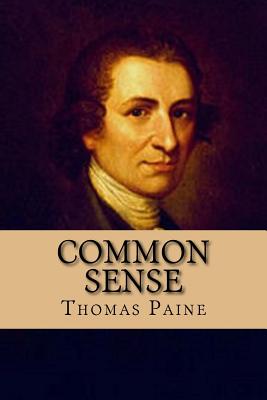
Sorry, Tom.

Nora and I often say that the State Motto of Vermont should be, “Huh… don’t know that I’d’a done it THAT way…” Every time a contractor comes to do a repair, or a mechanic gets under the hood, it’s a guarantee that we’ll hear some version of that in reference to someone else’s prior work. Everybody’s an expert in road repair, snow management, pie crusts, dog trainingโ€”and they don’t mind informing the world of what everyone else has done wrong. And once they tell you what they think should be done, they’ll end with, “It’s just common sense.”

I’ve come to believe that the phrase common sense is a shorthand for “I haven’t thought about this too hard, but I know my own biases and preferences.” It’s a phrase that does several simultaneous pieces of work:

It oversimplifies complexity. (We’ll talk more tomorrow about wicked problems.) There might be two dozen competing variables in how a problem gets resolved; if you choose only one as your sole guidepost, the navigation is simpler. It’s wrong, but it’s simpler. Social problems don’t often have single and unambiguous answers, like arithmetic does.

It disregards difference. The idea of common sense presumes common values, common goals, common language, common histories, common culture. It’s linked to the same project as our current hysteria over DEIโ€”there’s one right interpretation, one right course of action, one right community, and all others are deviant or inferior.

It amplifies the voice of the inexperienced. I had someone on the phone a couple of weeks ago who wanted more sand on her hillside road. She’s never done any road maintenance, but had no problem substituting her own judgment for that of our 40-year-experienced road foreman. “It’s just common sense,” she said.

It demeans others. Anything that’s “just common sense” is obviously contrasted against things that don’t make sense. The other is not merely wrong, but dumb.

It demands closure. “It’s just common sense” is another way of saying “I’m done listeningโ€”I don’t care to learn any further.” It scribes the line in the sand beyond which no ideas can encroach.

“Common sense” is the field marking of the incurious and disdainful, and holds particular power in our current, incurious, and disdainful moment.

More tomorrow.

Today Tested My Kindness

The cruelty is the point: a momentary sense of victory in an otherwise diminished life.

There’s been a saying going around for a few years: “You can’t win an election by calling people stupid.” Well, 2016 and 2024 were empirical evidence to the contrary. Liberals and progressives weren’t merely called stupid, but evil and deranged and socialist. The name-calling was constant, because MAGA weren’t trying to convert anybody. They were trying to reinforce the voters that they already had.

This afternoon, I was in the parking lot of the local Shaw’s supermarket, always an ethnographically rich experience. Macho cars and pickups in various states of disrepair, people far too young to be missing all of their teeth, gaggles of people whose family relations were impossible to even begin to guess. (One of our neighbors got remarried to a far younger woman; they had another kid themselves, and a friend pointed out that the new wife now had a daughter-in-law older than she was.) And the word that came to mind was lumpenproletariat.

I can call out my white-trash relations because I was one. My father couldn’t move away from the African Americans he despised because he’d spent all his money on beer, cigarettes, project cars that rarely ran, and fishing boats. I know that black-flag-bumper-sticking-2A-god-guts-and-glory bad beer bullshit far too well. We aren’t converting any of those folks, even though we’ve invisibly supported their dysfunction for decades. You want to talk about “makers and takers?” Makers: California, New York, Massachusetts, Connecticut, Delaware. Takers: Mississippi, Alabama, Arkansas, South Carolina, Kentucky, West Virginia, Idaho.

Indeed, because it acted only out of socially ignorant self-interest, the lumpenproletariat was easily bribed by reactionary forces and could be used to combat the true proletariat in its efforts to bring about the end of bourgeois society. Without a clear class-consciousness, the lumpenproletariat could not play a positive role in society. Instead, it exploited society for its own ends, and was in turn exploited as a tool of destruction and reaction.โ€”Robert Brussard, 1987.

Does this sound familiar to you? Does this sound like your “Let’s Go Brandon” neighbors? Easily bribed, exploited as a tool of destruction and reaction? Complaining that they can’t get ahead, never considering the role of the monster Ram coal-rolling pickup in the driveway and the scatter of other discarded and broken notions all around the house?

The lumpenproletariat hates the well-educated, mistaking us for the elites like Musk and Trump and Bezos who’ve actually gotten rich from exploitation. We live closer by, and are more visible and thus easier targets of their resentment. (Pretty much EVERYBODY is doing better than the lumpenprole, so their resentment overfloweth.) Own the libs, amirite?

I try. I really do. I don’t mind paying taxes to support things I don’t use directly, because I understand the difference between being a citizen and being a consumer. I can be kind to stupid people. But I can’t be kind to people who want to hurt millions of others just because they feel aggrieved. The fact that they simultaneously hurt themselves is just an inevitable byproduct, and one that I can’t be too upset about. I’ll help take care of them after the fact, as good liberals always do.

  • Forgive your brother seventy times seven.
  • Whatever you did for the least of my brothers, you did for me.
  • Let’s abandon Ukraine, threaten Canada and Mexico, and eliminate USAID.

Which of these things is not like the other?

Do better.