Central Place Theory

Remember when destination weddings were a thing? When prima donna brides just told everyone they had to fly to Barbados or Denali if they wanted to participate in the wedding? Yeah, I’m glad that’s over, too.

But I’ve now seen a state regional comprehensive college, a school designed specifically to serve students from a particular catchment area, publicly state its desire to become “a destination university.” Well, aside from out-of-state tuition being more than double the in-state rate, I’m wondering why they’d want that. (Cynically, I suppose that IS why they want that.) I’m also wondering what they think they’d be offering as the lure for those destination students.

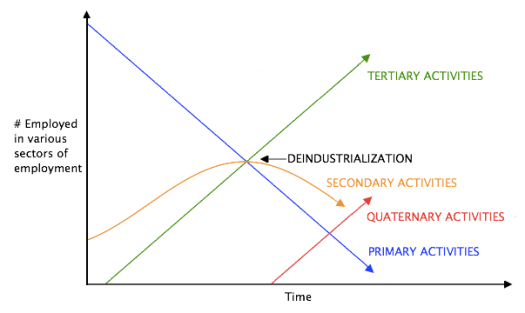
Back about 80 years ago, a German cultural geographer named Walter Christaller developed a theoretical system of habitation scales that he called Central Place Theory. The fundamental point was that it took a specific scale of population to be able to offer specific kinds of services, so towns of smaller size would be served by one central place of larger size, those places themselves being served in some number by a city of even larger size, and so on. Here’s an example:

  • My town, Middletown Springs (pop. ~725), has a post office, general store, church, and takeout restaurant. If you want to buy gas or go to a full grocery store or get your hair cut, you’d drive to…
  • Poultney (pop. ~3,000). But if you lived in Poultney and wanted to go to a movie or a Home Depot or buy a new car, you’d drive to…
  • Rutland (pop. ~16,000). But if you lived in Rutland and wanted to go to an elite restaurant or see a major performer live or go to a nationally connected airport, you’d drive to…
  • Burlington (pop. 35,000). But if you lived in Burlington and wanted to go to a world-class symphony or a major-league baseball game or an international caliber hospital, you’d go to…
  • Boston (pop. ~700,000).

Public higher education has long been organized in a sort of central-place-theory model, in which the dozen scattered campuses of the Community College of Vermont serve the smallest regions, the four baccalaureate (and increasingly master’s) Vermont State Colleges serve the State’s more advanced educational needs, and the singular University of Vermont is the research university with the med school and the doctoral programs.

This model is the norm around the country. Michigan has 28 community colleges, a dozen regional colleges (sometimes called “directional schools”—Eastern, Western, Northern, Central, etc.), and three research flagships. California has 114 community colleges, 23 Cal State master’s level schools, and ten University of California system research schools.

And I honestly have no idea why anyone would travel to any of those middle tier of schools. Why on earth would anybody from (say) Minnesota want to go to college at (say) West Texas A&M? One reason: for over a decade, West Texas had one of America’s elite college bowling programs. So that’s a good reason for, like, 15 people to go there. Everybody else, not so much.

And that’s not to say that West Texas or its compatriots are bad schools, of course not. But destinations? Why? On what grounds? When I lived in far northern California years ago, kids came from away to go to Humboldt State because it was a beautiful landscape in a very specific way (green, foggy, rainy oceanfront), and because high quality marijuana was vastly, easily available. Now that recreational pot is legal in California, I predict a substantial enrollment decline at HSU. It’s a good school, but why go there and not Chico State or Fresno State, much less come in from far away and pay double rate?

All this reminds me of something Nora’s knee surgeon said to us a couple of years ago. “I do four hundred of these a year, I’m really good at it. But there are a thousand people in America who are really good at it. I appreciate it when people make referrals to me, but there’s no sense in driving past another hospital to get to this one.” So why would anybody drive past dozens, or hundreds, of other state schools to get to yours?

Keep It Real

One of the things that bites me is when someone contrasts college against “the real world.” At any given moment, there are twenty million people involved in higher ed: as students, faculty, staff, and administration. That’s almost ten times the number of people involved in every branch of the armed services and Department of Defense combined. Anything that twenty million people are doing seems to me to be, by definition, real.

I had yet another person reach out to me today about the book, talking as so many people have about how much they miss their students. And I do, too. But let’s be specific. What do I miss about them?

I miss how much they want, and how open they are to trying. Trying damn near anything. If we give them work they find meaningful, they throw themselves into it with an abandon that I always found breathtaking. We are blessed to work with young people during their age of optimism, before the “real world” has broken them to cynicism and limited their beliefs.

I miss how much they love each other, how willing they are to have each others’ backs, how easy it is for them to share what they’re afraid of and what they dream of, and that so many of them are able to hear and respect each other. We are blessed to work with young people during their age of inclusion, before the “real world” has finalized its sorting into us and them.

I miss how easy it is for them to try new things, and to imagine themselves to be new people. We are blessed to work with young people during their age of possibility, before the “real world” has insisted on a career path and a job title.

One of the things I fear about our wholesale adoption of the “workforce development” model of higher ed is that it introduces cynicism and transactional thinking into what could be the last protected place. The entire logic of workforce development, for colleges and students alike, is simple: “If I do X, then I can have Y.” It eliminates considerations of optimism and inclusion and possibility, setting them all aside in favor of comfort and predictability and economic development.

The Urban Dictionary offers the following definition (from 2003) of the term keep it real: “When someone does not change who they are or what they believe due to societal pressures.” College—positioned as it is prior to life’s most weighty societal and economic pressures—might represent our last (and most) real place.

Adult Uncertainty

So many people I know right now are making decisions about who they are, and who they should be. About whether their path is productive and joyous, or habitual and enervating. About whether to spend their scant time on this good project, or on that good project. One of the things that’s come from this book is that people have felt brave enough to reach out with their uncertainty, to honor me with their confusion.

The defining condition of being grown up, it seems to me, is that you do things that you aren’t certain about. Adults, if they’re any good at it, are never, ever sure about much of anything. They make decisions for themselves and on behalf of other people without any guarantees. They always know that they’re choosing between good ideas, that doing one thing that they want will make them not do another thing that they want.

And we’re not just uncertain on our own behalf, because our lives are inevitably bound with lives of others. We’re doing things now that will make people’s lives different ten years from now, or twenty. And things that will change the lives of people we don’t even know. Nobody should ever imagine that they know, really, how any of that will come out, that one of those choices is the right one and all the others are wrong. It doesn’t work like that. It’s not arithmetic, or a crossword puzzle, bounded and non-contextual.

It’s no surprise, in the midst of that turmoil, that people sometimes reach for certainty, for something that can add a stamp of external validation. Sometimes religion, sometimes political parties, sometimes thumping one’s chest on 4chan or a website comment board, all of those can be moments in which we’re temporarily relieved of the human responsibility of uncertainty and can just declare that we’re right.

Last week, I drove 450 miles down Interstates 87 and 95 and the Garden State Parkway, and then turned around five days later and drove back. That’s a lot of attentiveness and navigation and traffic awareness, and I was grateful for the rest stops that occasionally gave me ten minutes to be out of the car and in the bathroom and just off the road. They were moments of certainty that readied me for the next two hours of churn.

Rest stops are important. But I wouldn’t want to live in one, forever eating at Roy Rogers and Sbarro, comforted by the limits of the menus and the spaces, safe from all dangers. Grown-ups get back in the car and head out again to navigate the precarious, fluid world.

Sliding Scale Tuition

Two weeks ago, the National Association of College and University Business Officers (NACUBO) released their annual analysis of tuition discounting, showing that for the first time, the collective discount rate for all freshmen enrolling in private colleges topped 50%. That is, private colleges collected on average only 47.5% of their list price for each student. Public schools discount less, of course, but still, it’s a big hit to take, and leaves each family wondering what the actual cost of a college might be. I just heard an interview with the outgoing president of the just-closed Green Mountain College, who said during their final academic year, they didn’t enroll one single student who paid their full listed tuition rate. And that was part of their doom.

In the interviews I conducted for the book, a senior administrator of a private college in the Midwest said that their 3,673 students paid 2,150 different prices to attend. And all of that was just invisible, calculations made for each student that families never knew about when they were thinking about applying.

So here’s an alternative model. I know it’s naive, but unless we try some naive strategies, we’ll just keep doing the same sophisticated failures we do now. Dare to be simple.

We’ll use some round numbers. Let’s say that Whassupwhich U* has a list tuition price (exclusive of room and board) of $50,000, once a horrifying number and now horrifyingly normal, and an operating budget of $50 million for its two thousand students. If all of those students paid full price, they’d make double that amount. They want to practice a form of progressive taxation, in which well-to-do families help to support those students who came from more humble means, so they’re going to discount quite a bit. They could just put the following numbers on their website:

  • Incomes less than $60,000 per year pay no tuition
  • Incomes from $60-120K pay half tuition
  • Incomes from $120-200K pay 80% tuition
  • Incomes over $200K pay full tuition

That’s it. No negotiations, and no questions. So that means that WU needs to enroll a certain number of students from each category to make its numbers. They can talk publicly about that, too. They need 400 students to pay full ride (making them $20,000,000); 600 students paying 80% (making them $24,000,000); 600 students at half price (making them $15,000,000); and 400 students get to go for free. The WU overall tuition income would be $59 million, more than enough surplus beyond their $50M budget that they’ll be okay if something gets hinky. And every student and every family knows how many students they’ll REALLY be competing with for admission, right from the first glance at the website.

I’m very Midwestern, and we hate to negotiate. We go to the store, the can of soup costs $1.69, and we pay it or we leave it on the shelf. We don’t believe that anybody owes us anything, but we like clarity in our prices. We believe in fairness, but we’ll never ask for favors ourselves. So any college that just put a simple sliding scale tuition on their website, and told us how many people they needed to enroll from each group, would immediately be attractive to us. Remember when Saturn auto dealers created the no-haggling model? That was a huge selling point for them, and drew tons of people to their dealer network who hated feeling like they had to go to battle just to buy a car. Any college brave enough to be as simple would get a ton of respect and affection before we ever filed our applications.

*a nod to Bullwinkle, who occasionally used to wear a sweatshirt from Wossamota U

The Woven Community of Artists

Aimee Lee: Washed duck (2018). Indigo, onion skin and brazilwood dyes on corded and twined hanji. 3.5 x 6 x 2.5″.

One of the great things about doing creative work is that you get to see tons of other smart, obsessive people doing creative work. Tomorrow is another of the sporadic Google Hangout discussions our writing group holds, reading and commenting on one another’s work from our vast distances. Me in Vermont, Tamar outside Boston, Nathan in North Carolina, Annie in Malmo, Sweden, and Christine in Sydney, Australia. (Managing the time zones is its own creative exercise.) Tomorrow, we’ll be talking about one of Annie’s stories, a beautiful exploration of the temporary insanity that grief can bring.

Last week, I worked with fourteen faculty members from Stevenson University to help shape their work. And I got to read about historical photography techniques, and about the phenomenological philosophy that underlies this scholar’s interests. I got to read about the design of computational experiments in organic chemistry, got to read about the uses of big data in studying writing pedagogy, got to read about the history of piracy in the Chesapeake region. I got to read an overview of a novel about medieval crime-fighting nuns, and the overview of a screenplay about a bluegrass musician. I brought them some writing techniques and a fresh pair of eyes, but they brought me the world.

Nora is at the Marshfield School of Weaving this weekend, speaking as I type this to an audience of fiber enthusiasts about the construction details of the spinning wheels of Samuel Morison. She has loads of friends at this weekend’s conference, most of whom she originally met through the fiber web community Ravelry. They’re staying an extra day after the conference for a workshop by the Scottish-American master weaver Norman Kennedy, now in his mid-80s, who teaches not only the hand crafts but the songs and traditions that form them.

Through the discussions about my book, I’ve been introduced to the writing of Andrew Kay, the Black intellectual life of Uncle Bobbie’s Coffee and Books, and the musicology of Suhnne Ahn. But today, I want to introduce one colleague in particular, the paper artist Aimee Lee. One wouldn’t think of Cleveland as the hub of Korean papermaking in North America, but Aimee does her work there, from raising and harvesting mulberry for fiber, to the creation of pulp, to the screening of the slurry into sheets, to an innumerable array of forms and ideas that grow from that finished paper. Aimee is one of those people who seem to have been allotted extra hours in her day; the scope of her knowledge and her practices (which also include yoga and violin, along with a lot of paper-crafts teaching and writing) is awe-inspiring for us mortals.

We are everywhere, us artists. We are in garages and sheds, in poolrooms and kitchens. We are hidden away behind our laptops, or on stages with audiences of thousands. We are scattered across the landscape, scattered across history. And we search for those moments when we can be woven with others, to make new forms that no one of us could ever have done.

Free College for All

Boy, that makes me nervous.

In principle, I agree with the underlying motivations. College is economically beneficial, but simultaneously too expensive to effectively serve the people who need it most without consigning them to endless debt. We have taxpayer-funded pre-K through twelfth grade, so why not extend that principle? The wealthy will send their kids to elite private colleges, just as they’ve already sent them to elite private schools from kindergarten onward; for the rest of us, public education should be public.

I get it. Really, I do. But here are a few of my fears.

First, when we say “college,” we have no idea what we mean. “College” is like “restaurant,” it’s a category that covers an enormous array of specific experiences. So do we mean Taco Bell for all, or Denny’s for all? Do we mean a Michelin three-star experience for all? Resources that had once been reserved for the elite tend to be democratized in deeply diminished forms. It’s already the case that the colleges that serve the least advantaged and least well-prepared students are staffed by the least well-supported and least permanent faculty; I worry that we’re going to make that even worse if we have to offer it more cheaply and more broadly.

Second, I do believe that all students can learn. But I absolutely do not believe that all students can learn everything. Nor should they be asked to. Just as with musical instruments, we are all best suited for a particular repertoire, things that we enjoy and that come to us more or less natively, things that we can push to greater skill and sophistication. Making me a basketball player, or a mechanic or a plumber, or a chemist, or a dancer, would be a waste of everyone’s time—mine, and all those who sought to push that rock up that hill. So why should we assume that all high school graduates should, or should even want to, go to “college” as we’ve defined it? What is it about 120 credits arrayed across the traditional academic disciplines that’s universally beneficial or universally attainable? (The credential is universally beneficial, I get that, but not especially the experience.)

Third, making a service both necessary and public adds enormous pressures toward compliance and compliance reporting. When something becomes a public service that taxpayers pay for, it’s (justifiably) subjected to layers and layers of rules, assessments, accreditations, dashboards and metrics and sign-offs and reporting deadlines. I’ve been working with a faculty member in education who’s developed an interesting model for teaching middle-school writing. But the education journal he wants to write his article for won’t take it if he doesn’t immediately demonstrate the ways in which his curricular element meets state and federal learning outcomes. So rather than writing about the ways in which this pedagogy creates powerful writing experiences, creates student confidence and productivity, he’s having to spend a lot of his article writing in detail about how it meets standard D.1 through D.4 of the C3 guidelines. We lose track of joy and learning, and reduce it all to compliance and “meets standard.” I don’t want anybody to “meet standard.”* I want them to thrive, in whatever crazy way thriving takes for them.

So I recognize that college is madly expensive, out of reach of a huge community of potential students who have to borrow so much that they endanger the very economic futures that college hopes to protect. But I fear that “free college for all” will exacerbate exactly the economic and social divisions that it hopes to remedy.

*We used to say in architecture school that “meets code” is one step above “goes to jail.”

A Great Good Place

Thirty years ago this year, the sociologist Ray Oldenburg published The Great Good Place: Cafes, Coffee Shops, Community Centers, Beauty Parlors, General Stores, Bars, Hangouts and How They Get You Through the Day (now in its third edition and with a much less compelling subtitle than the original). The book is a celebration of hangouts—of the places that you go only in part because of what’s for sale, far more importantly because you know you’re going to run into some friends and have a conversation, and those friends will introduce you to other friends who will have new and different kinds of conversations. They are social machines, generating and reinforcing connections.

A couple of days ago, I did a book talk at a truly great good place: Uncle Bobbie’s Coffee and Books in Philadelphia. I got there at two o’clock for my three-thirty reading, and got an iced tea and brownie and sat at the counter. There were thirty-five or so people there, but it was far more active, far more conversational, far more inclusive than any Starbucks you’ll ever see. The place was a continual churn of talk and laughter, people flowing through the narrow aisles between the couches and coffee tables and barstools, people hugging and high-fiving and shaking hands, people asking one another what they were reading and what they recommended. These people were neighbors, in the best possible sense, not merely adjacent to but involved with one another.

Uncle Bobbie’s gave me hope. These kinds of places, and the relationships they foster, really ARE possible. They’re rare, but they aren’t gone. We don’t have to communicate with one another just through Twitter and Instagram; we can be with each other, learn from each other, revise our thinking, make ourselves better.

With a Whimper

Vermont is served by a series of local commentary networks collectively called Front Porch Forum. It’s where you turn to get the date of the next Fire Association meeting, or to recruit strong young people to help you load a truck for $15 an hour, or let neighbors know about road conditions or missing guinea hens. It can get a little heated around election time, or with particular pieces of legislation moving through the State senate, but mostly it’s a neighborly, congenial place.

Sometimes, there’s some unspoken tragedy. A meal train gets set up, and we know without it being said that someone’s wife has passed. A sudden move, precipitated by a financial downturn. The messages are gentle, but the backstory can be hard.

And then there’s this, from about an hour ago:

Final College Free “Sale”

There are more student, staff and faculty items that have been removed from buildings—mini-fridges, appliances, books, clothing, household goods, and some furniture. Please come to Green Mountain College’s Bogue Hall at the intersection of College Street and Rae Terrace in Poultney between 10 AM and 2 PM on Saturday, June 1 to grab remaining items for free.

This is what it looks like when a 185-year-old college goes dark. The final commencement was a couple of weeks back, the younger students have made their transfer arrangements to partnering schools, the faculty and staff have done as well as they can for new jobs. And now the trustees just need to minimize their costs of solid waste disposal, giving away staplers and half-broken chairs, mouse pads and coffeemakers. The last clothes that a student left behind in her dorm room. The last flower vase that an administrative worker left in her cubicle.

The meat and organs of the carcass are already spoken for, by banks and bondholders who’ll convert those nutrients to a new energy, ready to invest elsewhere. This weekend will be the meager feast of the scavengers—the crows plucking the eyeballs, the coyotes stripping the last muscle fibers off the stringy tendons.

At the Fall, when God casts man from the garden, he concludes his remarks with this final judgment: for dust thou art, and unto dust shalt thou return. And the stapler shall remain a stapler, the mouse pad a mouse pad, until the landfill reclaims it all.

The Market, The Meal, and The Menu

I’m about to do two faculty writing workshops, aimed at slightly different functions. One, a half day, is about helping faculty members describe their research plans in an abbreviated form that will help others be interested in receiving a funding proposal for the work. The other, four days long, is more about helping faculty members select from their years of accumulated knowledge and wisdom to create a specific, bounded project. And because I generate metaphors, I woke up this morning thinking about those two processes as they relate to an entirely different profession.

A professional chef goes through both of those same endeavors. She starts her day in the market, in the wild profusion of produce and pasta, of aiolis and herbs, of breads and brisket. She’s capable of making a fine dinner out of any of that, but some combination suggests itself to her, some reduction of the fifty thousand items in the supermarket to the eight that will make its way into a single dish. Putting the whole market into a blender isn’t a meal; it’s a mess. The creation of a meal requires the assembly of a few finely related ideas, and the temporary setting aside of thousands and thousands of others. The fact that this particular dish doesn’t include avocado doesn’t mean that she doesn’t value avocado, merely that her deep knowledge of avocado won’t help this particular raspberry tart that has come to her mind.

So she uses her half-dozen chosen ingredients to make her fabulous, brilliant tart. But then she has to sell it. She’s not going to cut one into tiny little bites and send it out to every table to see who wants a whole one. No, she has to come up with a description of that tart that will fit in the menu, that will do the work of enticing the patrons to take a chance on it. The work of the menu (the work of any advertising) is future-oriented, predictive—it claims “You’re gonna love this!” It’s not merely descriptive, it’s creating an experiential image that a customer is willing to have some borrowed faith in.

Any form of writing, whether academic or popular, whether fact or fiction, goes through these same steps. We reduce the possibilities of the market, of our full and rich mental lives, to a coherent meal that we’d be proud to offer. And then we create a description of that meal for the menu—a pitch letter, an abstract, a proposal—that attempts to capture the essence and importance of the work well enough to entice a reader to choose it ahead of all the other alternatives.

The meal is always the goal. But my work as a writing coach has mostly been to help people recognize when they’re still in the market and need to leave good opportunities behind, and then to help them write a paragraph for the menu that will get their meal chosen.

Who’s In the Enterprise?

Not a Star Trek post…

Every college now has a broad array of enterprise software, a set of computing tools that helps to organize the business as a whole rather than the individual productivity of its members. The two that are most visible are the learning management system or course management system (LMS/CMS), like Blackboard or Moodle, that allow for the work of individual courses to be posted, shared, and recorded—and the information management system like PowerCampus that retains student and faculty data. But there’s related management software all around campus:

  • in admissions, to plan recruitment and track expressions of interest and applications (it’s the same software that car dealers use to check in on people who visited the lot a couple of Saturdays ago)
  • in financial aid, to track individual borrowing, lending limits, and institutional default rates
  • in advancement and donor development, to track the invitations and communications and contacts that convert friends into donors
  • in accounting, to organize the endless array of accounts payable and receivable, of contracts and partnerships
  • in facilities management, to record construction and maintenance and scheduled interventions
  • in security, to enable the card swipes that open doors and gates, record entries and exits, archive endless hours of surveillance video

It’s often difficult to get these things to talk with one another—they were often bought at different times, often from different vendors. And converting from one system to another is so daunting that they tend to become perpetual; the accuracy of data transfer from one platform to another is fraught with danger.

This stuff is crazy expensive. I’ve not seen a strong economic analysis that honestly compares the relationship between the actual costs of option a (enterprise software, and the IT personnel and resources required to run them) and option b (added staffing of administrative assistants equipped with PCs and Microsoft Office), but progress cannot be questioned. For today, let’s just grant that it has business benefits, even though colleges operated for a long, long time before enterprise software existed.

In the face of our humble acquiescence, the question I have for the day is: with all of this information at our disposal, why don’t we do a better job of making it available? Information, unlike water, tends to flow upward rather than down, and “the Enterprise” who benefit from this organized data is reduced to a scarce handful of its members. I was working with a faculty group a couple of weeks ago, and their union had actually hired a forensic accountant to understand actual expenditures. In the absence of data, we’re left to guess at how much (and why) we spend on some things and not on other things. We shouldn’t need to subpoena the line-item budget; it should be two clicks away from the home page.

I recognize issues of privacy, but that’s easily managed by installing password protection on certain domains of data. In the absence of meaningful need for protection, the default should be open data doors to members of the community. A budget is a statement of values, but we need more transparency to have real operational conversations about those values on any individual campus. How much do we actually spend, overall, on adjuncts? Where are they deployed, by department and by course level? How many have been with us for how long? What do their workloads look like? What could we do without, in order to bring on more full members of the community?

It’s easy to point to executive salaries or climbing walls or food courts as easy culprits, but that’s all just guesswork in the absence of data. And the whole point of enterprise software is the seamless integration of tons and tons of data. We’ve invested in the tools; why not let any number of people be involved in secondary data analysis, using the data sets to ask questions they find meaningful? I’ve often thought that questions about one’s own campus might form the basis for powerful undergraduate research projects, for instance. We ought to be able to learn more about our own environments, the case study we know best.