First Principles

Four questions that will allow us to avoid churn.

There’s a lot of churn at the college executive level, as schools try to figure out which programs to bolster and which to trim away, what kinds of student support are essential and which could be expanded even further. And although the questions to those should be informed by data, I think that they can’t be determined by data. Those questions, and hundreds of others, are ultimately expressions of values. And without expressly naming those values, we run the danger of building incoherence, of building a college at cross purposes with itself as one unit goes one way and another unit stands in opposition.

I’d like to name four core questions that any college (or really, schools at all levels) should deliberate carefully, and come to at least some tenuous collective agreement upon. The collective answers to these questions will, I believe, deliver some first principles that almost all other decisions can stand upon.

Question One: Who owns children? That is, are educators in the business of serving parents? Or serving the state’s department of labor? Or serving a leading local employer? Or serving God, as you imagine him or her or it to be? Or serving students themselves? Whose proxy is a school voting? On whose basis do we act?

Question Two: Are people fundamentally individuals, deserving rights? Or are we fundamentally members of a community, fulfilling responsibilities? Are we in service to individual or collective goals?

Question Three: What should all humans do before they die? What are the irreplaceable elements of a well-lived life?

Question Four: Is education primarily in preparation for, or primarily an experience of? Is it an investment, or a worthy period of life on its own?

None of the answers to any of these questions are right or wrong. But they will be absolutely distinct, and lead us in absolutely different directions of daily action. And like good social science questions, they are independent of one another: the answer to one does not determine the answer to the rest. So if we imagine that each question has n responses, then this simple array of questions will lead us to n to the fourth kinds of colleges, and they will look remarkably different from one another.

They’re Here…

A week or so ago, I wrote about being stuck with my next story until the right characters arrived to tell it to me. Well, they’re here. I don’t know their names yet, and I don’t know the rest of the people around them yet, but I know exactly what they look like, and how they move, and how they sound, and why they love each other even though they don’t like each other at all.

They’ve been at each other a lot in the last few days, and I’ve eavesdropped on all of it.

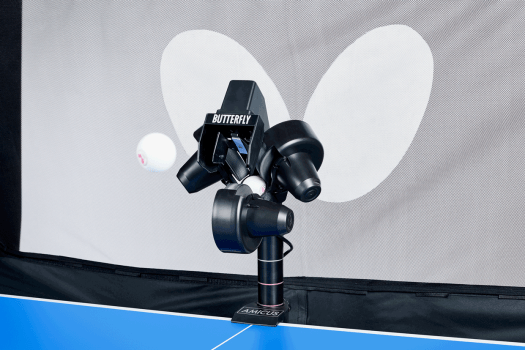
Here’s one of them, who plays a large role in the introductory chapter. I know his name: it’s Amicus. The two main characters use Amicus as a mode of nonverbal communication, since they can hardly stand to talk to each other directly any more.

Lots and lots and lots more to come…

But What’s It About?

Old vaudeville joke: There’s two kinds of people in the world—the ones that believe there’s two kinds of people in the world, and the ones that don’t.

I like binaries. Never to claim that they’re the only way of seeing the world, but as a way of making a decision clear. What does it mean to be T and not R? Do I see myself as more aligned with C, or with J? Do you want what’s behind Door Number One, or Door Number Two? It’s only through sitting patiently with the Hegelian dialectic of thesis and antithesis, through taking those differences seriously, that we can approach synthesis.

Historically, investigative methods have been bifurcated into deductive logic and inductive logic. In deductive research, one begins from a theory to create a hypothesis about some untested situation, and then creates a test that will or will not validate the hypothesis. In inductive research, one immerses oneself into some situation, and examines it without a lot of preconceived ideas until some mode of organization and explanation presents itself.

Throughout research history, different thinkers have stated this same bifurcation in ways that reflected their era and their interests. So Thomas Kuhn, in his Structures of Scientific Revolutions (1962), spoke of “normal science” that crept forward incrementally along knowable paths, and “paradigmatic science,” the revolutionary moments in which some thinker accepted all of the available evidence but created a new and more expansive way of putting it together. Ten years later, Horst Rittel and Melvin Webber proposed the idea of “tame problems” that responded to rules, and “wicked problems” that could neither be defined nor solved. In the first half of the 20th century, the phenomenologists asked us to “bracket” all of our definitions and schemes and just look at the thing in itself, the etre-en-soi. And at the beginning of the 21st, Zadie Smith identified writers as “micro-managers” probing forward a line at a time with no sense of the end, or “master planners,” those who build the story’s frame and then fill it in.

I’m an inductive thinker, and I specifically chose to look at American cities through an interdisciplinary program. My research on teenagers in a suburban community could have been done in an urban planning program, or in a sociology program, or in cultural geography or anthropology or folklore or material culture or American studies. I started with the kids and their places, and read whatever material I could get my hands on that helped me frame some of the questions that those kids and places raised for me. My doctoral program was housed in an architecture department, so I have a PhD in architecture, which is a meaningless shelf tag for the things I know and do. My dissertation committee came from architectural history, psychology, art history, geography, and fiction writing. Every one of them helped me see something new in the phenomena I was curious about.

—*—

I write about all this today because I’ve been a little stuck in my fiction writing in the last couple of months. I finished a book-length story back in July, and wrote a short story in August, but for the past five or six weeks, I’ve felt dry. So I’ve come up with probably two dozen different frames for a new piece of work, all of which have failed to launch because they’ve been deductive. “I could write about two women struggling for respect in a traditionally male profession.” “I could write about a teenaged table tennis player and his endless labor to reach the top of a profession that no one cares about.” “I could write about the quartermaster of a military campaign, and the ways that getting materials and food to the troops won a war.” And on, and on, and on. All of them stories about generic ideas, not stories of specific people and their problems.

Hilary Mantel once talked about the experience of starting to write The Giant, O’Brien. She said that she had to wait until O’Brien came to visit her—she writes of him as a fully corporeal person, not a creation—and that when he came into the room, he ducked to get through the door, and then visibly tested the chair to see whether it would bear his weight. And only then did she feel that she knew him well enough to tell his story.

And that’s really it. I’ve been willful in the past few weeks, deductive. I haven’t been patient enough to sit quietly and see who’ll walk through the door. A story isn’t mine to create, any more than I could have imagined in advance how all those kids would use their bedrooms and living rooms, would walk the streets and the vacant lots, would inhabit their cars and beaches. The story belongs to the people I write about; it’s my job to be quiet and attentive, and to tell it on their behalf.

Writing Like a Chess Player

A few years ago, I was with Nora in New York, and as she was shopping at the vendors in the Union Square Park craft fair, I was watching a game of blitz chess out on the sidewalk, a full game with five minutes per player and twenty bucks on the line. A young man was in a seemingly weak position, and his older opponent charged in. The young man, having set the trap, then made a quick, unseen move, reversing the game to his own victory within the next two moves. He began to set the board for his next game, and said, “wouldn’t it be nice if it were so simple…”

I was an awful chess player in junior high and high school, but I played a lot, and still retain some affection for it even though I haven’t touched a board in thirty years. It’s like math in that way. It’s just intellectually elegant in a way that few other endeavors can touch, and you occasionally remember that you used to be able to do it, now that life has become less clear.

I just read a book about chess that actually felt like that game in Union Square: Sasha Chapin’s All The Wrong Moves: A Memoir About Chess, Love, and Ruining Everything. He lulls you in, then snaps you to attention with something you hadn’t expected.

On its surface, Chapin’s story is one of obsession, the ways in which chess becomes so compelling to him that he often loses track of the rest of his life. Work, girlfriends, food, sleep, all secondary to staying up for yet another game of online chess. In fact, he describes those other things with such a light touch that they become unimportant to us as well. Now he’s in Kathmandu, now in Bangkok, now in New York, now in Toronto, now in St. Louis. Now he’s with Courtney, now with Elena, now with Sundae, now with Katherine. None of those are shown to us in enough detail that they matter at all, and we start to zone out, wallowing in his languid inner life. Then, without warning, the easy monologue reveals the blade:

Lacking any responsibility, I went to bed at 6 am every night, watching the gelid early morning crawl across my filthy feet. Seventy percent of my diet was salty snacks in shiny bags. It got to a point where I realized that I was walking quickly around my apartment because I was fleeing my own smell. (43)

That’s the sharpest description of lonely despair I’ve ever read, its suddenness like a bishop rushed forward from the back rank to change the tone of the game.

Chapin does that quite a lot in this book, letting us imagine that we understand something—his inner life, a relationship with a coach, what chess means—and then in a bold stroke, showing us that we don’t. He plays that way, too, with a desire for the impulsive reversal, the incontrovertibly brilliant strategy. As with his writing, it means that he isn’t paying all that much attention most of the time, but once in a while, comes to life.

Badly played chess is kind of like badly played life. Real problems are dealt with poorly or not at all, while much effort is expended on avoiding imaginary danger. (34)

Being the kind of writer I am—a memoirist, I guess— has always struck me as a little sad, because it means that I’m constantly wondering whether any definable portion of my experience is marketable. I’m forever observing myself from a mercantile perspective, noting whether any of my minor melancholies or brief decomposures might be salable. Essentially, I’m a parasite on my own life. (67)

…if there’s one thing that particularly distinguishes us [as humans], it has to be abstraction. The way we take our fleshy, silt-covered world and cover it with metaphors, maps, formulas, and poems—how we incessantly make wickedly complicated models of everything we live in. According to us, the sea is wine-dark, the earth is composed of metropolitan areas, and some numbers are irrational. (89)

Los Angeles is where dreams die. All day, the waiters realize that they’ll never be actors, and the actors realize that they’ll never be famous, and the famous slowly dry out under the nearly narcotic sun that falls on all the facades of the hot, sprawling city, clustered together in bright clumps like dirty candy. (172)

Like chess and baseball and soccer and bass fishing, Chapin’s book cries out for this kind of highlight-reel coverage, a few transformative moments lifted from what might otherwise seem like drudgery. A different kind of writer would help us see the steady beauty within the quiet. A different kind of writer would play a different kind of chess.

Unnecessary Details

Some days, weird things occur to me. (“Some days” may be an understatement there.)

I subscribe to a few websites, and occasionally participate in the comment community until some moment or another of hostility makes it less appealing to be there. One of those sites has been dark through most of the summer, its author dealing with family and professional crises, but now she’s back, and the feed has reappeared.

I left that comment community a little more than two years ago, when the playground violence took most of the fun out of it. But seeing it come up again today led me to go back through those six months or so when I was a near-daily participant, re-reading my old posts. It’s really fascinating to look at something you’ve written two years ago, now that it’s nearly forgotten and you can see it from the outside.

They’re really good.

Not like Eudora Welty, let’s publish it immediately good, but they’re thoughtful, careful, tightly composed. Each of those two- or three-paragraph commentaries took about an hour, as I edited on the fly, pruned unruly ideas, thought carefully about how to shape an emotional as well as a logical path.

That’s one of the things about being a writer: you’re never not a writer. When you write the minutes to a meeting, when you respond to an e-mail, when you write a message on your local community bulletin board… every time you use words, you’re thinking with care and precision about their sequence, their sound, their second meanings that might be misread.

Gmail now has an automated feature that recommends three alternative quick responses to the messages in the inbox. For one message this morning, Gmail offered “OK, thanks.” “Thanks.” and “Will do!” I know that those kinds of clipped responses are economical, and I have a lot of friends in administrative positions who reply like that, giving quick acknowledgement that a message has been received and moved forward. I admire the economy, even as I recoil from the practice.

I value the inefficiency of good writing. It’s a truism that we write in order to find out what we think. That’s kind of right, of course, but there’s also craft involved: we write in order to find out how a sentence sounds, how it feels, how it might be rebuilt in order to sound and feel different. We write ideas to find out what sequence makes them most appealing, most engaging. We surprise ourselves. We go past the content to the meaning.

When Tom Wolfe passed away a little over a year ago, the New Yorker’s Adam Gopnik wrote “as with any good writer, the mannerisms were the bearers of the morality.” That’s the best description I’ve ever read of the ineffable concept of the writer’s “voice:” that the simple organization of letters and sounds adds up to a personality, and that the personality is clearly the kind of thinker who’d be interested in that particular material. There’s a sense of inevitability to good writing when it’s read, hours or months or decades after its creation, but it’s absolutely not inevitable when it’s being made.

—*—

Nora has spent six years studying the spinning wheels of Samuel Morison (1775-1862), and she’s identified innumerable tools that he must have employed in his woodworking practice to make those wheels and their elaborate, precise components. She’s been struck by the clear joy he took in aesthetic decisions, even as he attempted to hold true to his Quaker principles of modesty and plainness.

Writers have an elaborate toolbox as well, drawers and drawers of tools ready for specific use. A punctuation drawer. A syntax drawer. An auditory drawer. A rack of scales against which we measure paragraphs. The stylesheets of headers and block quotes and section division devices. We collect tools, and admire the tools of others, even those we’d never use ourselves.

So when we compose even something as simple as a workplace email, that toolbox is right there at hand, suggesting possibilities to tune up an edge or turn a corner more gracefully. It takes a little longer, but I think it’s a gift well received, and it’s a practice that makes us more attentive to the world. It’s a gift we give ourselves, too.

Sometimes You Just Gotta Mess With It

Stout StickerAs part of my current project to build some of my work in audio format, I’ve been on a fast-paced, self-guided tutorial through the world of GarageBand, the sound mixing software that’s integrated with the Mac operating system. This would have cost thousands of dollars ten years ago, and now they just bundle it in with the calculator and the chess engine.

In the spirit of exploration, here’s an audio version of one of my stories, “Loyalty.” I’d love to hear what you think.

How Big Is an Idea?

I have Paul Groth to thank for an awful lot of things. For not throwing me out of his office when I showed up (by mistake, having gotten a note from someone else named “Paul”) to talk about Viking military camps in Jutland. For taking me seriously as an undergraduate, for letting me act as a reader for term papers in one of his courses, for showing me what a somewhat monastic intellectual life could look like. For having a church lectern in his apartment, with a gigantic unabridged dictionary open on it, and regularly used. For introducing me to the cultural landscape scholarship of Joan Didion—to this day, no one writes more compellingly about what places mean and why they matter.

But perhaps more important than any other act was that he took me seriously as a writer. I’d always been a pretty good writer, and I knew it, so by the time I was a senior at Berkeley, I knew that I was better than the other writers in the college, and I was a little (??) smug about it, and sometimes lazy. But when I arrived in Paul’s American Vernacular Landscapes courses (ARCH 169 A and B, and if Paul weren’t now retired, I’d tell you to apply to be admitted to Berkeley just so you could take those two courses), he was just ruthless about marking up papers, and I wasn’t spared. The son of a North Dakota English teacher, Paul combined the Scandinavian traits of precision and truthtelling with a love of language and a great physical pain at its abuse.

One of Paul’s aphorisms that’s stuck with me was a markup in the middle of a paper, in which he’d bracketed four or five consecutive paragraphs and written in the margin, “Ideas aren’t like piano keys. They aren’t all the same size.” I’ve carried that with me for thirty years.

Paul was talking about ideas at the scale of the paragraph, but I’ve often had to consider the size of ideas that could tilt toward article or tilt toward book. In fiction, characters who could tilt toward story or tilt toward novel. Or more than one novel. I have one character who held me for one really compelling episode, two days long. 4,800 words was sufficient to tell it. I had three other characters who held me for a year of writing that covered three years of their lives, 277,000 words and three thematically different books.

When I wrote The Adjunct Underclass, my editor was hoping that I could keep it to 75,000 words. I wasn’t sure when I signed the contract that I could be that concise about a gigantic topic. But in the end, I brought it in at 60,000, and it was plenty.

How big is an idea? How big is a farm? How big is a college? How big is a city? These are nonsense questions. They’re as big as they are, and none of us know until we’re done. (And what does it mean to be “done?” Child, cease your pestering!)

Lucy Ellmann has just released a novel called Ducks, Newburyport that’s a single, thousand-page sentence. That might be the right size for a sentence, or at least for that sentence. (I’ll never know, because I don’t care enough to read it. Bad me.) The Nero Wolfe mystery novels that I so love run about 50,000 words, as do most Harlequin romances. Karl Ove Knausgaard’s life story took him over a million words and six books, and he’s ten years younger than I am! I should get seven or eight books out of my fictionalized autobiography. On the other end of the spectrum, there are no end of “flash fiction” contests, short stories defined specifically by their word count, ranging from a maximum of 1,500 to a minimum of six.

Good writing makes us less willful, more willing. It seems to me that “how long does it have to be?” is just as bad a motivating question for grown-up ideas as it was in tenth grade English, when we were just trying to cut our workload. It’s the wrong variable to start from. If you do the work and pay attention to it, it’ll tell you what size it should be. It might surprise you. One story becomes a bonsai cypress, another an entire redwood grove. You don’t get to decide.