Same Time, Same Channel

Come back again next week for another thrilling episode!

Let’s revisit an idea we started a few days ago, about the chapter and the work of being chapterish. I’ll begin by quoting the novelist Peter Ho Davies (who has a new book coming in the first week of January, hooray!), from his essay “Only Collect:”

Novels, in the most basic sense, whether weโ€™re talking about Jane Austen or John Grisham, are machines to make us keep reading. If we love a novel, again irrespective of genre, weโ€™re apt to say things like โ€œI couldnโ€™t put it down,โ€ โ€œI stayed up all night to finish it,โ€ โ€œI couldnโ€™t stop turning the pages.โ€ The most fundamental novelistic skill, one might argue, is the ability to keep us reading, which perhaps explains why novelists โ€“ even gifted ones โ€“ arenโ€™t great at endings, at stopping us reading.

And yet, most novels DO stop us reading, several times. Every time we reach the end of a chapter, we are not merely permitted, but indeed encouraged to at least go to the fridge for a refill; maybe to close the book and lay it on the nightstand in the trust that we can rejoin it again tomorrow.

Why would a writer do that? As has often been said, we can lose a reader at an almost infinite number of moments in a book; why would we voluntarily give them an off-ramp? Why wouldn’t we just make a single giant chapter, like the world’s biggest bag of Doritos, and ask our readers to rip it open and gorge themselves in a single sitting? (I have no idea, for instance, how to read a book like Ducks, Newburyport. A single continuous thousand-page sentence? Any moment of cessation would seem arbitrary if the author isn’t controlling it, a sort of no mas surrender to exhaustion as we drop the book from our weary hands.)

Generosity isn’t about quantity, and it isn’t about demanding the reader’s unending attention, like the boorish party guest who just won’t shut up about the five primary varieties of beard oil. We’re inviting a conversation of sorts with our reader, and we need to encourage their active participation.

The conclusion of a chapter consolidates its ideas or its arc of action. It doesn’t necessarily resolve it; in fact, usually not. We almost always know we’re going to come back to that same problem again, that our characters aren’t done with that concern yet (or that concern hasn’t finished with our characters). But it closes a scene or a moment of a relationship by asking the reader to consider a question.

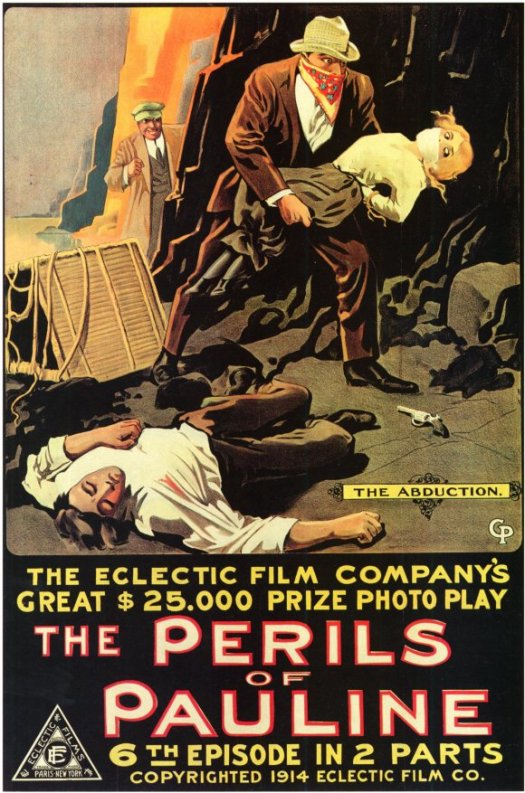
Sometimes, as in the cliffhangers of old, that question is both overt and simple. Will Dudley DoRight arrive before Nell is run over by the train? Will Batman and Robin save themselves from the evils of Mr. Freeze, or will they be turned into human Frosty Freezies? “Has the diabolical Mr. Freeze outwitted the Dynamic Duo after all? Hope for a miracle, and stay frozen in your seats until tomorrow…”

But more often, the question is implied.

  • It might be an open-ended question: how will this turn out? (knowing that there are any number of answers to that, not just two.) Ideally, if we care about the characters, an implied second question would be how do I hope this will turn out?
  • It might be a larger, broader question: will things get better for our protagonist, or will they get worse? Are we engaged in a tragedy of declining circumstances, or a comedy of rising circumstances?
  • It might be a question of how the two or three or six threads that we’ve launched will ultimately come together and reveal themselves to be one. Of how Chekhov’s gun, introduced in the first act, will be ultimately fired in the third.
  • It might be a question about ourselves as readers. How would I feel at that point? What would I do in a circumstance like this? Have I ever been as dumb as that, and been as oblivious about it?

I think that a chapter leaves us considering what’s been and what’s to come. It’s a place designed for the reader to get out their figurative (or literal) journal and do some work themselves.

Beta Testing

Women’s fictionย is anย umbrella termย for women centered books that focus on women’s life experience that are marketed to female readers… There exists no comparable label in English for works of fiction that are marketed to men.

Wikipedia

My brother-in-law is retired from a high-powered executive career, and with new time on his hands but the continued need for full strategic investment, he’s been forwarding news bits from the New York Times and the Washington Post and 538.com and Politico and HuffPost. Mostly, I let the rain fall without comment, but I occasionally click on a link.

The good news is that, like browsing in a library, I almost always see something in the adjacent sidebar that’s much more interesting than what I came to find.

A couple of days ago, that was this article by Andrew Reiner, called “It’s Not Only Women who Want More Intimacy in Relationships.” In this article (a preview of a coming book) he talks about the ways in which all of us, men and women alike, are trained to understand what men should do, and should want, and should merely endure. The cultural fetish for competition and stoicism and command are taught to us, repeatedly: by entertainment media, for sure, but more importantly by teachers and parents who themselves learned it as simply right and true.

Reiner talks about a common moment in a relationship:

it goes well for these men the first time they make themselves vulnerable. After that, though, the warm reception cools. Theyโ€™re often met with such responses as โ€˜Youโ€™re much needier than I thought you wereโ€™… Another common reaction from female partners is one they have long endured from men: โ€œTheyโ€™re told that they shouldnโ€™t get so worked up and emotional about things.โ€

I once described my body of fiction to a thirty-year agent who’d made much of her career and her livelihood representing women’s book-club fiction. As I talked about the goal of writing books in which men could experience the construction of a more satisfying self, she said, “You’re asking men to think about their emotions. They don’t want to do that.”

She has no empirical evidence for that statement. It’s merely learned mythology, just as masculinity itself is a learned mythology. And just as encompassing.


Real alphas don’t let women tell them what to do, whether those women are women’s libbers or debate moderators or the governor of a major state. Real alphas see the world only in competitive terms: attack and defend. They’re governed by a binary switch, their responses toggled between two positions.

I already know, if the Reddit-bro community ever read my novels, what they’d call them. They’d be cuckbooks. A clever wordplay that indicated how unsuitable they were for real alphas. (Sorry, boys, I already made this one up. Find your own.)

Real alphas know what women should do with their bodies, what they should do in the workplace, what they should do at home. We’ve always known that alpha-ness is threatening to women’s autonomy. But it’s threatening to men’s autonomy as well, and the only acceptable way to resolve that threat is to adhere to the rules of the game as played. As Susan Faludi wrote over twenty years ago, the level of cultural messaging about appropriate manhood aimed directly at men is profound. “And men respond profoundlyโ€”with acquiescence.”

Beta life is unacceptable. To men and to women. And that’s why it’s brave.

You know why the first public semi-release of new software is called a beta test? Because the alpha test was shoddy and misshapen and not worth showing anyone. The alpha test is the first draft, the sketch, the things we’d be embarrassed to have out in the world. Let’s create a beta masculinity. As our lead Alpha has often said, “What do you have to lose?”


But damn, it’s gonna be an uphill trek. It’s like clearing out the house in an estate sale, there’s just a LOT of debris to go through. Some of it can be reclaimed, but a lot of it will have to be discarded. Like this. And this. And this. We breathe this air every single minute, men and women both.

And like anyone on the forward edge of a cultural change, we’ll be labeled. We’ll be deviants. We’ll be unnatural, working against inherent traits of sexual evolution. We’ll certainly be opposed by masculinist constructions of religions in which women are to be subordinate “protected,” and men are to be assholes “leaders.” We’ll be repellent to readers of fiction in which men take charge, and women are swept into the whirlwind of romance. Or fiction in which men take command, and women are protected from evil.

We’ll have to clean ourselves of the debris as well. It’ll be too easy, too comfortable, too right to just fall back into the rules we’ve learned so thoroughly. And we will, sometimes. We’ll lose our vigilance, drop back into the channels that have been dug for us. They’re deep and pervasive, awaiting every weary moment. They invite us back to the reassurance of understanding our place.

Real strength isn’t compliance. Real strength is embarking on a path that we consciously choose, knowing that we might never reach a destination but that the trip itself is worthy, and that others might follow the rough trail we’ve begun. (Or not. Autonomy is no guarantee of success; it’s merely the opportunity to live as we see fit.) We have the rightโ€”and the responsibilityโ€”to define ourselves as we see best. We only get one self, right? We should make it ours, not a shadow of someone else’s.

The Scroll and the Click

Writers were so far ahead of this…

So yesterday, we talked briefly about paragraphs and chapters. They can’t be defined very well outside their contexts; they’re tools that do the work of being paragraphish, or chapterish. So what is that work?

A paragraph is like a course in a chef’s tasting menu. It gives us a moment to pause and to think about what we’ve just encountered before the next dish comes to the table and reorients our experience. (Each sentence is its own fork-full of the dish… and if the dish or paragraph is well-crafted, each bite is its own small revelation about the components and interactions that make up that larger experience.)

A chapter is the evening at the table. A sequence of dishes, nicely timed and well-thought-together, that make up an experience that comes to full closure. For instance, here’s the traditional order of service at Downton Abbey.

We begin with hors d’ouvres and cocktails in the library. Perhaps the simple colonial Gin and Tonic, its brightness and herbal notes contrasting nicely with a roast beef and horseradish tart, or a tiny croque monseur. The drink in one hand and the canape between thumb and forefinger of the other, we please ourselves with our cleverness.

We are called to the table, where a light broth soup will ease us from liquid toward solid pleasures. But we’ll remain light with our third course, a poached salmon with a light hollandaise to remind us that we are adjacent to the ocean and its related blessings of colonial exploitation.

The fourth course is a turn from sea to land, to the estate itself: roast grouse, perhaps, brought down that morning by your gamekeeperโ€”or, if you’re feeling familial, brought down by your visiting nephew on the morning’s hunt. (Your sister’s son is a disappointment, but family concerns are kept quiet in broader company.) A small accompaniment of rice steamed with parsley and chives.

The fifth course is known as the removes. It is an episode of its own, in which the service staff clears scraps and sides in preparation for the second movement. In typographical terms, we might think of it as a section break, a moment of nothing that signifies quite a lot.


Ah, the attendants begin our seconds with the sorbet course, doing work akin to that of the earlier clear soup; a light, bright reframing of our attention. That little introductory phrase is followed by the largest and most elaborate of the courses, the roast platter. The rack of lamb, the sirloin roast glistening with duck fat… the big carnivorous mass surrounded by roast cauliflower and potatoes and carrots, each guest pointing to her or his preferences as the cart rolls by.

Good lord, that was a lot of food. Time for a bit of roughage to help digestion. A salad course, lightly dressed, a touch of pepper, thank you.

And a sweet. A small pudding or pot de creme, or a glorious scalloped tart, presented whole before being cut into tiny wedges. Sublime.


We remove to the library once again, to be met with a small platter of sliced camembert and pears and a bit of Champagne. After a few moments of collective chat, the gentlemen retreat to the smoking lounge for cigars and cognac and discussion of politics and empire, while the ladies withdraw to the parlor for tea (or perhaps a small tipple of some lovely aperitif, a new Kina Lillet just in from Harold’s visit to Nouvelle Aquitaine), a game of bridge. Perhaps we can persuade young Ella to sing one of her nice pieces that she’s learned for the coming social season.

Bring the cars around. Farewell to our visiting guests, and preparation for bed for those members of the family staying with us for tomorrow’s excursion to the Chelsea Flower Show.


Now, let’s think typographically about what just happened over dinner. Each paragraph, in doing the work of being paragraphish, was about the multiple components of an individual course. It was a fully contained service, with individual sentences and clauses revealing its different components. And it came to a brief close, during which we consolidated that experience before encountering the next.

And because you’re reading this on a computer, what physical action did you take? You used that opportunity to scroll slightly, centering the coming paragraph on the screen for ease of comprehension. You don’t scroll mid-paragraph, unless the paragraphs are long and ungainly. You scroll where the white space tells you to scroll.

The section breaks were the markers of the different acts of the play. The moments where we moved from one room to another, one way of thinking to another, one large subdivision of time to another. Just as a comma and period both do different kinds of the same work of momentary hesitation, the section break is simply an emphasized paragraph break, alerting you that some larger new experience is soon to arrive.

And now that we’ve reached the endโ€”of the chapter, of the post, of the eveningโ€”you are permitted to take your leave. You will click rather than scroll, the episode retreating to memory. Tomorrow, or the next URL, will bring its own pleasures.

Lovely to see you. We look forward to your return. Be well.

The Things We Know, but Don’t, Not Quite

In which the seemingly defined becomes blurry…

Nora’s been listening to a lunatic spinning guru, sort of a Yoda of yarn, named Abby Franquemont, who goes on these long conversational journeys about what is fiber? and what is spinning? And as part of one talk, she defined yarn as fiber that has taken on yarn-ness.

How do I know when itโ€™s yarn? At our most basicโ€ฆI know itโ€™s yarn when it does the job of being yarnish, when it does what yarn should do, when it holds together, when itโ€™s structurally sound.

We spend endless time worrying about what something is, but maybe the better question is what something does. When it does the job of being yarnish.

My friend Aimee says that the paper-arts community is occasionally riven by the definition of paper. Good scholarship is often difficult to place disciplinarily; the boundary between sociology and social psychology and anthropology determines faculty hiring and course catalogs far more than it influences ideas. When I was teaching academic writing at Duke, we had long conversations about the definition of a paragraph, which ultimately fell to simply being a typographic device that does the job of being paragraphish.

Every genre of the arts falls into this question. What is a movement? In the peak of prog rock, side 2 of a record was occasionally a single song, 25 or 30 minutes long. But it had subdivisions within it, sometimes marked as movements but sometimes just understood to be there wherever the pace or the instrumentation or the basic theme changed. The shift from one movement to another was the moment of rest and reconsideration between major thematic ideas.

What is a paragraph? What is a chapter? I think they’re the length of time the writer wants to hold your attention on a particular idea or action, concluding with carefully choreographed moments of reflection and internalization. When we end a paragraph, it’s because we think you’ll need a second to take in what just happened before you embark again. When we end a chapter, it’s because some larger theme has played itself out, and you can safely set the book down and think about what you’ve just seen for a few minutes.

All of the rules of typography, rigid though they may have seemed when learned from Sister Toni Marie in 9th grade, are just tools that the writer uses to guide your experience. A period at the end of a sentence seems like a straightforward, rigid moment of conclusion. But that period could be replaced by an exclamation mark! Or maybe a question mark? Or could trail away into ellipses, as though there might have been more to say…

Does a parenthetical remark (like this one) always get parentheses? I don’t know. It might feel differentโ€”in some undefinable but real wayโ€”if we separated it by em-dashes.

There are serious writers who say that any typographic emphasis within a line of dialogue is a marker of a miswritten dialogue. That if a word is bolded or italicized or CAPPED, to reflect how the speaker might have sounded, we haven’t cast the sentence right; those emphases should just fall from the reader’s lips as though inevitable. To which I say bullshit. Look at a musical score sometime. It doesn’t just tell you the right notes at the right times, it gives you thousands of other instructions about each note’s connections with its neighbors, about volume, about little Italian states of mind that we should inhabit while we play. And that’s what we do as writers, right? We offer instructions for reading. We slow you down and speed you up, we hit a note hard or let it almost slide past, its effects unnoticed until later.

A blog post is a chapter. It’s a typographic structure that demands a certain length of engagement, and fills that length with a coherent sequence of ideas. It’s designed to be set aside at its conclusion; sure, we can binge-watch twenty episodes in a row, keep hitting “previous post” on the blog, but in the writer’s head, each one is an idea that is designed to be set aside from other ideas by a mouse click. A chapter is an idea that is designed to be set aside from other ideas by the reader going to sleep… or by putting the book down and doing some chores. A chapter holds you for its time, and then gives you permission to leave.

Another chapter will come tomorrow.

~A, but A

I love sudoku. I loved tenth-grade geometry. I loved my GRE section on Analytical Ability. And I loved freshman year Philosophy 250: Symbolic Logic. You give me any kind of logic problem, lay out the postulates, and stand back.

I mean, it’s really interesting that I went into qualitative rather than quantitative research, because I love logical pattern. Card games, board games, probabilities… I was in a graduate statistics course of about 30 students, and finished the semester with a z-score of 2.4. (Look it up. I dare you.) Given a different upbringingโ€”or set of postulates, if you willโ€”I could totally have become a mathematician, or an engineer, or a card counter at blackjack.

Here’s an example. Given a perfectly circular disc of any size, a compass and a straightedge, how would you find the center of the circle? And how would you prove that your answer was correct? I love that shit.

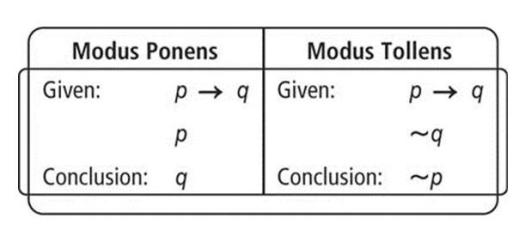
Anyway, I completely remember how much fun I had grinding my way through these gigantic logic proofs, using the logical forms of modus ponens and modus tollens, a hundred or more steps to get to the โˆด . (I am, as you can tell, just geeking out all over again just thinking about it.)


I worked at the town dump today on our bi-annual Large Waste Day, during which people can discard ranges and sofas and garage doors and barbecue grills. I worked at our regular transfer station, handling household trash and recycling and electronics, while our regular attendant worked the large waste site, because he loves to scavenge things. Once we closed at noon, I drove down to the other site to hand over the cash box. And as we were chatting about the news of the world, one of my friends said “I don’t want to wish anybody ill, but I hope he gets sick enough to really know how much harm he’s caused.” (Oh, come on, you know what I’m talking about.) And that led me to think about a common rhetorical structure that I’ll call ~A, but A โ€”>~~A. (or, in English, I will assert that A is not true; but then I will assert that A is true; that implies that you should understand the double negative, that I really do not believe that A is not true.) In other words, starting a conditional statement with something you don’t really believe, and are about to prove false. You’ve seen this a million times, but just haven’t thought about it in terms of logical operations. Here’s maybe the most common example:

[I’m not a racist], but [some stupidly racist thing] implies [yes, I really am racist]

That’s the form that my friend used at the dump. [I don’t want to wish anybody ill] but [I hope he gets sick enough to really know how much harm he’s caused] implies [I really do wish him ill].

You know this form. You’ve probably used it yourself.

  • I wish it weren’t true, but… (meaning It IS true, and I’m going to gloat about it)
  • I probably shouldn’t say this, but… (meaning I’m perfectly justified in saying this)
  • I know I’m not all that smart, but… (meaning I’m smarter than you…)
  • I’m just a simple guy, but… (meaning I’m more sophisticated than you give me credit for)

This is such a common rhetorical trope that I’m sure my friends who really are rhetoricians can tell me the proper term for it. It’s kind of like bug spray that we coat ourselves with before we go into the field: we hose ourselves down with “I’m not a racist” so that we can go out and say racist things with impunity. And like bug spray, it doesn’t work, but it makes us feel better.

So save us all some time, and leave that first clause off there. We can hear you just fine without it.

WFH WTF

Yeah, that’s me…

Douglas Adams once wrote (in paraphrase) that any technology that appeared before you were 15 has always existed. Technology that appeared between the time you were 15 and 35 is new and exciting and you can probably make a living from it. And technology that appeared after you were 35 is unnatural and Satanic.

I bring this up because I’ve been working on a PowerPoint presentation for a client, and I’m having no end of grief with it. Now, before you accuse me of being even older than I am, I’ve been using PowerPoint for about twenty years, and I’ve given TED-quality talks to a couple of conference keynote sessions of well over 500 people. I’m not a fossil, okay?

But this is the first time I’ve been called upon to provide a narrated presentation that can be played in my absence. Covid etc. So I wrote a script, then wrote the slides, and tuned it up three or four drafts’ worth. I know this stuff: you don’t just wing it, you open off-off-Broadway and work the kinks out of it.

So then I record it. It’s about 40 minutes. And on playback, every third slide or so, there’s an audio drop-out, where half a second or so is just missing and the audio on both sides re-connects over the gap. Visually, it would look like the difference between “a few seconds of missing sound” and “a few sec/ng sound,” where there’s just stuff left out of the string.

I go online. Hmm… dropouts are a “known problem” in Office for Mac 2011. As in, “we know about it, but we don’t know what to do about it.”

“But Herb!” I hear you wail. “Why the heck are you still using Office 2011?” Because my cat killed my new 2019 computer with a glass of cranberry juice. Because my old computer is 32-bit and the new Office software is 64-bit, and new software won’t run on a 2012 machine. Because Apple’s supply chain has left me waiting for a new computer for over six weeks. Leave me alone, okay?

So I borrow Nora’s nearly-new MacBook Pro, and try to record the start of the show as a test. No audio. Check system preferences… yes, it recognizes the microphone, and the speakers are on and turned up. Still nothing. Start a new show, two slides, and try to record that… no audio. Try to go old-school and INSERT audio in those slides… and the security dialogue opens up and says “PowerPoint isn’t authorized to access your microphone.”

Really.

Okay, so I re-set the security settings, record the test slides again. Audio! Yay for that! So I open up the original recorded presentation file to see what it sounds like on Nora’s computer. No audio. Nothing. The timings are there, it’s changing slides in ten-second sequences or so as it should, but dead silence.

This is what our vaunted work from home (WFH) environment looks like, in which we’re all called upon to act as our own IT departments. Since Covid changed our work, I’ve downloaded Zoom, Microsoft Teams, Skype, Skype for Business, and Cisco Webex Meetings, depending on the platform that each different group or client uses (and that’s beyond the Google Hangouts and FaceTime that I already knew). One of the groups I’m part of shares documents in WordPerfect.

Remember Y2K? (Of course you don’t, because you’re a freaking child!) We all worried that every computer everywhere would collapse when they could no longer recognize date codes that were created back when Stanley Kubrick could make a movie called “2001” and have it be set in the unimaginable future. Now, twenty years further on, computing has grown by at least two orders of magnitude, and what’s going to collapse is the interaction between incompatible systems supported by no humans. We’re going to be scavenging berries and wearing possum skins within a year.

More seriously, imagine the learn-from-home environment. Imagine a poorly educated parent unfamiliar with anything beyond their phone, trying to help their seven-year-old kid do an online lab and upload their homework to the classroom’s dropbox. Every social class divide we ever saw in education is going to be vastly multiplied this year. The comfortable families will have comfortably adequate access to information structures, and the scrambling and desperate families will scramble and become even more desperate.

When everything works, we take it for granted. But as soon as it stops, we realize that we might have been leaning a little too heavily on it.

Learning All the Time

My first writing teachers

I was a latchkey kid. We didn’t have that term, though, so I was just a kid who came home from school at about 3:00 and whose mom came home from work at about 5:30. Through most of elementary school, I was watched by the neighbor mom, Mrs. Herbst, and then later by an older lady near the school, Mrs. Margisโ€”they fed me lunch, and made sure I didn’t get into trouble before Mom got home. But by sixth grade or so, I was just on my own. I’d walk the four blocks home from elementary school (or from the junior high bus stop, at the same corner), and have a few hours to myself. Sometimes I’d work on a model car, or play some street baseball with the other kids, or ride bikes; but a lot of it was TV.

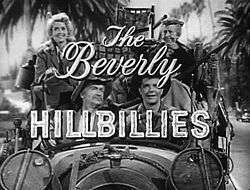
This being 1968 through about 1974 or so, we were at the beginnings of syndicated TV, of television producers selling re-runs of nighttime shows to local independent channels to fill their afternoons. TV stations had a set formulaโ€”morning game shows, mid-day soap operas, late afternoon re-runs, and then into evening network programming. So there was a whole generation of kids who grew up on afternoon sitcoms. The Beverly Hillbillies. Gilligan’s Island. Hogan’s Heroes.

I think that my storytelling instincts were imprinted early, early on. On the couch, with my Nestle’s Quik, watching The Beverly Hillbillies.

I love ensembles of characters, one of whom might be “the lead” but all of whom have knowable strengths and personalities. I love knowing that things might get sideways for a while, but they’re going to come out okay. I love knowing that we’ll get to see that same family of characters engaged in new problems from scene to scene; that they’ll push each other and test each other and bark at each other, but that at the last word, they love each other, and will step up when they’re called upon.

I love that the imperious were always mocked and the generous always rewarded. Sgt. Schultz and Col. Klink had the nominal authority, but Hogan and his crew had the cleverness (and the ability to see past the bullshit) to actually run the show. Mr. and Mrs. Howell were buffoons, their suitcase of money perhaps the least important asset that the islanders had. Mr. and Mrs. Drysdale were buffoons, she always offended by the boorish neighbors, he alternating between obsequious and outraged. There’s no story line better for a middle school or high school kid than the people with authority being the dumbest people in the play, trying in vain to uphold their meager rules. We lived that every day, running our independent adolescent nation while everyone pretended we were just a colony of our adult masters.

So when I write stories now, they’re often about the purportedly weak who find a way to overcome the nominally strong. They’re about ensembles, and the ways that they grow to love each other even as they snipe and goad and push each other to greatness. There’s a protagonist, but it’s impossible to say that the other characters aren’t equally important. Some of them surprise me by taking ownership of some part of the story, making their own strengths and desires apparent. (Nobody ever anticipated that the one spin-off from Cheers would be the nebbish psychologist Frasier Crane.)

I’ve been reading novels for fifty years, but I think those afternoons with TV sitcoms made more of an impression on my storytelling life than any other thing. And I have no apologies for it. I’m a big fan of pleasure.

Would I Lie To You?

Enter the world of literary agents at your peril…

It really takes courage to go out there, you know?

My friend was recently on a super-competitive fellowship residency, and she told me that she was getting rejections from other things even while she was at that one. The vaunted “thick skin” is a necessary trait for a life in any creative field. I understand and accept.

The thing that gets me, though, is when the gatekeepers are so actively demeaning. We already know that it’s hard, right? We don’t need to be told, along with that, that the people who run the show are cynical and cruel.

Let me back up.

I had a little time one morning, no live project on the desk that I could make progress on in the 45 minutes I had available, so I thought, “Let me look at the roster of literary agents again. I’m really proud of my most recent manuscript, let’s get it out there.” So I went to the Association of Authors’ Representatives website, because they have a pretty decent statement of professional ethics for their members. I entered a few keywords to narrow my search, and wound up with 39 possibles. The first one had an absolutely abysmal website, a whole can of 2003, so I passed and went to number two, an agent who owned her own agency in LA. No immediate red flags, though her website was nothing to write home about, either. But it wasn’t fully disastrous, so I Googled her to see if she had a web presence or had done interviews, so that I could learn a little about her.

And that was the end of my gumption for the day.

Here’s a selection of quotes from an interview:

  • [How many queries do you get in a day?] I donโ€™t measure them on a daily basis, but I would say that I get maybe 100 a week, and maybe several hundred a month. But most can be dealt with very quickly because in many cases people will send me a query for something… that I know immediately is not something I would be interested in or publishable.
  • [What percentage of queries will you ultimately decide to represent?] Zero to one. If I take on one project from a query that I receive, thatโ€™s a lot.
  • [How about conferences? Do you get writers at conferences?] I’m being more selective as to the conferences I go to because the material isnโ€™t always there… Conferences are great but theyโ€™re just temporary and theyโ€™re evanescent and you come away with some things, but itโ€™s like the people who keep buying all the writing books, but then they donโ€™t write. Or they keep going to conferences and then they donโ€™t write.
  • [What common mistakes do you see in queries?] They havenโ€™t done their research to help crowded marketing… they have no social media skills that they can bring to this platform. No one knows them.
  • [Let’s close with a fun question. Which of these three people would you most like to have dinner with? Alice Waters, William DeVries, Elon Musk.] I probably would want a talk with Elon Musk…. because he thinks so large on so many levels. Even now he is letting people go and cutting his business so he can produce that cheaper car.

So let’s break this down. She doesn’t take any queries, really, but she’s still got her web portal open, and she still goes to conferences once in a while. Why? Why keep up the pretense that unless you’re Khloe Kardashian, you’ll ever get past the receptionist? Just say Closed to New Clients and call it good; if Khloe really wants to work with you, she knows you’ll answer the phone for her. You’ll always answer the phone for someone who’s known, someone with a “platform” that you had absolutely no hand in building but can smell that 15% commission from miles away, like a bear stealing food from a parked car.

She thinks that most writers, even the ones serious enough to go to conferences, aren’t willing to put in the work. When she goes to conferences, she’s giving feedback to writers, which is fine for them, but SHE’s not getting any dough from it, so really, why bother.

And the thing she admires about Elon Musk, the example she uses about him “thinking so large,” is that he’s as ruthless as she is with other people’s lives. [THERE’s a dinner table I can avoid, thank you very much…]

It would be sad if this agent were an outlier, but no. I participated in the comments section of a senior agent’s blog for a few months, an agent who was routinely cynical and bitter and proud of it, imagining that it was among her more endearing traits. As Bugs Bunny once said with a sly grin, “Ain’t I a stinker?” I actually sent SLUSH to her a few months ago, with enormous trepidation, and she replied that she wasn’t taking any new writers. Hmm… not what your web portal says…

And here’s the deal. That same day, about two hours later, I negotiated with a client for a job that’ll be worth about six grand. It took me an hour to write the proposal and an hour to talk it through on the phone, for a job that’ll pay me way more than the advance on a first novel. It’s not about the money. Writing is NEVER about the money. But the people in the industry absolutely sell books for the money, and there’s the fatal mismatch. So the writers say that our job is to write the thing that’s never been written before, and the agents say that our job is to provide them comparable titles and a marketable brand name so that the book sells itself.

A cynic knows the price of everything and the value of nothing, as Oscar Wilde once said. It’s a shame that the wrong people have the keys.

Trance Time

Olga Ernst, Sunset at Long Beach (South Africa); Wikimedia Commons

Photographers and cinematographers have long known the power of the “golden hour,” when the sun is low in the sky, the shadows are long and dramatic, and the blue is all filtered away, leaving only golden orange.

But I would say that it’s the responsibility of all creative people to know what every time of day is good for. And that’s different for most of us, but the fact of being capable of different things at different times of day is just a fact of our own diurnal clock. It may be hormonal, related to our differing production of cortisol. It may be environmental, having to do with when the rest of our family leaves us alone. (Joyce Carol Oates, in her otherwise abysmal MasterClass lecture series, says one illuminating thing: that for the most part, writers are less hindered by lack of talent than they are by being interrupted.)

Whatever its source, there are times of day when we’re better suited to some things than others. For myself, I know a few things (all times approximate but pretty darn close):

  • Mornings (6:30 to 10:00) are for sustained, focused work.
  • Late mornings (10:00 to 1:00) are for chores, picking things off the list in ten-minute bits. Great for e-mail, household chores.
  • Mid-day (1:00 to 4:00) is social, the times when I can get on the phone or have a meeting.
  • Evening (4:00-8:00) is relational and transitional. It’s the time when Nora and I catch up, when Derrick stops by to show us what’s come from the garden, when we’re planning and cooking dinner.
  • Night (8:00-11:00) allows the return to sustained, focused work.

If you slow down for a day or two and pay attention, you’ll find similar patterns in your own life. The times when you can get things done, and the times when you lose track of yourself and fall into the trance. I’ll speak in particular about writing: I can tell the difference between editingโ€”shoving words around, being analytical and diagnosticโ€”and the loss of self and context (what psychologists might pejoratively call a “dissociative state”) that is necessary to genuinely inhabit other selves and other contexts.

You need to know this about your own relationship to the clock and the day. And you need to be ruthless about protecting trance time. Block out your calendar, don’t waste time online, leave your e-mail until later, and let yourself fall.

Open Studio

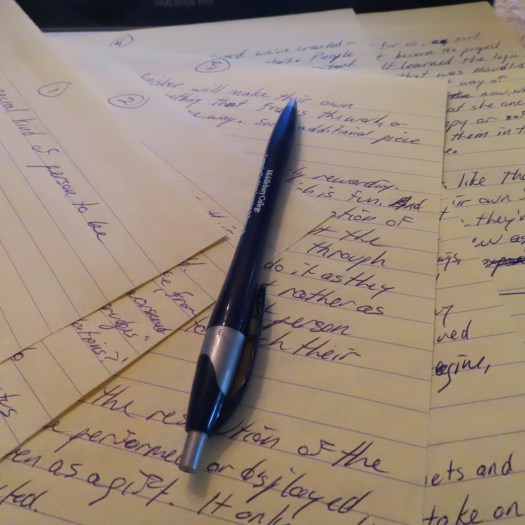
I woke up at 3:50 yesterday morning, with an odd thought in my head: a thought about an unseen group who do unseen kindnesses. I lay in bed for a couple of hours, working things through, hearing key phrases, seeing examples. So when I got up at five thirty, I handwrote five pages of notes, then built the first draft of a story. I knew I’d be working on firewood all day and then on client work all day Wednesday, so I had only until about 9:30 to get a draft together.

This is what it looks like.

The Elizabeth Ida Page Fund for the Completion of Things Left Unfinished

It takes a special kind of person to be a Finisher.

Here, Iโ€™ll show you one of my favorite ones. We have a database, of course, but some of them Iโ€™ve looked at enough times that I can go right to the volume and the page. This oneโ€™s in book 1982b. Tom Clayton. The Finisher on this was Phillip Chen, he’s a locksmith.

Tom was ten years old when he drowned at a cousinโ€™s swimming pool. Heโ€™d been working on a model car, and his parents talked about how much he loved cars. And they wanted this car as a memory of him. When Phillip talked to them, he started to realize that it wasnโ€™t really a model car at all, it was his image of the kind of car he really wanted. It was a ten-year-oldโ€™s picture of being an adult. So the car kit, when Phillip got it, was a gluey mess. Look at this picture, when it came to us; I mean, thatโ€™s just what a ten-year-old can do. But Phillip knew that Tom had an image of himself as a master model-builder, and of himself as a young man who might have a car just like this one day. So he spent four days disassembling the parts of the kit that Tom had already done, finding a solvent that would remove the glue but not damage the plastic parts. Then he built the model the way that Tom would have if heโ€™d been capable. See the seat-belt buckle on the seat there? Phillip used a single cat whisker to paint the center release button on that. Tom had already bought the can of metalflake blue paint that he knew he wanted, so Phillip painted three coats of that and then six coats of clear on top. Look at the finished picture, that little car just gleamed. Phillip built that stand that itโ€™s sitting on, too. Lots of our Finishers make something else in addition to the thing they started fromโ€”something that frames the work, or responds to it in some way.

Tomโ€™s parents are gone now. I think his sister has that model now.

Every one of these books, all the way back to the first one in 1907, is filled with stories like that one. We all have our favorites; you will too.


Although we have one namesake, there are really three founders of the Page Fund. Elizabeth Ida Page was a wonderful painter, she did portraits and magazine illustrations, some of her work is in private collections, thereโ€™s a small gallery at the Peabody. But when she died, she left one landscape in her studio that sheโ€™d worked at on and off for nearly twenty years. It was this romantic scene of her childhood, the creek behind her familyโ€™s summer cottage.

All unfinished projects are romantic, arenโ€™t they? They express some great inner longing that somehow we couldnโ€™t bring to fruition.

So when she passed, her husband James Wilson Page contacted another artist, a friend of Lizzieโ€™s named Constance Mullen. Connie spent two weeks at the Page home, and every day, sheโ€™d spend hours studying that painting, and Lizzieโ€™s other paintings, too. And every afternoon at six, she and James would sit in the studio with a glass of whisky and talk about that painting. About its techniques, its intentions, its spirit. They used that word a lot: spirit. Mr. Page thought that much of the disturbance of life, from wars to kitchen-table arguments, was worsened by the turmoil of the spirit world. In his letter that he wrote to establish the Fund, he wrote โ€œWhat are grudges if not the lingering spirits of unfinished relations?โ€

That became the mission statement of the Fund: To release the spirits of those who have left, to ease the spirits of those who remain, and to fulfill the spirits of the things themselves. And in some ways, thatโ€™s our three founders. Lizzieโ€™s spirit could rest with her painting complete. Jamesโ€™ spirit was comforted by having that painting with him. And Connie allowed the painting itself to fulfill its spirit, to come to the appropriate closure for its nature.

Thatโ€™s what weโ€™ve done, for over a hundred years, from Lizzieโ€™s painting in 1905, before the Fund was started, to last month. Each of these books is a gallery of spirits fulfilled. An unfinished novel or concerto completed. A summer cottage built out. A wood blank turned into a bowl. We donโ€™t privilege any kind of project. Weโ€™ll finish a sweater or a baby hat, or the studio of a fabric artist whoโ€™d wanted a teaching space for her technique, or a bed of irises that was the pleasure of someoneโ€™s lawn.

Our instructions to our Finishers are simple: to complete the thing in its spirit.

Phillipโ€™s finished a few things for us; Iโ€™ve turned to him a dozen times. I like how he frames it, he says it builds his creative empathyโ€”itโ€™s a new way to conceive of the kind of work he already does. Our Finishers find the work enormously rewarding, and most come back for other projects. They refer their friends to become Finishers, too. Certainly itโ€™s an intellectual challenge, which is fun. And some of themโ€”not all, but someโ€”accept the notion of the spirit world. But almost all of them talk about the liberation of being asked to see a work through the eyes of its own creator. To do it not as they themselves would have imagined it, but as its originator imagined it.

Thereโ€™s one writer who works with us, she teaches in a big creative writing program, sheโ€™s won lots of awards. No one knows that sheโ€™s a Finisher. Her own work is short and abrupt; itโ€™s been described as brutal, a description she doesnโ€™t mind. But she finished a novel for us, a family epic that had been left behind. And she said that because the project was maudlin and ornate, she herself learned the logic and the pleasures of making a story that was maudlin and ornate. She was able to inhabit that way of writing, to inhabit that motive spirit. And now, when her students come to her with stories that she might have rejected outright as being sappy or soft, now she knows more ways to support the spirit of what they want to achieve.

All of our Finishers come to us by referral from other Finishers. They know a few friends who have that ability to keep their technique but let go of their own motives. To see what exists in a half-finished thing, and to finish it on its own terms.

Really, all of our work is by referral. We donโ€™t make our work publically visible. When we called you a month ago, youโ€™d never heard of us either. Thatโ€™s our goal. Our clients come to us through a network of grief counselors and estate lawyers and hospice nurses, people who encounter unfinished spirits every day in their work. When people are near the end, they often talk about some great project that theyโ€™d never spared time to finish, that weighed on their closing days. After a death, families often talk about some great project that their parent or partner had always set aside in order to help others. Those conversations are the origins of our work.

Our donors all come by referral as well. Mr. Page left half of his estate to this project, the other half stayed with his family. Over the years, itโ€™s grown, of course, but weโ€™ve always wanted to keep our projects and our capabilities level. We have no need to be any particular size, weโ€™re not Harvard; we just want to do the work weโ€™re given. Our current donors know their own friends well enough to know who would be touched by our mission, and who donโ€™t need their names on a building. Or who already have their names on enough buildings.

Some of the client families are in a position to donate to us as thanks for our work, and we welcome that, of course. But we take on any project that appears. And often, our Finishers donate their work, or reduce their rates, because they find the idea of spirit completion to be compelling. Phillip spent over a hundred hours on Tomโ€™s model car, and charged only for the fifty dollars he spent in paint and glue and solvent. Tomโ€™s parents couldnโ€™t have afforded even that. It was our gift to them.

This whole library is filled with those stories, a book or two or three for every year. Every project has a statement about its original creator, and the status of the project when it arrives to us. It has the Finisherโ€™s statement of guiding principles that they believe are the projectโ€™s motivating spirit. And then it has a record of its completed stateโ€”photographs, audio recordings, published texts.

The Fund is its own project of completion, just like all the others, and we find our own replacements to move our work forward. And now youโ€™ll be the Finisher in Chief, as it were. Iโ€™ll be writing my record of the closing state as Iโ€™ve delivered the Fund to you, and youโ€™ll be writing your record of the status of the project as youโ€™ve encountered it, and the spirit that you believe motivates it as you carry it forward. Each of us has done the same at the beginning and end of our termsโ€”only five of us in a hundred fourteen yearsโ€”and that archive is here as well.

Iโ€™m looking forward to my retirement. There are a few things Iโ€™ve always wanted to get to but never made time for.

A few months ago, I shared a first draft of a much shorter work, again in the spirit of letting you see that what comes first isn’t necessarily what will be completed. I’m not convinced by the form of this yet; it came to me as a monologue, but it might be a fairy tale. The point of view might change away from the retiring director to that of the incoming director, or it might become a dialogue between them.

You could Finish it yourself, if you like. To take it in the spirit of its conception and move it forward.

There’s a long practice in Vermont on Memorial Day and Columbus Day weekendsโ€”the Vermont Arts Council puts on an Open Studio weekend, and publishes maps with the hundreds of woodworkers and potters and painters and jewelers around the state who are willing to host visitors in their workshops. There’s always work for sale, of course, but part of the pleasure of the day is being able to see the sequence of work that’s normally kept from us. To see the block of raw clay cut with dental floss into cubes that will be put onto the potter’s wheel. To see the dribbly pots of paint that become the landscape. To talk with the wood turner while the chips scatter on the floor beneath the lathe.

Writers don’t do open studio. We sequester ourselves until a story or an essay is “complete,” whatever we consider that to mean. We don’t make our notes public. And I think that’s too bad. The work starts to seem either mysterious (the writer as mystic) or plain (the world is full of text, after all, and it must be pretty easy to make), depending on the hubris or humility of the reader. And it’s neither. It’s work, like any other.

So welcome to my open studio day. Thanks for stopping by.