The Bends

Careful how rapidly you rise…

I’ve been coaching a writer on what might become a really wonderful book project. A couple of days ago. she shared a great idea with me. I’ll paraphrase, because the words are hers, but in sum, it was about the most dangerous lie we learn in schoolโ€”that talent will be recognized and rewarded. This is a simple root belief of our culture, and it’s wrong. Here are a few reasons why it’s wrong.


The wrong people tell us that we’re talented. When your third grade teacher says you’re the best student at arithmetic that she’s ever had, that’s just a low bar. When you’re the best gymnast ever to come through Tammy’s Tumblerz, or the best junior bowler in Ravenna, Michigan, you might think you’ve got something, and you’re likely wrong at the larger scale. Talent is always relative, and the less we have daily exposure to the very best in our field, the more we conflate the relative with the absolute.

I like to think of it in orders of magnitude. Let’s use baseball as an example. Every time you rise from T-ball to little league to high school to college to minor league to major league to All Star to Hall of Fame, you’re being run through a filtering device that eliminates more than 90% of the level below you. As the Bard of New Jersey put it:

I had a friend was a big baseball player
back in high school.
He could throw that speedball by you
make you look like a fool, boy.
Saw him the other night at this roadside bar
I was walking in, he was walking out.
We went back inside, sat down, had a few drinks,
But all he kept talking about was...

Talent without effort goes stale. Education writers often talk about the dichotomy between a fixed or a growth mindset. In the fixed mindset, we talk about talent as something that one has or is, that a particular talent is (or is not) a person’s innate component. In the growth mindset, we talk about talent as something that someone manufactures. And it seems to be the case that the growth discourse is better for students. The difference between “you’re really good at that” and “you’ve really put in a lot of work at that” is that the second gives us a stronger sense of agency. I can’t choose my attributes, but I can choose to work more and get better.

We all know those kids who were really good at something but who then left it behind, didn’t push it further… or didn’t have the opportunity to push it further. And we also know lots of kids who were told that they weren’t very good at something, and just stopped trying altogether.


Talent is contextually valued. Our environments are set up to absorb some kinds of talents and not others. Our town of 750 has plenty of opportunities to exercise skill at plowing snow or prepping firewood, plenty of ways to exercise skill at making pies and mittens. There are no opportunities here to exercise skill at literary fiction, or at drag performance, or at papermaking.

Talent has to be recognized and valued in order to grow, and cultural venues differ in what they recognize and value. Talent recognition is gendered; a girl doing something that “girls are supposed to be good at” will get more approval than a girl doing “boy things.” The opposite equally holds. Talent recognition is class-related: a family of mechanics will make fun of the writer, a family of writers will be disappointed by the mechanic. Getting a PhD from a teaching focused school will teach you how to do research and teach undergrads; getting a PhD from an elite research school will teach you how to do research, resent the demands of undergrads, and raise money.


In light of those first three facts, talent is communal. As 1960s chess guru Benny Watts puts it in the new Netflix miniseries The Queen’s Gambit, the Russians dominate chess because they understand that it’s a team sport. They confer, they debate, they coach one another and analyze one another’s games. American players never reach that level because of their precious individualism. Our commitment to isolated evaluation of the individual makes us all into competitors rather than collaborators, leaving none of us able to rise as far as we otherwise might.

Talent is also communal in that it needs to be visible to a community. As Chicago Tribune columnist John Warner once wrote, you could eliminate every single writer from The Atlantic tomorrow, replace them with an entirely new roster, and it would continue to be a fine magazine. Different, but fine. The ability to be an excellent magazine writer isn’t limited to the few thousand people who currently do it. But those who are doing it came up, for the most part, through an informally understood but elaborately structured minor league system. The right MFA programs or journalism schools, the right emergent online magazines, the people who know people and make the referral over cocktails. You can have talent and effort out the wazoo, and if nobody sees it, there’s no next step.


And finally, because of all that, talent can be painful. If we’re talented at the things that our ecosystem has a niche for, we’re right at home, and our rewards are commensurate with our skills. But if we’re talented at something that isn’t contextually recognized, then we’re left with a lot of difficult decisions. Do we 1) stay home and 1a) keep doing the thing we’re good at even in the absence of reward and further challenge, or 1b) quit doing it and pick up something else that our families and friends approve of? Or do we 2) leave home and 2a) become traitors to our families and culture while simultaneously 2b) being seen by those we hope to join as an intruder, a grasping, naive climber who’ll never really know which glass to use for the red and which for the white?

As history has proven, once your family connections get to a certain level, you don’t even have to be especially good at anything to win even more. It’s not hard to enter the race when you’re born already inside the stadium. But for the rest of us, ascending too fast can give us the bends, the debilitating ache of being ill-suited to the world we’ve trained so hard for, have reached for too soon.

Maybe our grandkids’ talent will be recognized. Ours, too often, will be squandered, excellent seeds falling onto infertile ground.
Misdirection

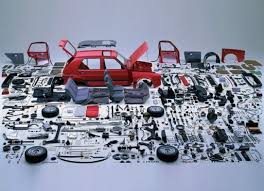
Fascinating, but not so fun to drive…

Back when I taught in architecture school, one of my courses was called Year One Seminar. I had all of the incoming students in one space, and gave them an abbreviated heads-up for what they were about to encounter. About how their curriculum would work, and about how Boston worked. About the economic and the spiritual value of professional life, and about the joys and stresses of academic life. One student called them sermons, which is probably about right. (And there’s a whole story behind that, which I’ll tell you someday.)

Anyway, as part of one of my sermons, I said something one normally doesn’t hear in a school of architecture. I made the assertion that no one in human history has ever wanted a building. People wanted to make more money, or to have a happier family. They wanted to have smarter students or more rapidly recovering patients. They wanted a symbol of their power, or of God’s power, or of community cohesion. They wanted to be dry and warm and comfortable. And they bought a building because they thought it would help them have those things. Architecture students, I said, were outliers because we cared about buildings as things; nobody else does. For everybody else, they’re tools or symbols or experiences. (If I’d understood this when I was younger, I would have gone into interior design, where we work with people’s desires at a much finer and more tactile scale.)

George Bernard Shaw once famously said that every profession is a conspiracy against the laity. But to turn that on its head, every profession is also a focus on the invisible work that brings about visible experiences. Most of us just want to drive our cars, and we’re lucky that there are a small number of people for whom cars themselves are interesting technical exercises. We don’t want to go to a hospital, we just want to be healthy; we don’t need to focus on how hospitals work, but we’re fortunate that there are other people who do.

Where professions go astray, when they do, is that they lose track of the fact that they’re working on behalf of a lay audience, that most of us don’t really care about their tricks and their specialized practices. They foreground the technical and theoretical knowledge of their profession in a way that actually distracts from the experiences that the rest of us want. Hospitals, of course, are a great lesson in this, as are airports and high schools. If you’ve ever felt like you were being moved through space and time like a machine part, just an object to be appropriately scheduled and handled, you’ve been in a space that is thought of in its professional terms rather than in experiential terms. Timothy Snyder, in his book Our Malady, says that during his recent hospital stay, he was given three medications, and each was on a six-hour cycle. But the six-hour clock for each started from its first moment of administration, and that first administration didn’t happen all at once for all three… so he was awakened at 10pm for one drug, and then again at 11 for another, and then again at midnight for the third. It wouldn’t have taken much to get all three onto the same cycle, but the hospital didn’t see him as an exhausted human who needed to sleep; they saw him as a technical demand to be precisely scheduled.

Whatever we do, whether chef or engineer, teacher or athlete, we are called upon to inhabit a paradox. We are asked to master the details of our trade, to learn new things every day, to raise our level of skill and precision. And we are simultaneously asked to make all of that invisible, and to focus on what really matters. To not brag about the things we can do, but to downplay our skill in favor of the experience we hope to foster.


Writers live this paradox as well, and are equally subject to its professional failings.

I’ll make the same argument about books that I did about buildings. Readers don’t want books. We want stories. We want the experience of being removed from one world and placed wholly into another. We don’t want technical gimcrackery, we don’t want the flashy flourish that calls attention to itself; we want all of that to fall away so that we can be fully absorbed in other places and lives.

But alas, the poor writer has only gimcrackery to fall back upon. We need decades of practice at working precisely with letters and words and punctuation, with point of view and verb tense, with document layout. None of that should be overt for the reader, but every single bit of it is overt for writers as we do the work.

And when we share our work with other writers, we often forget the lay experience we hope to foster, and focus entirely on the techniques we’re seeing. We talk about theme and metaphor, about the position of the narrator and the manipulation of chronology. We get under the hood, behind the curtain… and we forget that there are readers out there who would be distracted by all of our tricks, who just want to get on the plane and go for a journey.

I think that writers’ groups and MFA programs and literary analyses can lead us astray, because of their inevitable focus on insider issues. We start to admire our own cleverness, start to forget the vast lay audience who just want to read and not think about our authorial ingenuity. Writing awards often go to books that are clever rather than compelling, because they’re juried by people who privilege the craft over the experience. (Architectural awards almost always go to buildings that are clever, because there’s so rarely any discussion in design education or design practice of the experience of going to a library to use a library, of going to a concert hall to hear a concert.)

William Hubbard’s book A Theory for Practice: Architecture in Three Discourses is specific to the practice of architecture, but I think that it has broad applicability across professions. Hubbard describes the design of a building as having three interested parties, who hold three sometimes incommensurate sets of values. In Hubbard’s terms, the three groups use different discourses to describe what a building does.

  • The client describes the building as an instrument, interested in its effects and outcomes
  • The designer describes the building as a problem, interested in its analysis and order
  • The public describes the building as an experience, interested in its contribution to a good way of life

A book is the same as a building. A client (publisher or agent) strives for money, prestige, and industry influence. The writer addresses the problem of the book at hand, the myriad technical decisions that make up the whole. But the reader cares about none of those things. The reader wants to momentarily leave World One and enter World Two, to fully and unreservedly inhabit this other place through these other people.

Writing for readers is just different than writing for other writers, and certainly different than writing for publishers. These discourses frame the uneasy paradox that we’re all called to live within, no matter what path we choose. If professions are to be modes of service, we need to place the service at the center, rather than ourselves.

A Second Meditation on Category Failure

We talked a few days ago about the failure of categories to sometimes deliver us useful policy information. The categories, for instance, of Latino and Asian American, which reveal some facts and conceal others. Lots of categories contain differences that can be misleading when lumped together without care, a beige that conceals its red and yellow and black and blue pigment components. And a friend of mine gave me a new one to think about yesterday. As she wrote in her email, with regards to the fallout from last week’s election:

And when I heard yesterday that a LOT of college-educated white women voted for DumpsterFire, I thought, I don’t think “college-educated” holds water anymore, because what is college these days, anyhow?

As I wrote in The Adjunct Underclass, the term “college” is similar to the word “restaurant,” another category that contains vast dissimilarity. Alinea, for instance, is a restaurant. In order to get reservations (two months in advance), you need to go to their website at exactly 11am Eastern time on the 15th of the month and hope that you click first, like a game show. Dinner for two with wine will easily crack a thousand bucks. Taco Bell is also a restaurant, of an entirely different sort.

Now that “college” has become as ubiquitous as “restaurant,” we start to see that the category does less meaningful work. You could have a college degree from, say, Williamsโ€”its cost of attendance is $75,000, they accept only 12% of their applicants, students at the bottom range of their incoming SAT scores are in the top five percent of the nation, and faculty teach two small courses per semester. Or you could have a college degree from… well, you can fill that in with your own local favorite, the affordable school that accepts 98% of its applicants and graduates 30% of them, the school where the permanent faculty teach four or more huge courses every semester and the temporary faculty (who constitute most of the teaching force) make $2500 a class. Schools like those can do good things… but they don’t do the same things. They’re just set up to accomplish different outcomes.

There’s a lot of chatter about how colleges have become bastions of leftist bias, which I suppose may be true in English and Women’s Studies and so on at Ivy League schools, but far less true in the state-college free-market business schools or the libertarian professional-prep programs where the majority of our students spend their time.

The Classical (that is, Greek and Roman) model of education focused on the “liberal arts,” or the cultural and strategic knowledge befitting a free man who would have standing in public debate and policy. (Slaves and peasants had to get things done, and were trained rather than educated.) And it’s not etymologically surprising that the core practice of liberal education is deliberation, the work of judicious discussion that reveals the hidden corners of what might have seemed to be settled matters. This model held sway through the early parts of the 20th century, when only a single-digit percentage of young men attended college: they were being groomed to rule the world, as their fathers and grandfathers had before them. They needed to learn strategy and analysis and synthesis rather than information.

But now that a majority of high school grads attempt college, and half of those who start actually graduate, college has become reconfigured in ways that make the category less coherent. The risky and speculative fields of math and science are on the decline in college majors, for instance, while various forms of immediately useful technology have grown by orders of magnitude. Look in the want-ads of your local paper: you won’t see jobs in “math” or “physics,” but you can get a job in medical technology. And so our preparation has geared itself away from deliberation and toward workforce development, the accumulation of settled information and practices that can be correctly applied. The children of wealth and privilege will continue to go to deliberative schools that prepare them for entirely different livesโ€”and entirely different attitudes.

“College graduate” is a sticky political-polling category exactly because it used to be scarce. But now, the National Center for Education Statistics shows that although about 15% of Americans over 70 have college degrees, that’s up to near 30% for people under 35 (and more women than men, another important cultural shift). It’s just another box that holds too much dissimilarity to be deliberatively useful.

We have a lot of handwringing about why political polling is less than perfectly accurate. I think it’s not because people are lying to pollsters, and it’s not because the pollsters don’t understand sampling methods. It’s because they’re relying on antiquated and unexamined demographic categories that aren’t as unified as we might imagine.

Today’s Vocabulary Words

And I want to watch a TV show about dim, venal, mean-spirited people because why? (Photo by George Lange/NBC/NBCU Photo Bank via Getty Images)

I don’t watch much TV any more, and I rarely watch movies. I find that far too often, I don’t have the emotional capacity to watch people being cruel to one another, which is what an awful lot of television is about. I mean, take any piece of sitcom dialogue and say it, without warning, to your wife or your dad. (Actually, don’t.) It’s just snotty and mean. The characters get over it, because the writers move them on to whatever’s next, but the rest of us wouldn’t. It would become a chip in the accumulated slag heap of disrespect and diminution that we would bear forever. It would become yet another of our collected GIFs of mortification.

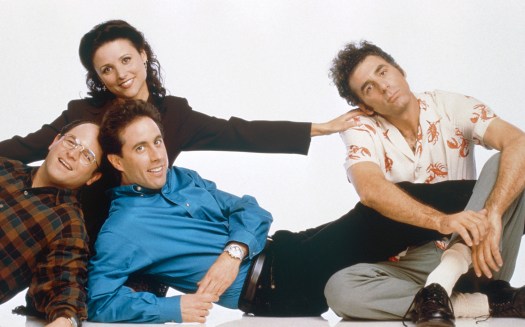
And today I learned that there’s a word for that experience of not being able to watch TV because I identify too closely with the characters being dim or venal or mean-spirited. It’s a German word: fremdschรคmen, meaning “borrowed shame.” I read about it this morning in an article by Dianne de Guzman in the San Francisco Chronicle, in which she talks about being unable to watch PEN15 or The Office. I know that I’ve never been able to watch even an entire single episode of Seinfeld, and quit watching Frasier back in the day as Frasier Crane dug his craven well deeper each week. Will Ferrell has talked about every single one of his characters being someone with undeserved self-regard. He thinks that’s funny. I don’t, and I can’t watch it.

One particular episode of The Office, called “Scott’s Tots,” is used as a litmus test for fremdschรคmen. In this episode, the dim, venal, craven Michael Scott has followed his native instinct for self-aggrandizement to promise a bunch of Scranton kids that he’ll cover their college tuition when they graduate from high school. It gets him photos in the paper when they’re in grade school and all, but then the kids graduate, the debt comes due, and the entire episode is his staff’s anticipation (with glee or with horror) that he’s going to have to stand in front of a bunch of high school seniors and tell them that he’s lied to them for ten years. Those of us susceptible to fremdschรคmen could never bear to watch that, because we have some degree of empathy with both Michael and with the kids. Because we internalize that experience of having let people down, or having been let down by someone you trusted. Because we know it too well.


The contemporary literary world presents us a similar test. Do I want to read six entire books about Karl Ove Knausgรฅrd being an asshole? No, I do not. Do I want to watch Lauren Groff or Jennifer Egan drag her characters through endless cruelties? No, I do not. A friend described his Faulkner reading group, and one member of the group saying “When will something GOOD ever happen to one of these characters?” To which my friend said, “You might be in the wrong reading group.”

The alternative isn’t sunny Reader’s Digest “good news” stories. We aren’t limited to a binary of trauma and treacle. The alternative to misery is agency, people deciding what they value and taking halting, difficult steps toward achieving it. They may never get there, they may discover that their values change, they may get part of the way and become a new person while they’re doing it, but they’re doing their best. That’s what I want to live with, that experience of aspiration and effort and wanting.

Our political landscape bears this division as well, between those who can watch cruelty without feeling it and those who can’t bear it. The desire to “own the libs” or to take pleasure in “the tears of the snowflakes” (or, as one of my neighbors does, the ability to fly a Trump 2020 flag that bears the tagline “Fuck Your Feelings”) reveals exactly the kind of person I never want to be. Why would I ever think that someone’s misery is funny? I mean, Timothy Snyder, in his important little book Our Malady, cites public health and political research to show that one of the very strongest predictors of a county voting for Trump in 2016 was the severity of its opioid addiction. I don’t celebrate that. I don’t want them to suffer, even if at their own hands. I always want people to thrive.

Snyder coins his own term for our political landscape: sado-populism, an isolated rage that leaves us unable to see past our own pain, that leads us to visit miseries upon others because it momentarily deflects from the injustices we believe have been delivered unto us. It is the injured dog that bites you while you try to help it, the child who swats away your hand while you comfort him. And the inability to empathize, to look beyond ourselves, has led to the casual degradations of reality TV and Seinfeldian cruelty. It has led to a Senate whose only operational rule is to kneecap the opposing party. We have become a ruthless people, unable to offer or to receive help. And we will die from it.

We can continue the cycle, or we can try to break the cycle. We can rub it in, or we can try to rub it away. And we get to decide every single minute which we want to be.

Demographics Will Not Rescue Us

One day after this election is over I am going to write a piece about how Latino is a contrived ethnic category that artificially lumps white Cubans with Black Puerto Ricans and Indigenous Guatemalans and helps explains why Latinos support Trump at the second highest rate.

Tweet on November 3 from historian and journalist Nikole Hannah Jones

One of the most fundamental things we learn as children, and reinforce for the rest of our lives, is seeking similarities. From sorting our toys by shape and color, to the Linnaean taxonomy that underlies biology, to endless amounts of inept political guesswork, we rely on categories to help us make sense of a complex world.

It’s crucial to remember that all categories are the answers to particular questions. A piano, for instance, would be classified differently by your high-school music teacher (classroom equipment, like a whiteboard), your furniture mover (heavy and finicky, like a pool table), and your accountant (expensive, like a sports car). Same thing, placed in different boxes by people who hold a different interest in it.

In reviews of my book The Adjunct Underclass, I took criticism from several commentators who took umbrage with what they saw as a conflation of categories. Adjuncts, they said, were not the same as graduate students or post-doctoral researchers or the college’s IT worker who teaches an occasional software course. And in some ways, they absolutely are not. They fill different category systems in the university’s org chart; they have different jobs. And yet… if we ask the question “Who conducts a significant amount of the work of higher education with no offer of permanence and no protection of intellectual freedom?”, then we absolutely are warranted in a larger inclusion of people who properly answer that question.

We are in a desperate search today for the demographic key that will unlock our understanding of America. We believe that Red and Blue America can be explained by gender, by ethnicity, by age. By education, by religion, by urban and suburban and rural. By social media platforms, by relationship to the former Union and Confederacy. I read a fascinating piece yesterday that talked about the power of talk radio for lonely people who do dull work all day; is that our master demographic variable?

What questions will we ask to understand ourselves?


It’s important also to understand the difference between a category and a coalition. When we need to gain political powerโ€”whether in a workplace or a neighborhood or in a national electionโ€”we gather together people with whom we otherwise might not have too much in common.

When I first went to Muskegon Catholic Central high school in 9th grade, I walked into a cafeteria that already had most of its social sorting figured out. There were Sacred Heart tables and St. Francis de Sales tables, St. Michael the Archangel tables and St. Thomas the Apostle tables. Ten different parishes that sent their kids to a unified high school, parishes dividing our county geographically, and thus also dividing our county by family origin: the Irish Catholics, the Italian Catholics, and the Polish Catholics. All those kids had been clustered in their ten different K-8 parish schools, had their intramural rivalries. But when Friday night came along and the Crusaders took the field, those small internal differences were set aside in favor of mutual hatred of the Mona Shores Sailors, or the Muskegon Heights Tigers, an army of thousands of spectators wearing their green-and-gold allegiance alongside people they would never have encountered at work or in a restaurant.

We often don’t think of ourselves as an us until we need to be afraid of a them. And so a lot of social and political organization is based on fear, on knowing that we are small and must band together with others to become larger in the face of an oppression or an injustice.

The term Asian American was created in 1968 by Yuji Ichioka and Emma Gee, and fostered in the universities of the San Francisco Bay Area, a region with a substantial Asian population. After centuries of exclusion and demonization, in the shadow of the recent history of internment, and in the heat of the immediate involvement in Vietnam, a diverse community became a coalition in common resistance to larger American policies. The term heartland, though it has a longer history, was politically employed in the 1970s by those who felt that their industrial and farming lives were at risk in a broader global and strategic economy. It’s another coalition, embracing a diverse underlying membership ranging from a Lubbock cotton worker to Betsy DeVos, people who certainly wouldn’t be members of the same country clubs.

Coalitions are based on perceived oppression or perceived threat. The Neo-Nazi chant of “You will not replace us!” is the howl of a coalition explicitly perceiving its cultural superiority as threatened. Our local State house election was won by a coalition of people who have little enough in common. We had the anti-abortion community, the pro-gun community, and the no-tax community all banding together in the face of some perceived communist overthrow of American values. Three thousand years of political history seems to be summed up in the ancient Sanskrit wisdom, “The enemy of my enemy is my friend.”

Who we fear seems to be a huge component of who we are.


Theory is based on classification; practice is based on specificity. One of my fictional characters, a relatively ruthless policy analyst, once sent an email to another character saying “Public policy 101: you can’t worry about every blade of grass if you want to get the lawn mowed.” But the gift that artists give us is the relentless focus on specificity, on the exact and unique detail that sets this moment apart from any other. The world of specificity, of love, of art, of care, has no room for that impulse to casually ignore the individual.

As much as anything, I’m tired of partisanship because it is incapable of love and attentiveness. We are by necessity reduced to one demographic cluster or another in order to get the lawn mowed. And so those who set the strategy find fear to be a fundamentally effective tool in coalition-building.

That’s why I’m so committed to a writerly practice of seeing the world as generous and open to possibility. I just don’t see any way forward from the coalitions of fear and oppression. It’s time for us to turn to what Carol Gilligan called an ethics of care, an ethics that privileges compassion above justice. It’s harder work, because it requires us to see individuals and their context rather than categories and their opposition. But the alternative, as we’ve seen, is monstrous.

Sleight of Hand

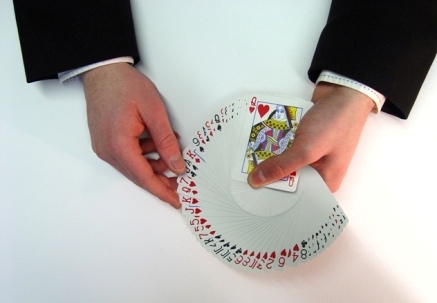
From Noel Qualter, close-up magician

One of my very favorite ways to spend a few minutes is to watch clips from the tv show Penn and Teller’s Fool Us, a show in which professional magicians get to perform a trick on stage to see if Penn and Teller can figure out how it was done. And that’s basically the way most people think about magic… they want to see if they can figure it out.

But when magic is done beautifully, we lose that ego-sense and just give ourselves over to the fact that we’ve seen something amazing. I give you four quick examples, in four very different modes:

There are innumerable others. Some are funny, some are mystical, some are conversational and some are gigantic and stagey. But they all rely on the magician’s ability to make one action seem like another.

The magician Noel Qualter differentiates between what he calls sleight of hand and flourishes. In sleight of hand, the viewer/participant sees nothing at all of the underlying mechanism. The act can seem simple, even skill-less. And yet, the outcome is never as we expect. With flourishes, the magician does all kinds of showy mechanical manipulationโ€”fancy cuts, the coin rolling across the back of the knuckles, all acting as a kind of misdirection for the real work going on unseen.

Sleight of hand is pure craft, the endless practice that allows a manipulation to be not merely obscured but convincingly unseen. The magician has to not merely master the props and the hands, but also the face and the patter. No hesitation or furrowed brow at the moment of truth, just fluid movement, seamless across the before and the after.

Writing is a form of sleight of hand. When it works, the viewer/participant stops thinking about letters and words and sentences, and just falls completely into the world of ideas and characters and problems and opportunities. Every decision a writer makes is in service to sleight of hand, the invitation to let the reader feel as though something else is happening. Something larger that can’t be predicted by the mechanical facts of spelling and syntax.

I’m good at it. I’ve been doing it for a long, long time, and most of my tricks are now just native. I can employ them in different forms, but my readers are pretty reliably lost to the illusion rather than just watching my hands. And that’s no accident, just practice. Lots and lots of practice. And I keep trying to learn new tricks, to expand my repertoire. There’s always more craft to take on, and to respect.

The reason I raise this question today is because I’m working on two different stories at once, and in both cases, I haven’t manufactured the next step of the illusion. I’m watching my hands in the mirror as I do the next part of the trick, and in both cases, I can see the mechanical move. I can spot the drop or the pass or the force that ought to go unseen. And if I leave it that way, it’s going to be visible to you, too, and the magic will at that moment crumble entirely. The illusion will disappear and we’ll just be left watching a shuffle. So I have to push past “good enough” to “exactly right.” Good enough is rarely good enough.

I think that’s a lot of what people talk about when they use the term “writer’s block.” Sometimes it’s that we’re sick of the craft, that we don’t feel like we’re learning. Sometimes it’s that we haven’t heard the idea or the character speaking to us yet who’s worth days or months or years of our time. But often, I think it’s those long periods of watching our hands in the mirror and saying, over and over, “Nope. Nope. Close… Nope.”

It’s super frustrating, that time before the right sequence of motions makes itself evident. I’ve gotten used to it, and I have confidence that I will be able to manufacture the illusion again. But it always feels clumsy, until it doesn’t.

Keeping Up with the News

She was a woman of mean understanding, little information, and uncertain temper. When she was discontented she fancied herself nervous. The business of her life was to get her daughters married; its solace was visiting and news.

Jane Austen, Pride and Prejudice, speaking of Mrs. Bennet

Isn’t this the best, most polite description of gossip ever? “Visiting and news.”

I once read a line by a retired urban reporter who’d moved to a rural place, who said that one of the very first things he had to learn in his new home was how to lean. Most of the conversations between men in his community took place while leaning on a truck fender at the store, or leaning on a fence post while taking a break from field work. A friend and I catch up on conversation every hour or so while we’re splitting wood, in the few minutes that we’re refueling and getting something to drink. A lot of it has to do with our neighbors, as casual conversation often does. A study by researchers at UC Riverside showed an average of 52 minutes a day spent in workplace gossip, with no meaningful difference between men and women.

There are a few people in any town who act as large-capacity gossip conduits. They’re extroverted and like to talk, and they interact with lots of people and thus have lots of source material to draw from. These informal information networks can become something like the small town version of a think-tank: when you have a problem or an issue that’s troubling, you turn to the people you’ve leaned against the truck with for forty years, the people you’ve had church-fellowship coffee with since your grandma was the head of the altar guild. That’s both natural and problematic. It closes us off to new ways of thinking, and deepens the channels already dug.

Our sources of social information are just as much sorting mechanisms as our sources of professional media information. It’s been almost fifty years since Jim Duncan’s famous study of the two communities of Bedford, in which he found that the long-time WASPy residents and the recent Italian-American arrivals kept to themselves in every way. They lived in different parts of town, belonged to different clubs, sent their kids to different schools, and had entirely different values for the appearance and messaging of their homes and landscapes. Our little town is much like that. The people who used to go to Nan’s potlucks and the people who are members of the volunteer fire department are a Venn diagram with nearly no intersection. The people who buy lunch at Grant’s General Store and the people who buy lunch at Sissy’s Kitchen are similarly dissimilar.

The Old Vermonters and the Flatlanders. The pickup and the Prius. The people who shower before they go to work, and the people who shower after work. We have so many ways to divide ourselves into tribes, invisible to the rest of the world but clearly spoken among those who matter, like a twin language, bonding us forever in opposition.

Over the decades, these harden into feuds and grudges. The origins are no longer precisely recalled, but every interaction offers the opportunity for reinforcement, an opportunity to teach our own biases to our kids who will carry them on in perpetuity.

And trust me, I know fully that I’m not innocent of this. I talk smack about people far too often. I make the inside joke, the cutting remark; and it makes me laugh when other people do it, too. As Tip O’Neill famously said, all politics is local, a wisdom born of Boston and its perpetualโ€”often bloodyโ€”battles between the WASP academic-finance old guard, the Catholic Italians and the Catholic Irish.

And let’s go back to our originating quote from Jane Austen, its own model of demeaning the morally-inferior other. “She was a woman of mean understanding, little information, and uncertain temperament.” You can imagine Jane over tea with her friends, chatting and smiling about the poor Mrs. Bennet and her limited world.

We need to belong. But we often do it through the mechanism of naming those who don’t belong.

Sorting Mechanisms

Not perfectly grouped, but far from random.

I’ve often thought about opening a pool room, but I know the likelihood that I’d attract the crowd that comes to pool rooms. (The American Poolplayers’ Association guide for league operators literally has pages of instructions on how to handle match outcomes if they’re interrupted by a brawl. I don’t think the Royal and Ancient Rules of Golf, for instance, laid that out in such detail.) But I think I could forestall most problems by instituting four basic business practices:

  1. No coin-operated tables
  2. No domestic beer.
  3. No televisions.
  4. No jukebox, and the sound system playing chamber music.

The kinds of people who cause problems in poolrooms wouldn’t stay more than five minutes in this one, and it would leave the place for the grown-ups.

I was put in mind of this on Sunday, when I went to the political meet-up I described a few days ago. They had a trio performing thereโ€”guitar, mandolin, upright bass. All three were good technicians on their instruments, all good singers… and I had no more interest in listening to that music than I would in watching football. Music is a remarkable sorting mechanism, dividing us not by talent but by culture.

And music isn’t alone. Every art and every craft attracts a body of people committed to that mode of work, even as others find it incomprehensible or dull. All of writing is a sorting mechanism, with readers bumping off the gates until we find the slot that fits us. Contemporary Christianity is a blizzard of incompatible readings of the same book, with literally thousands of denominations each believing that they have the direct track to divine truth (not to mention those billions of other people who are adherents of their own books of wisdom, each of those communities also subdivided into incompatible sects). Auto racing is just as sectarian as religion: Nascar, Indy car, rallies, off-road, dirt track, drag racing, F1, CanAm, monster trucksโ€”each with committed fans who wouldn’t spend a dollar to see the others.

I just read a term yesterday that’s undoubtedly been around for a decade or more: the splinternet. We can now tune our cultural consumption to only those things that please us. I grew up with what were called “variety shows” on television, the most famous of which was hosted by Ed Sullivan on CBS on Sunday nights. An hour-long episode of the Ed Sullivan Show had eleven or twelve acts, almost always including a crooner, a pop music act, a rock music act, a stand-up comic, a comedy sketch, a big choreographed dance number, and a juggling or tumbling act. The Muppets were an early and frequent part of the show. My mother and I both watched it together every week.

The variety show fell victim to the more sophisticated demands of advertisers in the 1970s. Mere size of audience was no guarantee of advertisers’ happiness; they wanted demographics, wanted shows that would subdivide a mass audience in order to more directly target the likely buyers of their cars or foods. TV shows were the first data-harvesting tools of the modern era, allowing us to be micro-targeted with pop-up advertising (then, of course, just called commercials.) A show that a junior-high kid could watch with his 50-year-old mother did not suit the demands of the marketeers.

There are no right answers to this, just as there are no right answers to any social question. I miss the idea of the variety show, the common knowledge on Monday morning of what every kid would have seen the night before. And yet, I’m as guilty as anybody of watching TV almost exclusively now on YouTube, consuming only eight-minute bits of an hour-long show already pretty tightly targeted. I’ve never watched an entire episode at its scheduled time of the things I seek out in scraps: Stephen Colbert, Trevor Noah, Graham Norton, Penn & Teller’s Fool Us. We microdose on our culture.

The question, I think, is whether we can encounter variety without needing to demean it or brush past it. And that’s hard, even for those of us who try to be well-meaning. I too often recoil from or just ignore the unfamiliar, and I have to challenge myself often to find the beauty in something that isn’t immediately apparent to me. It’s usually there, if I can slow down and look.

American Divorce

I was listening to NPR this morning, about the vast increase in violent and illegal gangs militias across the nation, and their common language of “prepare for civil war on November 4.” And I had the thought I’ve had dozens of times in the past twenty years: Why a war? Why not a divorce?

There’s no particular reason why the United States has to take the same form in perpetuity; it’s already changed lots of times already. The geographer Joel Garreau wrote thirty years ago about the “nine nations of America,” from the Ecotopia of the Pacific Northwest to the Caribbean cultures of the Gulf Coast. Let’s acknowledge that we have fundamentally different beliefs about a good life and about our responsibilities to one another, and go our own ways without being beleaguered by the other any longer. Cultures matter, and different cultures would benefit from their own values being more broadly enacted.

Even though there are red swaths in blue states (California’s Central Valley, Oregon’s eastern rangelands) and blue dots in red states (Austin, Atlanta, Raleigh/Durham), we would have to come to terms with geography. It’s not possible to have a political government without adjacency; we can’t be members of a different nation with a different constitution and different laws than our the other people on our street. This isn’t as simple as Ford trucks and Chevy trucks, where I can park whatever I want in my driveway. So I’d propose some version of Washington/Oregon/California out west, and some version of New England and the Mid-Atlantic on the west. That might be two different blue nations, or it might be one, but the big red one in the middle is clearly different. And that’s fine. “When in the course of human events, it becomes necessary for one people to dissolve the political bands which have connected them with another…” We’ve done that before. No need for shooting this time; just call it a day.

And Canada’s not an option. The population of Canada is just shy of 40 million; Blue America, the larger of the two, is about 200 million. It wouldn’t be fair to impose ourselves, like an outsized houseguest who decided to just stay. The Canadians are lovely people and all, but we can’t look to them for rescue. We’re responsible for taking on our own future.

Lots of folks will have to move from one place to another to fit their social and political choices. That’s fine, we can allow two years for migration before we establish border protocols.

I mean, this sounds snide and snarky, but I really do think that it might be time to establish an American Dissolution Commission. Divorce is never pretty, but it’s a lot better than domestic violence. There’s no reason to continue to make each other miserable.

Departure and Arrival

This is how stories work

I had an interesting day on Sunday. Part of it was catching up with friends at a masked-and-distanced meet-up for a local State House candidate who’s done a terrific job for us for the past six years. As part of that, I was able to chat with two friends we haven’t seen for eight months, and talk about writing and writers. One of them said that the thing that has always captured him in fiction, and the thing that he so often finds missing in modern fiction, is an arc of motion. That completely mirrors a metaphor I’ve used before, which is that any story is a form of travel, taking us from one place and delivering us safely to another.

The rest of Sunday was taken up with writing a story myself. All morning, most of the afternoon, and an hour or so after dinner, and I’d taken an idea that came to me on a country drive on Saturday afternoon and developed it into a solid draft of a 2,700-word story. I’m proud of it, but that’s not the point. The point is what it does. Does it do the job of being story-ish?

That’s the question, isn’t it. What is the job of being story-ish? I’m enormously weary of those stories that lead us right into the heart of an emotional morass and then end. These stories follow a “choose-your-own-adventure” theory of literature that basically says that, since the reader is doing most of the work anyway, we should leave it to the reader to imagine what they would do if their lives sucked as badly as the one’s portrayed in the story. So we quit while the father is running down the side of the freeway during a schizophrenic episode. We quit while the adult brother and sister are just learning that the same man abused them both. These stories always feel as though they’re missing the last third or so. Climax and denouement are seen not merely as old-fashioned, they’re somehow intellectually dishonest, a summing-up that is unavailable in life and thus must be withheld in fiction as well. The crisis is all that we have.

Nope. Nope nope nope. I still feel that it’s the author’s responsibility to land the plane, to pull up to the gate and lower the ramp. The author can surprise us endlessly with delights along the journey, and the destination itself might be something other than we imagined, but a story is fundamentally a trip from A to Bโ€”for the characters, and for us.

The story that stops in mid-stream is, for me, the very definition of a chapter. It is the cliffhanger that invites us to come back tomorrow, the tension suspended across reader-time until we pick the book back up again after dinner. A storyโ€”whether flash or short or novel-length or epicโ€”is a journey that can reasonably be said to have been completed.


The twentieth century modernists and their post-y offspring were just as unkind in music and architecture and visual arts as they have been in literature. We are mocked for wanting, for carrying expectations, for having hopes. Emotion is suspect; we are just brains in jars, logical sequences, information processors, data clouds. (The human mind used to be a watch, with intricate connections and levers. Now it’s a computer, with memory storage and processing capacity. Metaphors are insidious if we leave them to be invisible.)

One of the great losses brought about by recorded music and radio was songs that ended. Magnetic tape and mixing boards allowed the sliders to gradually descend at the end of the record, and the necessity of the DJ to talk over the space between records led to songs that didn’t have to end at all except at the demand of networks and advertisers. (Now that the role of the DJ has changed, songs can end again, except in various modes of electronica and dance music, where the DJ continues to be responsible for continuous sound and songs still needn’t be composed to a conclusion.)

[If I were David Foster Wallace and this were paper text instead of a website, each of the parenthetical remarks closing the last two paragraphs would have been footnotes. The medium remains at least part of the message.]

Songs and stories are similarly linear. The composer places us onto time’s arrow and fires us off in the direction they’d aimed. Einstein supposedly said (actually, it was science fiction writer Ray Cummings, in 1919), “Time is so everything doesn’t happen at once.” But time also allows emotion, because it allows anticipation. We know what happened, and we know where we are now. “And then what happened?” we say, unable to go to sleep until we know.

If we told stories at the campfire the ways that some of our contemporary writers told them, we’d be pelted with marshmallows until we finished the damned thing. You took us up hereโ€”it’s your job to get us back down.

So that, for me, is the job of being story-ish. It begins from one whole and entire place and brings us, moment by choreographed moment, to another whole and entire place. It is, as David Littlejohn once said about teaching, an opportunity to create an experience more shapely than our daily lives.