But What If It’s No Good???

Anachronistic, but still apt.
(Image from Steve Johnson via Unsplash)

Kanak Jha is the best table tennis player that the US has ever produced. He’s only 21, he’s been to the Rio Olympics in 2016 and the Tokyo Olympics this month, he’s won a gold and two bronze medals at the 2019 Pan American Games. He plays professionally with TTF Liebherr Ochsenhausen of the elite German Bundesliga, which is akin to playing in the National Hockey League. And yet, last week, he lost in the men’s singles at the Olympics in the round of 64. So, simple question: Is he good?

It takes so much work to even have a chance to fail. Don’t get me wrong, it’s easy to be inept. There are tens of millions of things that I’d be inept at, because I’ve never given them any practice at all. From chemistry to ballet, from skateboarding to online multiplayer video games, there’s a vast universe of things at which I would be instantly and identifiably awful.

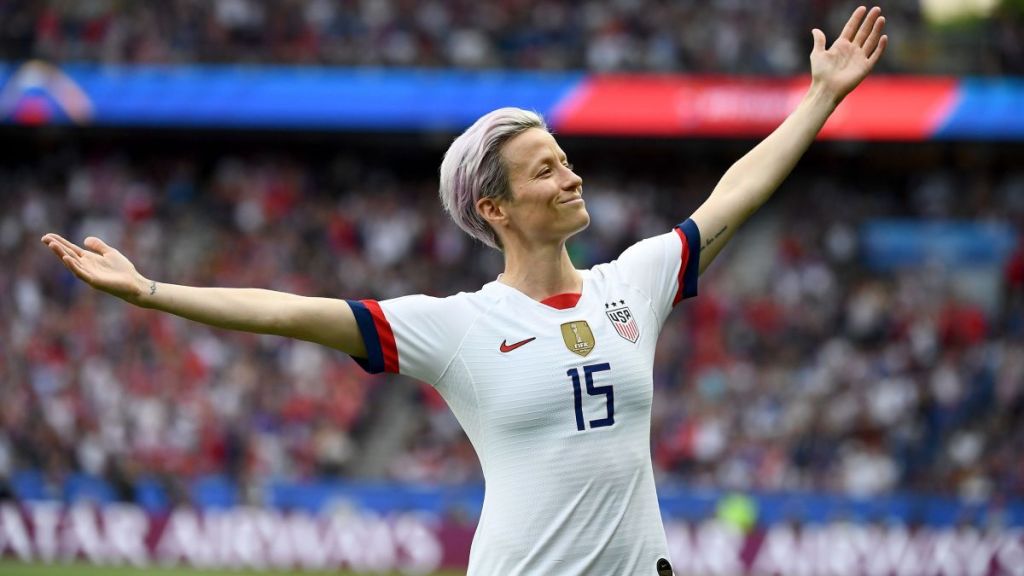
No, I’m talking about a different phenomenon. I’m talking about people who are really, really skilled and trained at something, whose excellence has been identified and praised, who sometimes do work that isn’t good. Think of Matthew McConnaughey in Sahara, or Charlize Theron in Aeon Flux. Think of Madonna releasing MDNA, or Emerson, Lake and Palmer subverting their entire career with Love Beach. Think of any athlete who has a rough day with the entire world watching, at the World Series or the Women’s World Cup soccer tournament. It takes a lot of work to come up short.


I’m at the point of my current novel where the question comes up โ€” but what if it’s no good?? I’ve got a lot of plates launched and spinning: the sibling tension, the multicultural romantic drama, the emotionally wounded child, the physically wounded hero, the dying sister, the questions of whether one career will launch or another career sustain, the questions of sexual identity and sexual fluidity. That’s a LOT of plates. Too many? Are some working in opposition to others? Does the variety distract from the whole? And what if one of those plates drops and shatters? Ruins the whole act, right?

Plus I sent one of my prior novels to the printer last week for a short run. I wrote it in 2016-18, so it’s three years prior to Leopard or Trailing Spouse. I was a similar but not identical writer to the guy who wrote those later two. So what if The City Killers is no good? Am I just assembling the outtakes?

And there are other books I haven’t gone back to for revision and assembly. I’m planning to, but maybe that’s a bad idea, because they’re no good.

You’ve been there, I’m betting. You’ve wondered whether the work you’ve invested so much care and effort in is no good. So here’s my half-full thought for today on that.

It’s okay if it isn’t.

One of my writing heroes, Jon Carroll of the San Francisco Chronicle, wrote a daily 700-word essay five days a week from 1983 through 2015. They were wonderful, mostly, but of course not entirely. Any career with over seven thousand essays has to produce a dud now and again. Anyway, he was wrestling with this question โ€” but what if it’s no good?? โ€” one day, and came to a formulation that he believes supported him through his entire career. He said, “One of these five columns is going to be my worst column of the week. And I probably won’t know which one it is.” Once he gave himself permission to not be on an identifiably and perpetually upward arc, he freed himself to write more fully.

Here’s a challenge. Spend a weekday afternoon watching television. Scroll around and flip through the channels. It’ll be a real challenge to find anything that’s good anywhere in your hundred-channel basic package. And these are people who’ve made real careers around those cooking shows or soap operas or sports-shouting panels, around those game shows or shopping channels. They provide a lot of people with a solid living, and almost none of them are any good.

The science fiction writer Theodore Sturgeon once responded to a critic who said that science fiction wasn’t literary because so much of it was low quality. Sturgeon responded that most work in most genres was of low quality. His more colorful phrasing, which has come down to us now as Sturgeon’s Law, was “Ninety percent of everything is crap.”

Yes, ninety percent of everything is crap, and you deserve to make some of it. You are doomed to make some of it. If you do enough work with enough care for enough time, you will produce some of that work that is of lesser quality. It is as close to an immutable, inevitable fact as any social phenomenon I can imagine.

And that’s encouraging, I think. It gives us permission to do everything we can as fully as we can, and learn the verdict later on. So pull on your muck boots and wade back out there, comrades. If it’s every bit as good as you can make it today, then it’s made today worthwhile.

What I Know After Six Weeks

We’ve gotten everything brokenโ€”now, how do they fix it?
(Photo byย Ruan Richardย onย Unsplash)

Well, we’re six weeks and about 36,000 words inโ€”halfway through, more or lessโ€”and settling into the long game. I didn’t work on the novel as much this past week as I’d have liked. We had friends from out of town stay with us, the first time in two years we’ve had people stay overnight! It was wonderful. And I did some work to teach myself a new graphics program, and got another of my novels into the production process. There’s just something wonderful about a physical book in your hands, after months or years of looking at the thing on your monitor as a Word file. And it makes a nicer gift when you give one to a friend. I highly recommend it. Stay tuned for more developments on that front…

But back in the story, everybody’s coming to terms with the new world after the old one’s now been irrevocably broken. We’re going to have changes in where people live, and with whom. We’re going to have changes in how people make their living, or don’t. And Cale’s got fundamental changes in how his body works, changes that he doesn’t yet understand, and hasn’t yet fully seen.

Two doctors came in, the one Iโ€™d met plus another. They talked almost exclusively to one another, I was just the object, like a dog at the vet. I remember one of them asked Sammi, โ€œHow are you around the sight of blood? I donโ€™t need a secondary casualty in here.โ€ Then they put a mask over my eyes. โ€œItโ€™ll be bright in here, we donโ€™t want to aggravate your brain injury.โ€ She was lying, of course, they didnโ€™t want me to see my hand, but they were nice to me, and it was all okay. I wanted to say thank you, but it turned out that I couldnโ€™t say anything, so I didnโ€™t try very hard.

The two women had similar voices, so I couldnโ€™t tell who said what. I felt cutting and pulling, but none of it hurt much, and I couldnโ€™t talk to them anyway. I felt Sammiโ€™s hand crush down on my good hand, felt her jerk back.ย 

โ€œMilitary surgeon, probablyโ€ somebody said. โ€œKeep him from bleeding to death, and send him back for someone else to clean up.โ€

โ€œAnd they did a full open for the tendon repair, not arthroscopic. I havenโ€™t seen an incision like that in fifteen years.โ€ย 

I wondered if cars could hear it when mechanics talked about them.ย ‘I donโ€™t know who worked on that transmission, but thatโ€™s just fucked. Yep, itโ€™s a goner.’


I’m not an especially experimental novelist. Or, perhaps more accurately, the experiments I set for myself aren’t formal; they’re ethical. I want to know how someone might overcome or adapt to a new world that they weren’t able to fully create themselves. Our lives change around us all the time, and I’m fascinated by the ways that we change in response.

Because of that, I write in an identifiably realist mode. I write in a relatively linear chronology, with some sense of a before, a during, and an after. “And THEN what happened?” is at the core of my organizing structures.

It’s surprising how unusual that’s become in literary circles. It’s still the norm in every commercial genre you can imagine, but it’s no longer interesting to the people whose job it is to invent new forms, just as humane habitation isn’t very interesting to the architects whose job it is to invent new forms. I recently proposed a Myers-Briggs equivalent that I called the Reader-Writer Type Indicator, that attempts to help us understand the types of novels that will be most appealing to us. Like the Myers-Briggs, it has four variables with two types each:

  • E/Aโ€”Is the action responsive to the Environment or to the characters’ Agency? Can people overcome their circumstances, or are the circumstances too substantial to be resisted?
  • C/Uโ€”Is the story intended to be Comforting or Unsettling? Do we want things to become better, or ever worse in creative new ways?
  • N/Fโ€”is the story set in some Nearby place that we’re helped to see more richly, or is it set in a Faraway and unfamiliar place that keeps us off balance with its forms and rules?
  • R/Jโ€”is the story fundamentally about the Relationships of its characters, or more about the Journey or the adventure on which they’ve embarked?

Iโ€™m more or less an ACNR reader, looking for well-executed but pretty traditionally structured stories about the successful building of a relationship with self, friends and partner, set in a seemingly familiar place that surprises us with its inner workings. My wife is an EUFR, constructing ethnographic studies of people bound by culture and family and place, most of those places being distant in time and space, but like me, focused more on the daily inner lives of her characters than on some large adventure they embark upon.ย 

Your literary personality type will be different than either of those. But you should know it, because if you write outside those bounds, the work wonโ€™t draw on your greatest strengths. All of us are instruments suited for a particular repertoire, with a voice that has in fact been generated by that repertoire. No matter how conscious we are of our craft, we still largely play by ear, falling into the written culture that has shaped us. This is not a failing; it is a celebration of the reading life weโ€™ve chosen.ย 

What I Know After Five Weeks

…and doggone it, people like me!

So here I am, right in the heart of the book, about 33,000 words in. It’s been a productive month. And, as often happens, I learned something about my writing this week through a surprising source.

As I wrote about a couple of weeks ago, once we get through the first fifteen or twenty thousand words, we know who all the players are and what fundamental problems the book is going to have to get them through. The last ten or fifteen thousand words will be the resolution of those problems, for better or worse. So what’s the fifty thousand words in the middle doing? I mean, why bother? It should be like bowling, right? Set the problem up and knock it down.

But early this week, I got an e-mail from a friend. He’d read one of my books, and loaned it to his high-school-senior granddaughter. She read it, and enjoyed it as much as he had. I won’t replicate that message here, but one of the things she said that really landed with me was that the characters were compelling and multifaceted and “just plain likable.”

And that’s what I’m doing in the middle of the book.


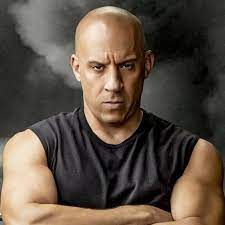
What makes a character compelling? I think it’s when they have a compelling self-problem to address. Vin Diesel isn’t a compelling character in the F&F franchise, because his whole worldview is external. Stuff happens, he reacts to it. The writers try to tag on a little internal struggle, but come on, that’s not why you watch those stupid movies.

Characters are compelling when they’re compelled. When they’re driven by some internal demons or some internal motivation to do something bigger than everyday life. Let’s stick with the action-movie mode for a minute. James Bond as portrayed by most actors has been externally driven. Villains or girls (or sometimes girls who are villains) present themselves, and he responds. We wait for the fight scenes or the wisecracks. But Bond as portrayed by Daniel Craig is completely different. He hates his life, he doesn’t want to live this way any more, and he’s aging out anyway. He does what he does, because of patriotism and because it’s what he knows how to do, but he fights against it every step of the way. So the explosions and motorcycle chases are still cool, but the movies are way better because Bond is now a compelling character. He has an internal life that he hasn’t resolved.

What makes a character multifaceted? I think that it comes through seeing how they react to different kinds of people and events. They have a personality that’s expressed more or less the same way in different life momentsโ€”not perfectly consistent, because none of us are, but reactions that are reasonably evoked from that person. So every interaction gives the characters a chance to show you a different facet of who they are, a different glimpse into how they think. And those interactions have to be different enough to give you meaningful difference in how characters respond. If every single challenge in your book is yet another bad guy, or yet another alien, or yet another dinosaur, then your characters have only one facet to show you. (There are a lot of action movie stars whose facial expression has two modes: happy and resolute.)

Am I right?

And how does the writer choose what other kinds of people and interactions to put in there? The writer does not choose! The writer knows the characters well enough to know their friends and their workplaces and their habits, so that’s what shows up. This is what ethnographic writing is about; it’s about studying a person and their ecosystem thoroughly enough that you know how everything’s related to everything else. There are surprises for the reader (and the writer), but they aren’t “plot twists.” (Oh, no! He has amnesia and his long-lost twin brother has arrived!!!). They’re merely another part of everyday life as it exists in that ecosystem.

Finally, what makes a character likable? Well, what makes anybody likable? They look out for their friends, they don’t pick fights, they look for ways to be supportive and kind. They’re curious and generous. I have a friend whose LinkedIn profile tagline is “Restoring Human Dignity through Social Innovation.” I mean, if your mission in the world is people’s dignity, then what’s not to like? And because I choose to spend time with likable people, it’s no surprise that my characters are likable. I seek out people who are curious and generous, who respect the dignity of those around them.

Now, here’s a little secret. I never did this on purpose, but I think it actually helps the likability factor. All of my books are about human interaction, so people talk to each other a lot. Not too many car chases or gunfights. And what do likable people often do? They make other people laugh. So I actually show people laughing, quite a lot, because they’re funny people.

There’s a lot of coaching about overwrought dialogue tags. “Stop That!” he emoted wildly. Stuff like that. “S/he said” is thought to be the most invisible tag, a simple identification of the speaker without the intrusiveness of a self-aggrandizing verb. The two most common ways to frame dialogue involve a comma. She said, “I have to go back to the office after dinner.”โ€”orโ€”“I have to go back to the office after dinner,” she said. But we can attribute dialogue, often to great effect, simply by shifting the camera shot. We show that person doing something for half a beat before they speak.

  • She laughed. โ€œOnly people who ever call me Coby Rae are women over 70. All of Momโ€™s old friends.โ€
  • I cracked open the seal and passed it to her. โ€œFirst slug for the eldest child.โ€
  • I thought for a second. โ€œI want Ray to live out her life the way she wants. I want Jay to move on after. I want Walker and April to see what the world is like, so they can make up their minds after they know more.โ€ย 
  • I glanced at my watch. โ€œWhy donโ€™t you call the house? We should let them know weโ€™re okay, and you can find out how the family reunion went.โ€

I still use some variant of “said” probably 80 percent of the time, but these kinds of occasional refocusing shots allow us to have a lot more control over how a reader hears that next spoken line. And they let us see people laughing at what someone else has just said, which is at the heart of likability.

There’s been a lot of communications research about the effectiveness of the laugh track in television comedy. Whether pre-taped or from a live audience, laughter is social, and we enjoy being around other people who are having a good time. So I think that the fact that my characters are often laughing is a significant part of their likability.


So that’s the work of the middle of the book. The story’s going to take care of itself once it’s launched; my job in the middle is to help you invest your care in the people, to make you emotionally engaged in their well-being.

What I Know After Four Weeks

Wouldn’t it be nice…

Before we’re underway, I wanted to start with a review of a short story. We won’t bother with the author or the location of its publication, but the story was accompanied by an interview with the author, who was trying to describe what she was trying to do. (And yes, that repetition is purposeful. As Yoda tells us, “Do or do not. There is no try.” She landed on the “do not” half of that formulation.) Anyway, it was an abysmal story about abysmal people. That seems to be this author’s forte. In her interview, she described a reviewer’s reaction to one of her prior stories: “one commentator said that sheโ€™d rather shove shards of glass underneath her fingernails than ever read the story again.” That’s a bit extreme, but only just.


That motif of the damaged hand appeared last week, but this week… well, I’d been wondering for a couple of weeks if this thing was going to happen, and on Wednesday, it did.

He still wouldnโ€™t look up, but he hadnโ€™t left the table, so I took another step. โ€œI talked to your dad earlier this morning, before he went off to work. He said that you feel bad about my accident, and that youโ€™re taking it pretty hard. I appreciate that, but accidents happen. Thatโ€™s why theyโ€™re called accidents, because they arenโ€™t anybodyโ€™s fault. You didnโ€™t know that ladder was broken, right?โ€

I intended that space to let him have some peace, to agree with me that he hadnโ€™t known, that it was all just an unfortunate mistake. But the space grew, the void filled the kitchen. 

โ€œYou didnโ€™t know, did you?โ€

He bolted then, ran out the door and off the porch, his mother screaming behind him, everyone on their feet, April out of the room and away. And then Ray let out a half-animal moan, and just made it to the kitchen sink before vomiting up her lunch. Sammi went to her, pulled her hair back, and I went out onto the porch. No sign of him anywhere, he was lost to the corn.

Well, boom.

And a new project has emerged for Cale, one that will bring his family together, or do permanent damage. Hard to know. It came to him as an epiphany in the AmericInn motel on their way back from the farm to Minneapolis, after that explosion at the lunch table.

Since I was inert, I decided to look at the ceiling. Three different smoke detectors. Two different water stains. An unpainted drywall seam, the nailheads still dented and visible beneath the too-thin skim coat. Corrosion on the ceiling fan motor. Years of cobwebs and dust in the fins of the heating grille. It was probably just as well I couldnโ€™t roll over, who knew what the bedcover and sheets would look like.

Why was it so hard to do work with care? Why was the world filled with Rollerbites and margaritas made with Mr & Mrs T mix? Why hadnโ€™t Ray ever cleaned up all the junk equipment and returned the farmhouse to being a point of pride? Why was the world so filled with half-assedness?

And, in my half-oblivious, pain-infused misery, I suddenly knew the answer. Literally, it was like Saul blinded on the road to Damascus, I had a vision in its totality, and I was charged with bringing it into fullness before releasing it into the world.

When Sammi returned with soggy subs and a couple of bags of Sun Chips, I didnโ€™t try to lay it all out for her at once. I knew it would scare her, that it would sound like the ravings of a concussive. I knew that this editing job would be the most important of my life. I had to get it right, in order to bring the team together.


I’ll take a couple of days away from it now, tomorrow for a civic event and Monday for returning rented tables and chairs and washing coolers from said event. We’ll see how it all feels on Tuesday.

What I Know After Three Weeks

You’ve been here.

I took a week away to do some professional writing and to help organize a local friend’s memorial service, but this past week, I was back at it, and blew through another 9,000 words. Absolutely incredible, it feels like molasses while you’re in it, but at the end of the day you’ve written a real, meaningful scene.

Lots of stuff happened in the story this week, but we’re in the point of the book where it becomes a spoiler if I tell you too much about plot. Ray becomes a little less of a farmer, and Cale becomes a little more of a farmer (to his chagrin), and everybody has a few too many margaritas made in the bad midwestern style with Mr & Mrs T premix.

All I knew is that the Royals had lost their sparsely attended afternoon game against the Texas Rangers, Iโ€™d finished my chile rellenos and then my enchiladas verdes, and a sequence of large, frosted yellow glasses had come across the booth and been emptied. They tasted like Mountain Dew with tequila, and I didnโ€™t care.

Everybody’s a little more complicated now. And we’ve hit the part of the storytelling where “themes” are emerging. I didn’t put them there, but I’m starting to see similarities between different characters’ problems, mildly different tones of the same dilemma, so I can now keep those categories in mind and bring them forward when they make sense. But I think that themes have to be inductive. You just have to start with characters, and let patterns emerge. I’ve read too many books where the author clearly started with patterns and then pressed some misshapen characters onto them, characters that never once became people.

This is also the place in the manuscript where questions of pace start to become more important. The opening of a book is easy to pace, it just natively wants to go fast. You’re introducing everything all at once, place and people and contexts and competitions. But now, sixty-five pages in, we know everybody we’re gonna know, we know all the places we’re gonna be, and you can’t rely on simple novelty to make the reader go on to the next pageโ€”and, as Peter Ho Davies says, “Novels, in the most basic sense, whether weโ€™re talking about Jane Austen or John Grisham, are machines to make us keep reading.” So we’ve reached the point of the story where the machine is running efficiently, but could easily bog down if the added complexity isn’t just as interesting as our first glimpses of the characters.ย The saddest review of a book is “DNF 40%.” That’s what it looks like when a promising opener stops paying off.

I used to tell my students that the first four weeks of a course is new and exciting and filled with brand new things to think about. The last month of the course is tense and filled with production and deadlines. And that two months in between there takes a year and a half, you think it’s NEVER going to be over. Reading a book is like that, too. That middle half is brutally difficult, because it occupies the native emotional trough. When it’s played well, it seals you into that world completely. When it’s given even the least little bit of room, it squiggles into the corner and takes a nap.

That’s one of the great things about writing blind, about following the story where it leads me. If I’m excited by these new developments, then I can convey that excitement through tone and syntax, and it’s more likely to be exciting for a reader. If a writer is road-mapping a story, and they know they’re at A and need to be at B pretty soon, it’s easy to take the nice dull interstate and see nothing along the way. I get to follow my characters off-road, into a Mexican restaurant after a bad late-morning doctor’s visit.

Weepy, woozy Tex-Mex music was playing, the walls were draped with Christmas lights and sombreros, and all the windows had been darkened. Perfect. Funereal. I thought about sitting at the bar, but figured that if I drank enough, I might fall off the barstool, and I wasnโ€™t wearing a bike helmet. So I let the pretty young hostess lead me to a booth, and chose the side from which I could see the TV. A young man appeared magically with water, chips and salsa, followed soon after by the roomโ€™s only lunch waitress. โ€œHey, hon, welcome to Playa Azul,โ€ she said, rhyming the second word withย dull.ย 

You’ve been in that room, you know you have. Nothing better than Mexican food for self-pity.ย So now your own experience of being there is mapped onto Cale’s, and your own emotional resonance colors his. I can borrow your own history to ease you through the increased density of the trip.

Every time I do this, I learn something new. I can’t imagine anything more fun.

Whose Is It?

Ahh, fan mail…

I’m back into the new story, which just got kicked sideways this morning. Didn’t intend it, but there it is. And this new direction will make it appealing to some readers more than others, as every writing decision always does.

Anyway, I was taking a break while considering how to ride this new course, and through the random miracle of hyperlinks, I happened across this little nugget, a tweet from the novelist Brandon Taylor:

Pls do not tag me in scathing, incomprehensible misreads of my work, lol. People are entitled their experiences with the text but donโ€™t involve me in it, pls!

(This is one of the reasons I’m never on Twitter, by the way. It’s the cattiest, bitchiest platform out there, rhetorically based as it is on nothing but one-liners. It’s nothing but #snark.)

Anyway, it’s an interesting idea. Once the book leaves your hands, it’s not yours any more ever. It belongs, differently, to every reader, who will make their own project of it. Every reader will not merely have a different judgment from one star to five, but will place it into their own category system, will take different life lessons from it, will think it’s “about” different things or “means” different things. It will remind them of different other books. The book becomes a metaphor through which other people think. It’s now theirs, individually, to do with as they wish.

I got a wonderful letter from a friend about my recent novel Trailing Spouse. He wrote, “I read it with great interest, finished it blown away. I think it’s brilliant. I was impressed by your table tennis book; I’m even more impressed with this one. It begs to be publishedโ€”as a YA, to my mind, but what do I know? I think I’ll lend it to my 17-year old granddaughter, see what she thinks.” I never once had it in my head that Trailing Spouse was YA, but all of my books are hopeful resolutions to difficult stories, and YA is a native market for that. (I watched a podcast last night of three literary novelists talking, and one said that he’d set himself the challenge of writing for once about happiness rather than trauma. The other two almost visibly shuddered. “Oh, I could NEVER do that…”) So my friend made my book a YA book, and I think that’s really nice, though I wouldn’t have done that myself.

When I taught at Duke, we used to speak occasionally of “productive misreadings,” when a student would take a text that seemed to be doing one kind of work and then follow it down an entirely different, but really interesting, path. But I think that ANY good reading of a book is a productive misreading. If the book is so didactic that it can only be interpreted in a single way, then it probably isn’t a very interesting book.

I think that all we can control as writers is how WE think about the work, which is just as much a personal and imperfect reading as anybody else’s. We have no authoritative interpretation, though we naturally have an authorial interpretation. We can only hope for productive misreadings, the fact of our story helping someone else do her own work.

Gift or Imposition

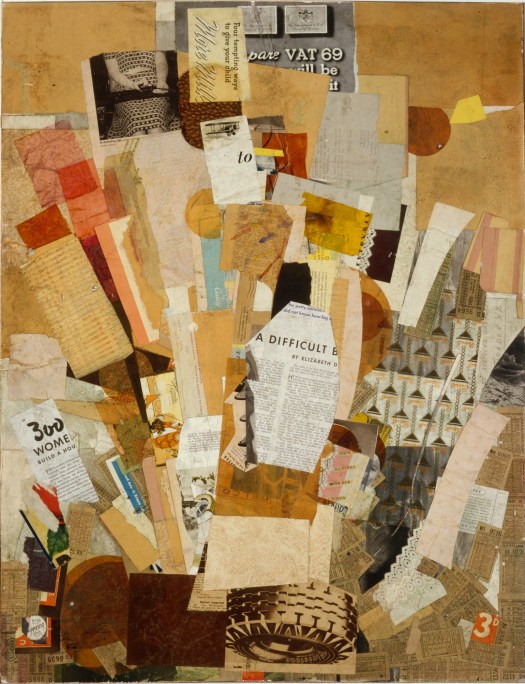
Kurt Schwitters,ย Difficult, 1942โ€“43, collage, 31.3 x 24 in. Albright-Knox Art Gallery, Buffalo, New York

My relationship with design education has been fraught. As both a student of studio architecture, and later a teacher of design theory and human interactions with places, I was dismayed at the degree to which the pleasures of habitation and public life were discounted, or more often, never raised at all. The buildings we studied and were asked to emulate were mostly isolated and irresponsible buildingsโ€”vacation homes, world’s fair pavilions, museums, monuments. Even churches and skyscrapers, which do have real work to do, were taught primarily as urban monuments, as moments of inspired jewelry in the city’s wardrobe. The academic study of architecture is all head and no heart. All ideas and no comfort.

The academic practice of fiction is similar. All head, all ideas, all carefully shaped novelty. Stories no longer need to end, they just stop at the moment that the narrator realizes the depth of the shit they’ve gotten themselves into. We talk only to ourselves and those who’ve been similarly trained in academic “close reading.” We admire rather than enjoy.

So I was exactly the right audience for Peter Schjeldahl‘s essay in this week’s New Yorker, “My Struggle with Cรฉzanne.” Schjeldahl is nobody’s fool when it comes to contemporary art; he’s been a professional art critic since the 1960s, along with his other career as a poet. But in this essay, he uses the work of Paul Cรฉzanne as an entry into why so much contemporary art leaves him cold. “You donโ€™t look at a Cรฉzanne, some ravishing late works excepted. You study it, registering how itโ€™s done.” That’s the academic impulse, of course, to understand rather than to enjoy. In a writing program, we can never merely read a story; we have to “interrogate” it, to use the writing-program cliche for reading. As Billy Collins says, we have to tie a poem to a chair and beat it with a hose to find out what it really means.

For Schjeldahl, Cรฉzanne is not the problem but the symptom.

So whatโ€™s my problem? Partly itโ€™s an impatience with Cรฉzanneโ€™s demands for strenuous looking. I tire of being made to feel smart rather than pleased. (Here I quite favor the optical nourishments of van Gogh, Gauguin, and Seurat.) But my discontent is inseparable from Cรฉzanneโ€™s significance as a revolutionary. How good an idea was modernism, all in all? It disintegrated, circa 1960, amid a plurality of new modes while remaining, yes, an art of the museum. It came to emblematize up-to-date sophisticated taste, spawning varieties of abstraction that circle back to Cรฉzanneโ€™s innovative interrelations of figure and ground. It also fuelled a yen in some to change the world for the more intelligent, if not always for the better. The world took only specialized notice. Modernismโ€™s initially enfevered optimism could not survive the slaughterhouse of the First World War and the political apocalypse of the Russian Revolution, which ate away at myths of progress that had seemed to valorize aesthetic change. Dedicated newness in art devolved from a propelling cause into a rote effect.ย 

“I tire of being made to feel smart rather than pleased.” This is my own response to so much contemporary art. To quote a t-shirt available in the gift shop of the Massachusetts Museum of Contemporary Art, “Contemporary art does not love you.” To which I say, well then, screw it. Go bother somebody else.

The bartender and writer Jim Meehan once weighed in on the difference between bartender and mixologist. “A mixologist serves drinks. A bartender serves customers.” And this is the principle that I try to hold in my work of all sorts. People don’t come to my house to have a drink; they come to my house to have an evening of conversation, and a nicely made drink is something yummy and fun to talk about for a few seconds. The drink is at the center of our attention for all of fifteen seconds. People don’t read stories to be instructed in literary structures; they read to leave their own lives for a bit and be welcomed into the lives of others. And people don’t go to architecture, at least not many of us. We go to work, or we go to a store, or we go to church for those purposes, and if we’re lucky, the building makes the experience of our work or shopping or worship a tiny bit more graceful.

I am dedicated to the principle of offering pleasure to my readers. And the more difficult the subject matter, the more comforting I try to make the form and the diction of the stories. Our work can be willful, an imposition of our ideas. Or our work can be a gift, a generous offering that takes into account what pleases its recipients.

What I Know After Two Weeks

The second week of the new story bowled me over, I had four days where I could barely keep up. But now I need to take a short break from it, to take on professional and civic and friendship responsibilities. So let’s see where week two got us, aside from another eight thousand words (!!).

Cale’s relationship with his sister has a hard side and a softer side, one that she doesn’t let on about very often. It surprises Cale whenever it appears.

We stood side by side, unable to look at each other, both facing the grave square-on. We didnโ€™t want to stay, didnโ€™t know how to leave, knew that if we turned our backs and got into the car, weโ€™d be ending that story forever. No redemption in the last act, just โ€œThe Endโ€ scrolled across the broken family in the shattered landscape.

Ray fixed it, same way she fixed everything, by reminding us of chores. โ€œBetter get back to the house, got ladies to hug and potato salad to speak highly of.โ€ She laughed a little, and I could hear the tears within it. โ€œCale, I completely fuckinโ€™ hate potato salad.โ€ She reached up and squeezed my hand, then pulled out from under my shoulder. โ€œCome on,โ€ she said.

But then, after they discover what’s in their father’s will, the peace is broken again, even as she’s trying to hold her love for him.

We were all silent for a few seconds, like that moment after an earthquake, before you take stock of the damage, while youโ€™re wondering whether this particular tremor is done. Then Ray, with her eyes closed, said, โ€œCale, Iโ€™m gonna need you to leave.โ€

โ€œCome on, Ray…โ€

โ€œCaleb, I need you away from this table in the next ten seconds, and out the driveway and gone from my house in the next ten minutes. Can you do that for me?โ€

As Cale drives back to Minneapolis and his summer work and his summer girlfriend, he sits in a truck stop and reads the letter that his father has left him. The letter that will lie at the heart of the story.

And then, finally, at the Formica table under the fluorescent lights and the suspended ceiling panels and the distant country music radio, I wiped the Rollerbites grease off my fingers, and I opened Dadโ€™s letter.ย The envelope that simply saidย Caleb Barrows, in blue pen. Inside, one piece of three-ring paper, probably borrowed from Walker. The same blue ink.

Sammi, his summer girlfriend, has also arrived more fully, as a wise and merciful advisor.

I got home and just dumped it all out on Sammi, didnโ€™t even unpack my bag. It was a total blender shake: the casket and the will and the letter and the macaroni salad, the church ladies and the parts guys, Ruth and Jerry, Walkerโ€™s hat. The pesticides and my mother. And my sister. Sammi fished out a pipe and some weed, put a chill mix on Spotify, and just let us both sit with it all. Sometimes thereโ€™s wisdom in not deciding anything. I remembered readingย Siddharthaย when I was in high school, there was one point where he didnโ€™t have any food and so he decided to fast. Iโ€™d thought that was dumb thenโ€”of courseย he was fasting, he couldnโ€™t eat. It took me a second reading to understand what he was doing: taking a necessity and making it into a sacrament.

Sammi offered me that sacrament. I couldnโ€™t decide anything, and she let me know that I didnโ€™t need to decide. And that it was a blessing to not decide. To just be in it. To just be sad and confused and hurt, not to fix it.


You look back every so often and you see that some work got done.

I launched this website in February 2019. In the intervening two and a half years, I’ve written a couple of books’ worth of words here as well. And today marks the three hundredth installment of these comments. If you’ve liked them, please consider following in the link at the bottom of the page. Thanks for coming along on the ride.

Oh, yeah.

What I Know in a Week

Ready for Cale’s father’s funeral

So last Sunday, I told you that the new story had arrived, and was ready for boarding. Now it’s Saturday, five writing days later, and I’m 7800 words in. (That can happen, sometimes.) And I know some things.

I know who my character is: Cale, short for Caleb, the younger son who left the farm for urban and academic life. And I know the biggest character he’s going to have to push against: his older sister Ray, short for Coby Rae, who’s run the farm herself for 25 years. So when Dad got the farm, he kept painting Barrows & Sons on the trucks. And Coby Rae had been a ranch kid right from the start, had no patience with anything girly, insisted that everybody call her Ray anyway. She was a better son than I ever was, knew her way around a field and a fuel injector and a co-op board meeting since junior high.

I know what the landscape looks like. I know the gossip that goes on at the co-op as the farmers come in for lubricants or to schedule their deliveries of corn, most of it bound for ethanol refineries. I know how far everybody has to drive every day. You drive a lot in Nebraska, because everything you need is 15 miles away from where youโ€™re at, no matter what you need or where youโ€™re at.

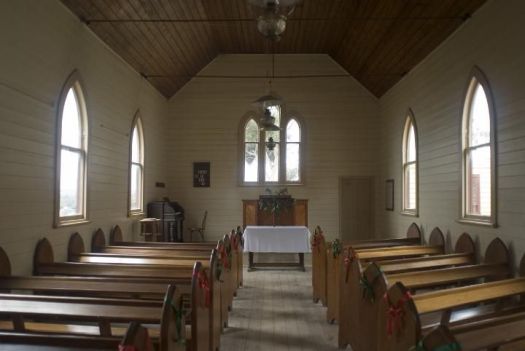
I know how Cale and Ray’s brother, mother, and father died. The opening chapter is the preparation for the father’s funeral, in the church you see up at the top of today’s post. Having an image like that is important not for describing the color of the pews or the altar cloth, but to describe what it would feel like to be inside it. The sanctuary was lit only by daylight through the two big windows on each side of the plain plastered walls, the room feeling every second of its 130 years. Itโ€™s hard to remember how gloomy an indoor space can be in on a bright prairie day, the sun pours straight down like hail and leaves no light to scatter sideways.

I know what the farm looks like, because I’ve seen it in my own neighborhood. Deceased trucks and tractors and implements and cars, all left wherever they dropped. The trucks still had Barrows & Sons painted on their rusted doors, the trucks we used to haul corn and wood and gravel and sand and Christmas trees and dead stock and whatever damn thing somebody needed moved from A to B. The weeds had grown up to about mid-door height and then just surrendered, like everything else.

And most importantly, I know Cale’s biggest internal dilemma: he’s never really been convinced of who he is. And the fact is, the simple binary ofย I got out, she didnโ€™tย isnโ€™t sufficient anyway. Because I didnโ€™t just leave one culture, I joined another. A culture in which we talked endlessly and rarely accomplished anything, a culture in which feelings and manners and process outweighed getting shit done. A culture in which no finely-sliced difference couldnโ€™t be sliced even a little further, Freudโ€™sย narcissism of small differencesย carried to the sixth decimal place. I left a world I didnโ€™t want and never would, and walked into a world I didnโ€™t understand and never would. I had dual alienship.

So a good week. I’ve got the people and the place and the voice. I’ve been surprised half a dozen times a day at what somebody said or noticed, always a good sign that the story’s real. And I’m ready for week 2.

Where It Starts Is How It Goes

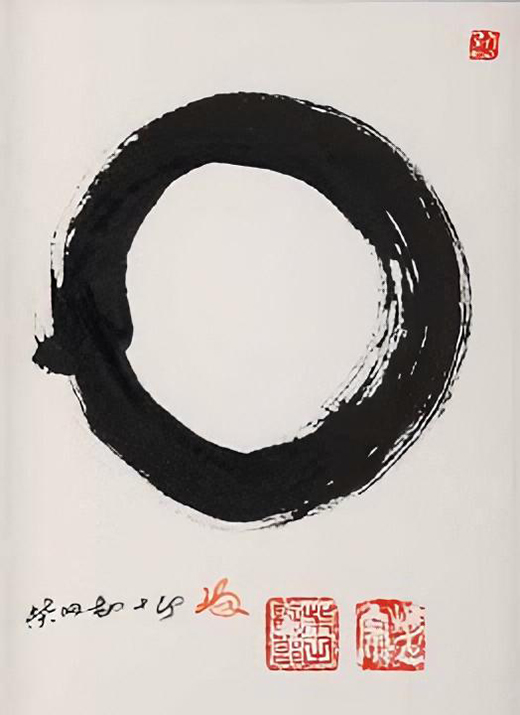
Kanjuro Shibata XX “Ensล (ๅ††็›ธ)”, via Wikimedia Commons

My next novel arrived today.

As always, it begins with a person bearing a particular problem, and a context that makes that problem matter. But I’m also realizing this evening that it has a subsequent starting point, which is the opening sentence.

There’s a lot of blather in writing circles about the importance of the first sentence as the hook that makes a fickle and impatient reader hang on for a few seconds further. That’s just market research, it’s Twitter-think. There’s a reason that TikTok videos are ten or fifteen seconds and novels take ten hours, you can’t just cobble a tweet onto the front of a book and think you’ve got something. (Though the writers at Saturday Night Live often seem to think so, for instance, coming up with a great ten-second gag that they stretch out to fill six minutes.)

No, I think that the first sentence is important for the writer, not for the reader. The first sentence sets the terms of engagement, sets the trajectory through which the terrain will be approached. If you’re a micromanager like me (to use Zadie Smith’s term), you start with the first sentence and end up a few months later with the last sentence, and you’ve made every single decision along the way as a part of the run. It’s like race driving: you don’t get to stop halfway through the course and say, “I didn’t come into that curve the way I wanted to, let me back up thirty seconds and hit it again.” I know that there is a vast community of writers who would find that sentiment to be (at least) naive and (at worst) lazy, because they believe that every decision is fungible and swappable at every moment. But that’s not how I write. Like Zadie Smith and many others, I write like a reader reads: “And THEN what happened?”

So my first sentence (or maybe, to be fair, my first paragraph) does a pile of things. It names the temporal starting place for the story, not at the protagonist’s conception but at some meaningful moment along her or his life course. It establishes why that moment is, in fact, especially meaningful. It sets the narrative voice, lays out what kind of sentences matter and the kind of narrator by whom that kind of sentence would be said.


I’m increasingly wary of cultural appropriations, the idea that because I heard a cool word once, I understand all of its meanings and implications and can take it on as a normal part of my vocabulary. We do a lot of that. We talk about someone being Zen, someone being enlightened, someone being a saint or a mensch, a Brahmin or a good ol’ boy. We don’t really own those words, most of us, certainly not all of them. We borrow them as one borrows any precious object: with care, with respect. We borrow them as metaphors rather than as native expression. (Nora always laughs when I use some Yiddish expression like gathering one’s farmegens, but it’s an enormously helpful idea. The fact that Yiddish words don’t have fully agreed-upon English spellings is part of their history.)

As a teacher, I love metaphors, always searching for that secret code that will help you see what’s before you in a way that you can best absorb. So I’m going to give you a word today as a metaphor rather than as a literal expression: ensล, the circular form that is drawn in a single brush stroke as a result of meditative absorption. You prepare yourselfโ€”sometimes for minutes, sometimes for yearsโ€”and then you act. The resulting form does not belong to its maker; it now exists independently in the world.

The opening sentence of a story is, for me, an ensล. It launches me down the mountainside.


Just for fun, here are my first sentences or paragraphs. Each of these is from a different book, in the chronology that I wrote them. Some are sentences and some are paragraphs simply because ensล don’t come in uniform size. Each was the seed that grew to be its book.

Dearest Mother, I do hope that this letter finds you in better health, and that your arthritis is relieved as the days become warmer.ย (The Abbot of Saginaw)

Clay was a good cook, limited in range but reliable within it, but had hardly cooked anything at all in the three years since heโ€™d left Elaine. No one to say thank you, no one to appreciate his effort.ย (The Host: Triptych Book 1)

Clay had watched television cooking shows as a child while his mother was at the college and his father at the club. He loved to watch the chefs talk as they casually tossed in ingredients that magically appeared from bowls and ramekins arrayed across the counter. He felt like they were speaking directly to him as a friend. They had taught him not only how to cook, but how to be simultaneously genial and utterly controlled. (The List: Triptych Book 2)

Clay wiped his forearm across his brow to clear a light sheen of sweat, and divided the pot of steaming rice into three glass bowls.ย (The Test: Triptych Book 3)

In the early 2000s, I was teaching in the University Writing Program at Duke, one of my favorite jobs ever. But something caught my attention. I kept hearing my colleagues, all relatively recent Ph.D.s, referring casually to something that their mother or father had once done as a college faculty member or administrator. If it had been one or two people, Iโ€™d have left it alone; in any crowd, thereโ€™s probably two plumbers or two golfers or two college faculty members. But this was a constant background sound, like a refrigerator motor or tinnitus. (The PhDictionary)

Even though I knew it was coming, it was always a surprise. (The City Killers)

Colin had been in anonymous roadside shopping centers like this thousands of times, built two dozen of them himself. Even though he had a different purpose today, he still found himself reflexively itemizing construction flawsโ€”poorly installed flashing, stained stucco from insufficient roof drains, cracked mortar that indicated foundation settling. (The Opposite of Control)

This is a book for those thousandsโ€ฆ hundreds of thousandsโ€ฆ millions among us who write in silence. For all of us who write carefully, patiently, thoughtfully, and whose work has not (yet?) found its audience.ย (Slush)

This is how you kill a profession. (The Adjunct Underclass)

The very most important things about you were decided by lottery. (Trailing Spouse)

Is it possible to hate a machine? Or do you hate what, or who, the machine represents? (Leopard)

I don’t hold these out to be exemplars of literary sophistication. What they are, each of them, is the expression of preparation that then, once manifested, allowed the rest of the book to spring from the reservoir.

So I know what this new story is. I know what it’s called, though that may change. What I don’t know, yet, is its first stroke. Once I have that, I’ll be lost to it for months.