
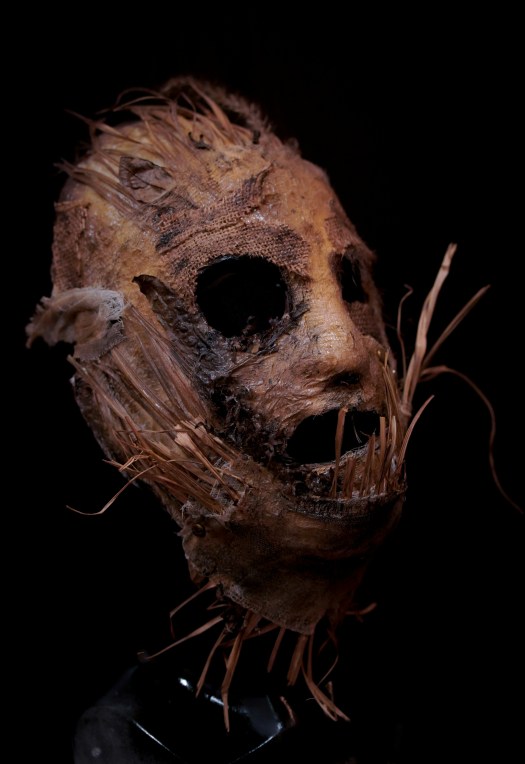
(Image by Rob Griffin, via Unsplash)
You may have heard about the red protest hats, drawn from similar hats worn in Norway during the Nazi occupation as a wordless sign of resistance to authoritarianism. The Minnesota fiber store Needle & Skein is selling patterns for knitting and for crocheting at $5 per, and have raised nearly three quarters of a million dollars for immigrant support services by doing so. It’s hard to get red yarn right now because of the power of this moment. Nora has hosted knit-ins for the past three weekends, and everyone in the room has been working on their red hats. We have friends in Canada and in Sweden who’ve knit their own in support.
However, we recently got word of this Instagram post about Crochet.com asking their “influencers” not to mention the name of the company in any posts having to do with the creation of these hats. Apparently, they’re trying to not piss off the petty tyrants in the administration, and would like to just be left alone to make money, please.
Let’s take a step back. Crochet.com is owned by another company, called Local Crafts. Isn’t that a sweet name… Local Crafts has assembled an extensive roster of fiber-arts companies: Knit Picks, We Crochet, Madeline Tosh, Jimmy Beans Wool, Berroco Yarn, Connecting Threads, HandiQuilter, and Della Q. Probably others. Each of those was started by a person who cared about yarn, about knitting, about fiber arts. And each of them was eventually sold to a company that doesn’t.
From the Local Crafts website, we see that their CEO, Veronica Collins, is “a seasoned ecommerce leader. Veronica has also focused on scaling tech enabled consumer companies across industries both organically and through targeted M&A.” Sounds like every knitter you know, right? And guess where she trained before this MBA word salad? At Amazon and at Bain, Mitt Romney’s old vulture shop.
Local Crafts itself is owned yet further upstream, by Premier Needle Arts, which is a nice shell name for one of the twenty companies or conglomerates owned by Blue Point Capital in Cleveland. Blue Point Capital doesn’t specialize in any particular industry—their companies range from post-fracking industrial washout services to rubber and plastic gasket makers to blank t-shirts and merch for the promotional-printing industry. What they specialize in is operational efficiency for “lower mid-market” companies of $5M to $50M in annual sales. Doesn’t matter what you make, it only matters how much. As the former president of US Steel once said, “We don’t make steel. We make money.”
I don’t begrudge anyone who comes up with a good idea, builds it, and then later decides to sell the company and buy a house or send their kids to school or whatever. I get that. But what happens far too often is that the company lives on as a zombie, a corpse with no heart left to it, roaming the streets in the lurching pursuit of cash. Madeline Tosh Yarn started out as an Etsy shop twenty years ago. Jimmy Beans was a neighborhood yarn-and-coffee shop in Truckee, California. Knit Picks was launched by a husband and wife who used his engineering and her knitting experience to start manufacturing knitting needles and crochet hooks. In each case, the founders wanted to bring pleasure and human connection. Now those hollow names just shamble through the world consuming dollars. If industrial washout services make more money, yarn will be abandoned without a second thought.
Four decades ago, I spent a miserable year working in the kitchen at one of the outlets of Bennigan’s Tavern. Bennigan’s Tavern was a subsidiary of Steak and Ale, itself owned by Burger King, itself owned by Pillsbury. In the regular human world, all of these shell companies and holding companies and subsidiary agreements would be called “aliases,” and would mark you as wholly untrustworthy. In the corporate world (and as Mitt says, “corporations are people, my friend“), they’re everyday practice. It’s enormously difficult to untangle who owns what, and it shouldn’t be.
The fiction of the corporate entity allows enormous malfeasance, because everyone is protected from the implications of their decisions. I mean, you can’t blame a zombie for eating brains, right? It’s what they do. But don’t hide behind the name of the corpse. Just call yourselves YarnCo and be honest. Shareholders don’t care what the company makes, as long as it makes money. To quote Napoleon (ruthlessness recognizes ruthlessness), “Money has no motherland. Financiers are without patriotism and without decency; their sole object is gain.”
 Herb Childress