It’s a Man’s World

Real work.
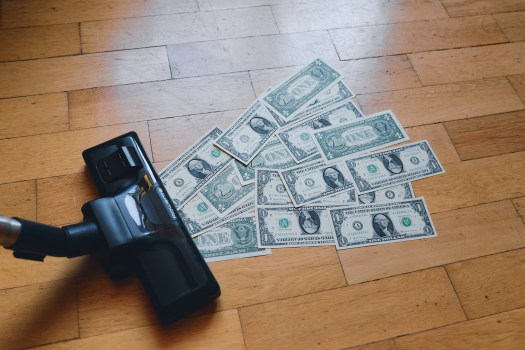
(Image by Jimmy Nilsson Masth, via Unsplash)

I’ve talked before about Colin Clark’s four-sector economic analysis. There’s primary production, which is extraction; secondary production, which is manufacturing; tertiary production, which is professions and services; and quaternary production, which is strategy and investment.

Most of the world, for most of history, was engaged in the primary economy. We were all farmers or hunters or miners or fishermen. There were a handful of skilled tradespeople making goods from mined or harvested materials, a handful of doctors and artists, and a handful of kings and popes who had all the money and made all the decisions..

The Industrial Revolution was the ability of a handful of nations to receive investment in manufacturing capability, while the rest of the world continued to mine and grow what was needed. The American colonies were prohibited from having factories for a long time; it was really only industrial espionage by Francis Cabot Lowell that allowed America to become something other than a source of inexpensive food and tobacco and cotton for England. During the 19th and first two-thirds of the 20th centuries, the American economy shifted almost wholly from primary to secondary production. In 1800, about 90 percent of Americans lived on farms; by 1900, it was about 40 percent; by 2015, it was one percent.

The issue is that other countries caught up in secondary production as well. Manufacturing in Central and South America, East Asia and Southeast Asia has become as sophisticated as ours, at lower labor costs. And automation has taken up a lot of the manufacturing that remains. Our economy has shifted upward again, into the services and professions.


One of the most striking turns of phrase I’ve seen lately has been from the political scientist Tom Schaller. He was talking about the disproportionate deaths from COVID in Trump-voting areas: something like a four-to-one disparity between rural and urban counties. And he extended that notion more broadly.

Theyโ€™re making decisions that donโ€™t just affect their communities; they affect other communities and other industries that are parallel or adjacent. So now, itโ€™s an economic murder-suicide when you make these decisions that donโ€™t just hurt your bottom line, your finances, your ability to pay for Johnnyโ€™s braces or Joniโ€™s summer camp but are affecting industries and communities and devastating your neighborsโ€”including your neighbors who didnโ€™t vote for Trump, especially your nonwhite rural neighbors. (emphasis mine)

After I read that, I had to do a little research on the phenomenon of murder-suicide. A 2006 study by the Violence Policy Center has revealing findings.

  • 94% of the perpetrators were male
  • 74% of the victims were family members
  • The most common instigating factors were a sense of being grievously wronged, and a shame in the resulting loss of status. “This type of murder-suicide typically involves a man between the ages of 18 and 60 years old who develops suspicions of his girlfriendโ€™s or wifeโ€™s infidelity, becomes enraged, murders her, and then commits suicide.”

Now, maybe it’s a stretch, but if you disagree, argue carefully, don’t just bark. We have a population of mostly men who’ve lost the status that came from primary and secondary careers, and who see success flowing to women and the well-educatedโ€”people who don’t do real men’s work, and thus aren’t deserving. And that sense of being wronged, and being shamed, is enough for some to say “burn it all down,” and take their neighbors with them. The fact that they will perish too is less important than the fact that they can avenge their lost heroism.

And the kings, distant in their towers, watch with pleasure while their serfs come to blows.
Profit = Tax

Economics 101
(Image via Unsplash)

Given that this blog is crossposted to LinkedIn, I’m imagining that the title might be provocative. It should be, of course, but I don’t think it’s wrong.

Lots and lots of people hate paying taxes, because they think as consumers. The money we pay in taxes doesn’t immediately reflect itself in goods and services obtained. (Actually, a surprising amount does, if we benefit from research or education or highways or the Internet or a defended nation or a river that doesn’t catch fire or whatever. They’re just not a) fun or b) visible as purchased goods.)

The proportion of our purchases that goes to the profit for the businesses that provide goods and services doesn’t benefit us, either. When gas was five bucks a gallon in early COVID, the oil companies made absolutely astonishing profits; the costs for raw and refined products didn’t actually change all that much. It was just that BP and Exxon and Shell knew they could take advantage of crisis and confusion. But even at the smaller and more honest scale, let’s say you have a driveway poured. You pay X for that service, which actually includes a ton of sub-components: materials, equipment, labor. But part of thatโ€”let’s say five percent of the price you payโ€”goes to the profit of the concrete business. You’ll never benefit from that, nor will the workers. It’s not even the owner’s salary; that’s part of the expenses. The profit is the owner’s tax on the transaction.

That concrete business had material delivered from a concrete plant, which made a profit. They drove to the job site in a mixer truck; the manufacturer of that truck, and the shop that maintains it, both made a profit. The contractor has a couple of pickup trucks; Ford or GMC made a profit. They hauled forms to the site on a boom truck; the truck manufacturer and the boom manufacturer both made a profit. Every step along the way, the ownersโ€”not the managers, not the workersโ€”skimmed a little off the top. The homeowner probably paid a 25-40% collective tribute to all the owners in the chain. That $20,000 driveway could have been fifteen or less, except for all the ownership surcharges.

Workers don’t make a profit. Consumers don’t make a profit. We pay the ownership surcharges, which flow only upward. I don’t know about you, but I’d rather pay taxes for drug rehab and homeless shelters and public libraries. I don’t get to make that choice, of course, because someone entirely unaccountable to the public skims their sliver and never has to justify, or even disclose, what they’ve done with it.


I read a great commentary today by the economist Kathryn Anne Edwards. She talks about the foolishness of trying to revive the manufacturing economy, but I want to quote a slightly different part of her talk:

If you really wanted to have good middle-class jobs in the U.S., you would identify the jobs that canโ€™t be exported and replaced by a machine, andย you would ensure that those jobs are high quality and well-paid. What made a manufacturing job good is that they were high-paying, had health, and had retirement. Thatโ€™s not special to manufacturing. Thatโ€™s just special to labor economic policy. The jobs that canโ€™t be exported that need people like are teachers, nurses, doctors, childcare workers, a lot of these pink-collar jobs that have never had the type of economic leverage to demand higher quality.ย Not to mention the retail sectorโ€”people who work in kitchens, people who bring you food, people who take your bag up to your room when you check into a hotel. We have a massive sprawling low-wage service sector. You could make that into the middle class if you really wanted to, but I donโ€™t think we want to.ย 

No. I don’t think we want to. Unions bad. Government bad. Invisible hand always help. Ugg.


Let me throw another quote out here, this time from Finian O’Toole’s review in the New Yorker of a new book by the historian Padraicย X. Scanlan, called “Rot: An Imperial History of the Irish Famine.

It was obvious to outsiders that the root of Irelandโ€™s misery was what de Beaumont characterized as a โ€œbad aristocracyโ€โ€”the monopolization of land by a small รฉlite that had no cultural or religious affinity with its tenantry and little sense of obligation to develop sustainable agriculture. But an English ruling class in which many leading politicians were themselves owners of vast estates in Ireland was unable to acknowledge this inconvenient truth. Who, if not the landlord system, could be to blame? It must be the Irish poor themselves. As Scanlan puts it, โ€œIntensive monoculture made Irish potatoes vulnerable to blight. The solutions proposed to mitigate famine were themselves the product of a kind of intellectual and political monoculture. Solutions were unimaginable outside the market that fuelled the crisis to begin with.โ€

In a neatly circular argument, the conditions that had been forced on the laboring class became proof of its moral backwardness. It was relatively easy to plant and harvest potatoesโ€”therefore, those who did so had clearly chosen the easy life. โ€œIreland, through this lens,โ€ Scanlan writes, โ€œwas a kind of living fossil within the United Kingdom, a country where the majority of the poor were inert and indolent, unwilling and unable to exert themselves for wages and content to rely on potatoes for subsistence.โ€

This is about as good a summary of capital extraction as one could imagine. It’s always been easy to blame the poor for being poor, but the tentacles of profit drain us all dry.

More tomorrow.

Second-Tier Oligarchs

Remember when we thought HE was stupid? Ah, for the good old days.
(Image via Wikimedia)

We often think of oligarchy in immediate termsโ€”a handful of people with whom all of the power and wealth are vested. One of the less-considered impacts is that after a few years, we’re left with their kids, who are even stupider and more venal than they were.

The Republican Party, who seem somehow to have captured the working class, keep putting up one nepo baby after another. George H.W. Bush, the son of a senator/investment banker and grandson of a railroad company president. George W. Bush, further down the creek than that. Mitt Romney, son of a state governor and automaker president. DJT, the ultimate failson, riding the family fortune into the dirt over and over and somehow still convincing people to lend him credit and credence. Elon, child of a wealthy landowner and jewel dealer.

We see this elsewhere, of course. Papa Doc and Baby Doc Duvalier in Haiti. Uday and Qusay Hussein in Iraq. King Charles. A.G. Sulzberger, the sixth-generation publisher of the New York Times who never would have risen that far on individual merit. All of the Kardashians. And the ultimate DEI hires: Don jr., Eric and Ivanka.

When I was a postdoc at Duke, I kept hearing other postdocs talking about something their mother had done as an administrator at some college, or something their father had done as a professor of chemistry. It seemed too common to be coincidence, so I literally went door to door and asked each person what their parents had done for a living. Fourteen of the twenty-six had one or both parents in higher education.

When power can be inherited, we can’t talk with a straight face about meritocracy.

The Pipe and the Rope

Today’s metaphor.

Imagine, if you will, a length of rope, running through the center of a long metal pipe so that there’s some rope on either end. Let’s use the total length of the rope to represent an economy: all the material wealth that a nation generates. The amount of rope remaining on one side is the benefit to consumers; the amount of rope remaining on the other side is the benefit to workers. The pipe is the benefit to the owners.

Capitalism benefits the pipe. Government benefits the rope.

Left to its own devices, the investment community would increase the length of the pipe indefinitely, leaving no rope exposed at all. We see that every time we’ve have a colonial excursion, for instance: the money flows home to the wealthy in England, and the subjects get… well, they get the short end of the rope, don’t they.

“Back in the day, when America was great,” we were governed by wild-eyed Marxists like Harry Truman and Dwight Eisenhower, who tried to leave as much rope available as they possibly could. It was a pipe-shortening era, with extraordinary marginal tax rates at the top end of the scale and relatively low taxes for average workers. In 1960, the median family income was $5,500, and their Federal income tax rate would have been 20% on the first four grand and 22% on the remainder; on the other end of the scale, family income beyond $400,000 (about four and a quarter million dollars in current value) was taxed at 91%.

The results are clear. The Economic Policy Institute shows that in 1965, the average CEO/corporate president made twenty times as much income as the average employee; in 2021, that ratio was 399 to 1. For those at the top, it pays to elect people who make that pipe as long as it can possibly be. That’s the definition of oligarchy.

The great trick of the past sixty years has been that the lengthening of the pipe has mostly been toward one end. Wages have been stagnant or worse for decades, and employees are shed in massive waves of gigification. Whether you drive a cab or teach in college, you probably don’t have “a job.” But we’re all happy consumers, with our array of fancy coffees and artisan body wash and “free” internet content. Bad wages are the norm, but an eight-dollar carton of eggs will lose you an election.

And yes, capitalism as the engine of prosperity, blah blah blah whatever. Prosperity is the overall length of the ROPE, not the proportional length of the pipe. Don’t confuse the two.


All of the above is only economics. It only has to do with things that can be measured in dollars. (I had a teacher in grad school who spent his whole career studying spatial design in shopping malls. “I love shopping malls. There’s only one variable that matters: dollars per square foot.” A great example of a wicked problem artificially tamed.)

That’s the other thing that government attends to: things that can’t be measured in dollars. Things like health, and dignity, and beauty. I’ll close today by quoting Robert F. Kennedy (the real one, not the washed-out photocopy we’ve got now), speaking in 1968 at the University of Kansas.

But even if we act to erase material poverty, there is another greater task, it is to confront the poverty of satisfaction – purpose and dignity – that afflicts us all. Too much and for too long, we seemed to have surrendered personal excellence and community values in the mere accumulation of material things. Our Gross National Product, now, is over $800 billion dollars a year, but that Gross National Product – if we judge the United States of America by that – that Gross National Product counts air pollution and cigarette advertising, and ambulances to clear our highways of carnage. It counts special locks for our doors and the jails for the people who break them. It counts the destruction of the redwood and the loss of our natural wonder in chaotic sprawl. It counts napalm and counts nuclear warheads and armored cars for the police to fight the riots in our cities. It counts Whitman’s rifle and Speck’s knife, and the television programs which glorify violence in order to sell toys to our children. Yet the gross national product does not allow for the health of our children, the quality of their education or the joy of their play. It does not include the beauty of our poetry or the strength of our marriages, the intelligence of our public debate or the integrity of our public officials. It measures neither our wit nor our courage, neither our wisdom nor our learning, neither our compassion nor our devotion to our country, it measures everything in short, except that which makes life worthwhile. And it can tell us everything about America except why we are proud that we are Americans.